Crop guide
Growing squash
Growing squash means matching summer and winter types to cited culture notes, keeping sources separate by geography, and recording what happened in your bed. There is no single trick.
Growing guidance is general information. Timing, spacing, and care depend on cultivar, weather, soil, and local conditions. Check the sources and adjust the plan for your garden.
Steps (range, not a promise)
- 01Read cited culture notes for summer and winter types — they are not one BioArva average.
- 02Match type groups (acorn, spaghetti, butternut, and others named on cited sheets) to your site.
- 03Log the bed so next season is not a guess.
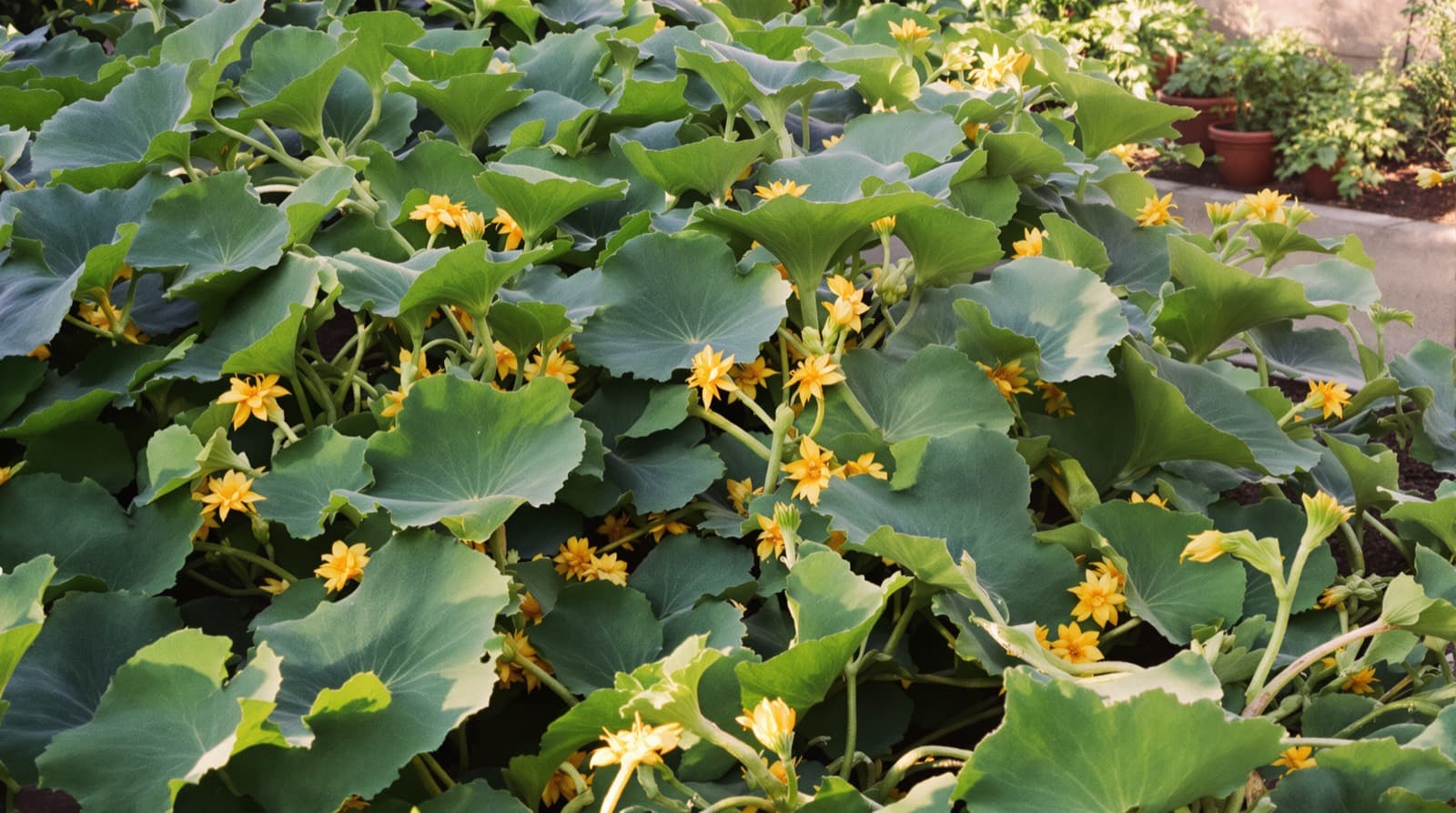
Squash in a home garden bed.
The season, on your ground
Save this bed — freeWhen to plantCareWhen to harvestWinter squash varietiesSquash bugsSquash vine borerPowdery mildewGarden pests
TomatoesPeppersBeansLettuceOnions
What the sources say — at a glance
One source per card. Facts are not averaged.
Clemson HGIC 1321 (South Carolina)
Summer squash (Cucurbita pepo) is a warm-season crop that grows best at 65–75°F. Yellow and scallop types listed; some bush instead of vining.
Details and limits (4)
Temperature
Summer squash (Cucurbita pepo) is a warm-season crop that grows best at average temperatures between 65 and 75°F. Temperature range on their sheet — not a BioArva climate zone.
Types
Their sheet lists yellow (straight and crookneck) and scallop among summer squash types. Type list on their sheet — not a cultivar ranking.
Habit
Some varieties have a bush-type of growth instead of the vining habit. Habit on their sheet — not a ranking.
Limit
South Carolina summer-squash sheet only. Not winter-squash timing.
Maryland Extension (Maryland)
Summer squash is a very tender warm-season annual; frost will injure top growth; needs warm weather to grow.
Details and limits (2)
Hardiness
Summer squash is a very tender warm-season annual; frost will injure top growth; needs warm weather to grow. Hardiness on their sheet — not a BioArva climate zone.
Limit
Maryland summer-squash sheet only.
UMN Extension (Minnesota)
Summer squash (Cucurbita pepo) includes crookneck, straightneck, patty pan and similar types. Common in Minnesota gardens — geography, not a climate zone.
Details and limits (2)
Types
Summer squash (Cucurbita pepo) includes crookneck, straightneck, patty pan and other similar types. Their sheet also lists summer squash as common in Minnesota vegetable gardens, which is geography on their Minnesota sheet and not a BioArva climate zone.
Limit
Minnesota summer-squash sheet. Not blended with their winter-squash page.
Cornell (New York)
Four groups of summer squash. Most summer varieties form a compact bushy vine, unlike most winter squash and pumpkins.
Details and limits (4)
Types
Their sheet lists four groups of summer squash. Yellow summer squash have long, thin fruits that can be smooth or warty, straight or crooknecked. Type note on their sheet — not a cultivar ranking.
Types
Scalloped or patty pan squash are disc-shaped with scalloped edges; colors range from greenish to yellow to white. Type note on their sheet — not a ranking.
Habit
Most summer squash varieties form a compact, bushy vine, in contrast to the sprawling vines of most winter squash and pumpkins. Habit on their sheet — not a spacing prescription.
Limit
New York squash sheet only.
UMN Extension (Minnesota)
Winter pepo: acorn, delicata, spaghetti. Moschata: butternut. Maxima: Hubbard, kabocha, buttercup. Vines run along the ground.
Details and limits (5)
Types
Edible winter squash in Cucurbita pepo on their sheet include acorn, delicata, and spaghetti types. Type note only — no cultivar ranking.
Types
Edible winter squash in C. moschata on their sheet include butternut types. Type note only — no cultivar ranking.
Types
Edible winter squash in C. maxima on their sheet include Hubbard, kabocha, and buttercup types. Type note only — no cultivar ranking.
Habit
Pumpkins and winter squash vines run, or grow along, the ground. Habit on their sheet — not a spacing prescription.
Limit
Minnesota winter-squash sheet. Not blended with their summer-squash page.
Maryland Extension (Maryland)
Pumpkin, acorn, butternut, and buttercup among types. Winter squash grows on long vines in many varieties and colors.
Details and limits (3)
Types
Pumpkin, acorn squash, butternut squash, and buttercup squash are among the types on their winter squash sheet. Type list — not a ranking.
Habit
Winter squash grows on long vines and comes in many varieties and colors. Habit on their sheet — not a spacing prescription.
Limit
Maryland winter-squash sheet. Not blended with their summer-squash page.
Virginia Cooperative Extension 426-406 (Virginia)
Small-fruited winter: acorn and butternut. Intermediate: banana, Cushaw, Hubbard, Sweet Meat. Spaghetti flesh separates into strands.
Details and limits (6)
Types
Small-fruited winter squash on their sheet include acorn types and butternut types. Type note on their sheet — not a ranking.
Types
Intermediate-fruited winter squash on their sheet include banana squash, Cushaw, Hubbard, and Sweet Meat. Type note on their sheet — not a ranking.
Types
Large-fruited winter squash on their sheet include Blue Hubbard, Boston Marrow, and Jumbo Pink Banana. Type note on their sheet — not a ranking.
Types
Spaghetti squash (also listed as vegetable spaghetti) has flesh that separates into spaghetti-like strands. Type note on their sheet — not a ranking.
Habit
Some of the small-fruited types have been bred for bush or semi-vining growth habits. Habit on their sheet — not a spacing prescription.
Limit
Virginia 426-406 only. Classification — not a ranking.
Make it yours
Save the bed in the Field Book so next season is not a guess.
Verified suppliers only
No supplier on this page
When a partner is listed, it will be outbound and disclosed. Nothing to buy here. Fertilizer, soils, and pesticides stay off this slot.
What to record in the Field Book
Save the bed with the crop and the date. You may add a photo and notes. Compare entries you have recorded with each other — not with a diagnosis from this page. If you want an identification, bring the record to local Extension.
What are the secrets to growing squash?
There is no single trick. Clemson HGIC 1321 (South Carolina): summer squash (Cucurbita pepo) is a warm-season crop that grows best at average temperatures between 65 and 75°F. Temperature range on their sheet — not a BioArva climate zone.
Do squash plants regrow every year?
Maryland Extension (Maryland): summer squash is a very tender warm-season annual; frost will injure top growth; needs warm weather to grow. Hardiness on their sheet — not a BioArva climate zone.
How we know — methodology. Ranges and assertions are cited per source, not blended.