Crop guide
How to grow lettuce
Growing lettuce means sowing a cool-season crop as soon as soil can be worked, matching cited spacing by type, and recording the bed. Light-frost notes are source-specific.
Growing guidance is general information. Timing, spacing, and care depend on cultivar, weather, soil, and local conditions. Check the sources and adjust the plan for your garden.
Steps (range, not a promise)
- 01Sow leaf or butterhead as soon as soil can be worked in spring, or in late summer — cited Maryland timing.
- 02Match spacing to type. Leaf, cos/romaine, butterhead, and crisphead are listed separately.
- 03Protect against heavy frost. Light frost is listed as tolerated on cited sheets.
- 04Log the bed so next season is not a guess.
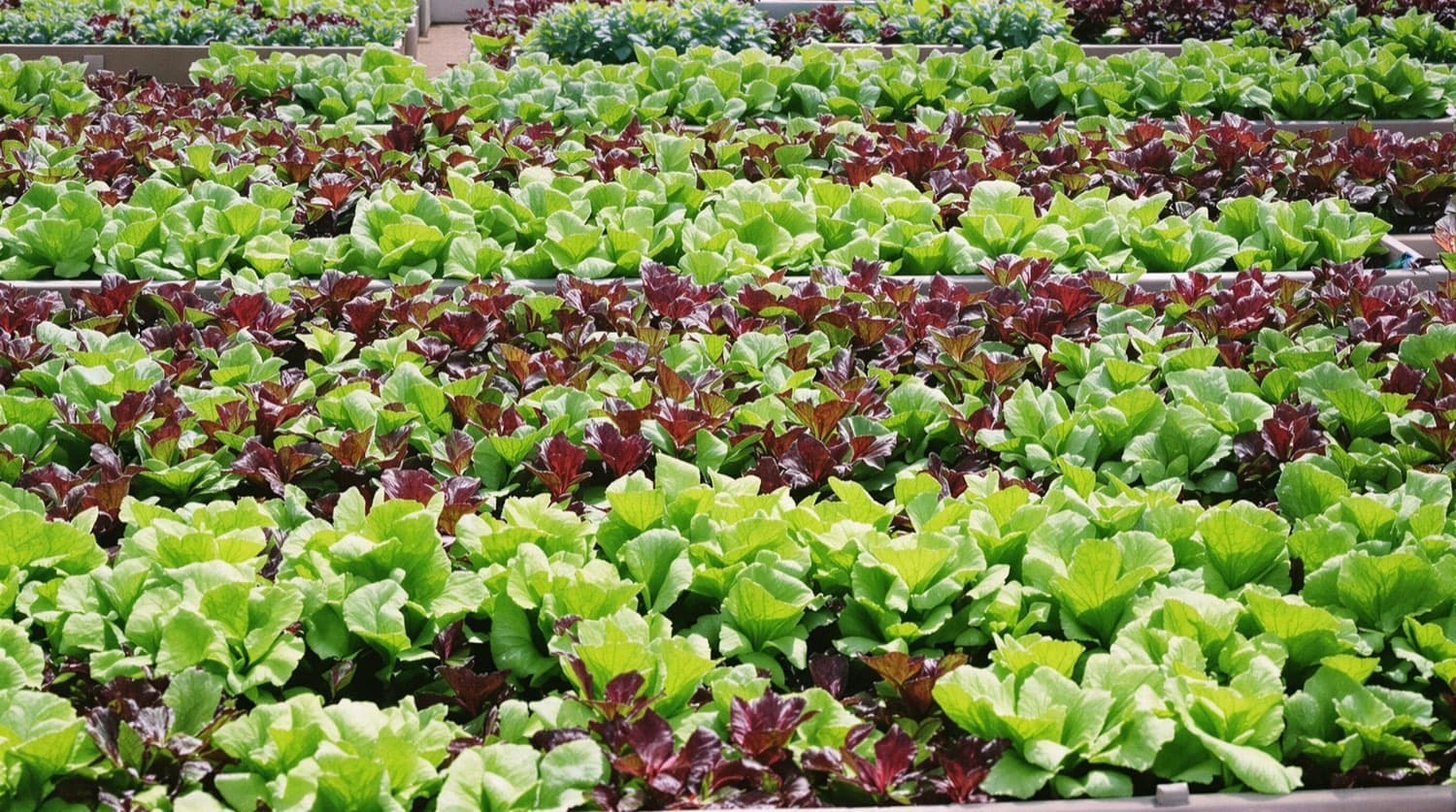
Leaf, butterhead, and crisphead spacing differ on cited sheets.
The season, on your ground
Save this bed — freeWhen to plantCareWhen to harvestBoltingPestsGarden pests
Romaine class notes are on the Maryland timing and spacing cards below. Romaine transplant timing is on when to plant lettuce. Romaine head-size harvest cues are on when to harvest lettuce.
What the sources say — at a glance
One source per card. Facts are not averaged.
Clemson HGIC 1312 (South Carolina)
Withstands light frost; 55–65°F. Leaf: rows 1–2 feet, seed ¼ inch, 6–10 inches in-row. Head: 3-foot rows, 12 inches in-row.
Details and limits (11)
Hardiness
Lettuce withstands light frosts. Hardiness note on their sheet — not a freeze-proof claim.
Temperature
Lettuce is a cool-season crop; their sheet lists temperatures of 55 to 65°F. Temperature range on their sheet — not a BioArva climate zone.
Spacing
Plant leaf lettuce in rows 1 to 2 feet apart with seed one-quarter inch deep and 6 to 10 inches apart in the row; they say it is usually necessary to plant thicker and thin. Spacing on their sheet — not a BioArva average.
Thinning
Leaf lettuce should be thinned when the plants are 1 to 2 inches tall. Thinning stage on their sheet — not a BioArva instruction set.
Germination
Their sheet lists soil temperature for seed germination of 60 to 80°F, and says raw lettuce seed will not germinate at a soil temperature above 95°F. Germination range on their sheet — not a BioArva climate zone.
Spacing
Leaf lettuce can also be planted in 12-inch-wide beds with the seed broadcast over the bed. Spacing on their sheet — not a BioArva average.
Spacing
Head lettuce should be planted in rows 3 feet apart with 12 inches between plants in the row. Spacing on their sheet — not a BioArva average.
Seed
Their seed-starting note distinguishes potting soil from garden soil for covering lettuce seed. Source-specific seed-covering note—not a BioArva mix recipe or product SKU.
Start
They list growing head lettuce from transplants. Source-specific start method — not a ranking of sources and not a BioArva instruction set.
Types
Butterhead or Bibb lettuce is a loose-heading type with dark green leaves that are somewhat thicker than those of iceberg lettuce. Type note on their sheet — not a ranking.
Limit
South Carolina HGIC 1312 only. Spacing is not averaged with Maryland.
Maryland Extension (Maryland)
Semi-hardy: light frost, protect against heavy frost. Sow leaf or butterhead as soon as soil can be worked, or in late summer.
Details and limits (17)
Hardiness
Lettuce is a semi-hardy annual; it can withstand light frosts but needs protection against heavy frosts or freezing. Hardiness on their sheet — not a freeze-proof claim.
Sun
Lettuce tolerates partial shade (4–6 hours of direct light per day); their sheet also lists full sun in spring and fall. Light note on their sheet — not a ranking of sites.
Timing
Sow leaf or butterhead types as soon as soil can be worked in the spring, or in late summer; crisphead and cos (romaine) types may be transplanted in early spring and fall. Timing on their sheet — not a national calendar.
Spacing
Leaf, cos, or butterhead 4–10 inches in-row by 12–24 inches between rows; crisphead 12–15 inches in-row by 20–30 inches between rows. Spacing depends on harvest stage on their sheet — not a BioArva average.
Start
Their sheet lists 3 to 4 week old transplants. Timing note on their sheet — not a yield promise.
Container
Their sheet lists lettuce in containers. Container note on their sheet — not a ranking of pots vs ground and not a BioArva pot size.
Shade
Plant long-season lettuces so that crops such as sweet corn, staked tomatoes, pole beans, or deciduous trees will shade the lettuce during the hottest part of the day. Shade timing on their sheet — not a companion ranking.
Sun
Baby leaf lettuce can be grown entirely in indirect light in summer. Light note on their sheet — not a ranking of sites.
Timing
Leaf lettuce on their sheet can be grown from March to December with a break in July and August. Geographic calendar on their sheet — not a national plant date.
Spacing
Sow 10 to 20 seeds per foot of row; thin individual plants 4- to 8-inches apart, depending on variety. Spacing on their sheet — not a BioArva average.
Mulch
Organic mulches are helpful in conserving soil moisture and maintaining even soil temperatures. Cultural note on their sheet — not a BioArva mulch program.
Maturity
Days to maturity 40–80, depending on the type. Timing on their sheet — not a yield promise.
Culture
Cultivate carefully, as lettuce is shallow-rooted. Cultural note on their sheet — not a BioArva instruction set.
Water
Their sheet lists frequent, light watering; for overhead watering, it specifies morning so plants have time to dry during the day. Water note on their sheet—not a BioArva irrigation schedule.
Harvest
Their Cut and Come Again harvesting note describes sowing a raised bed thickly and cutting plants right above ground level with sharp scissors. Harvest method on their sheet — not a BioArva yield promise and not a title claim.
Shade
Their spring succession note describes using tall crops and trellises to shade late-spring lettuce plantings. Source-specific planning note—not a companion ranking or a BioArva calendar.
Limit
Maryland lettuce sheet only. Spacing and calendar are not averaged with Clemson.
Make it yours
Save the bed in the Field Book so next season is not a guess.
Sources differ
Can lettuce grow in containers?
Maryland Extension lists lettuce in containers. Container note on their sheet — not a ranking of pots vs ground and not a BioArva pot size.
What to record in the Field Book
Save the bed with the crop and the date. You may add a photo and notes. Compare entries you have recorded with each other — not with a diagnosis from this page. If you want an identification, bring the record to local Extension.
Verified suppliers only
No supplier on this page
When a partner is listed, it will be outbound and disclosed. Nothing to buy here. Fertilizer, soils, and pesticides stay off this slot.
How we know — methodology. Ranges and assertions are cited per source, not blended.