Squash · Symptom guide
Powdery mildew on squash
White marks on squash leaves in a garden bed are a look-and-compare job. Cited sheets list powdery growth as observations, not a ranked or confirmed cause. This page does not diagnose.
Cited observations are comparisons—not a confirmed diagnosis. Check the cited sources and local requirements before taking action.
Save this bed. See it coming next year.
Your checks stay in the Field Book so next season is not a guess.
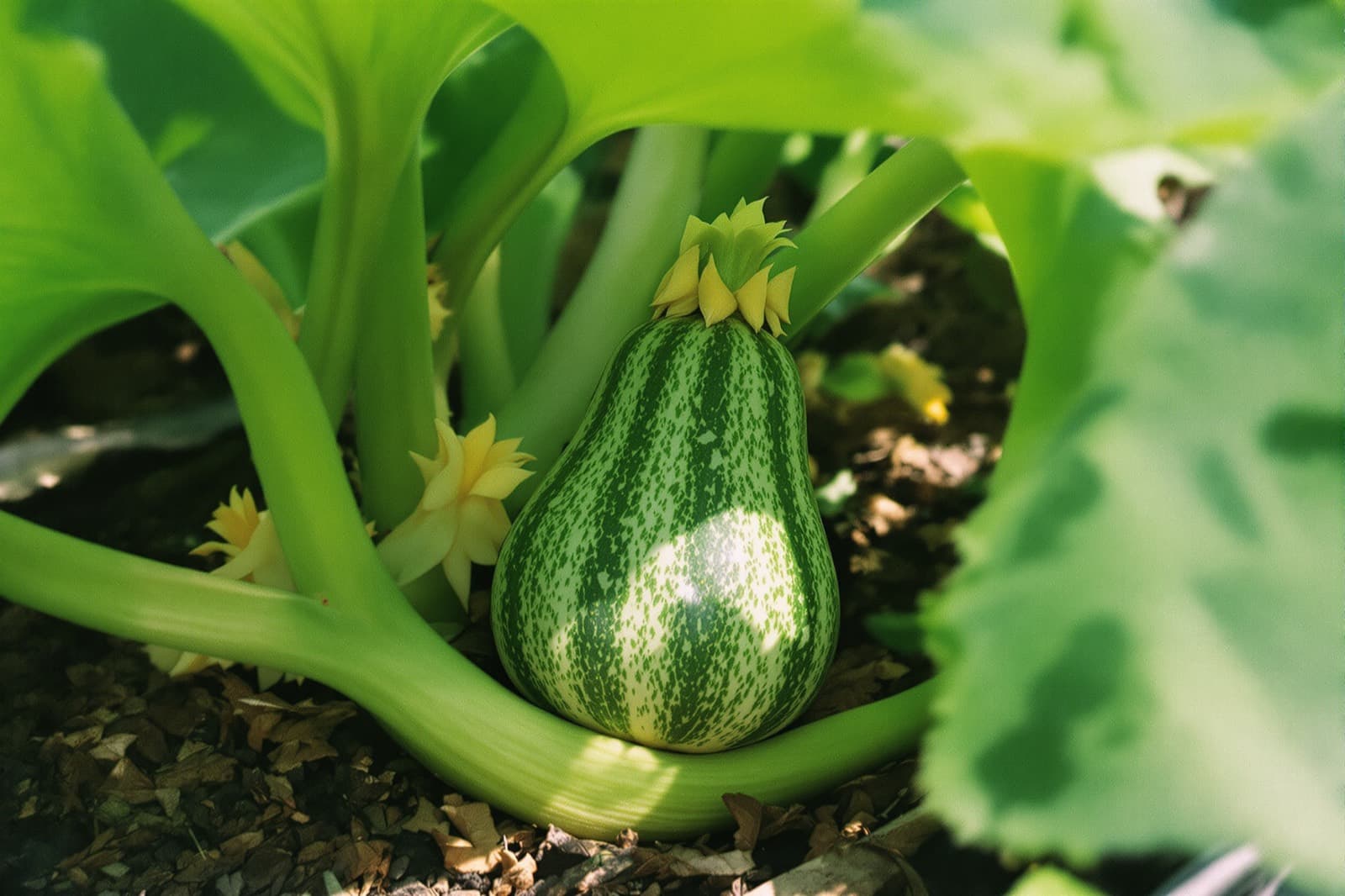
Illustrative photograph — not identification proof.
Look
Compare the plant in front of you with the cited notes after Other causes. Leaf marks alone do not name a cause on this page.
Other causes
Growing notes live on how to grow squash. Garden-wide looks live on garden pests. Squash vine borer is a separate species page — not this leaf list.
What the sources say — at a glance
One source per card. Facts are not averaged.
Clemson HGIC 2206 (South Carolina)
White powdery growth on upper leaf surfaces and stems.
Details and limits (3)
Look
Clemson HGIC 2206 (South Carolina): powdery mildew causes a white powdery growth on the upper surfaces of leaves and on the stems of infected plants. Observation. Squash as named.
Look
Clemson HGIC 2206 (South Carolina): infected areas are often stunted and distorted and may drop prematurely from the plant. Observation.
Limit
South Carolina HGIC 2206. Squash clause only — not a diagnosis.
Maryland Extension (Maryland)
White powdery coating. Leaves around the base first.
Details and limits (3)
Look
Maryland Extension (Maryland): powdery mildew grows as a white powdery coating over the surfaces of leaves. Squash named on that sheet. Observation.
Look
Maryland Extension (Maryland): leaves around the base of the plant are first affected. Observation.
Limit
Maryland powdery-mildew vegetables sheet. Squash named — not a diagnosis.
Sources differ
Make it yours
Save the bed in the Field Book so next season is not a guess.
How we know — methodology. Ranges and assertions are cited per source, not blended.