Crop guide
How to grow onions
How to grow onions means matching day-length type and cool-season culture to cited geography, then recording what happened in your bed. Cultivar and latitude change bulbing. There is no single trick.
Growing guidance is general information. Timing, spacing, and care depend on cultivar, weather, soil, and local conditions. Check the sources and adjust the plan for your garden.
Steps (range, not a promise)
- 01Read cited day-length notes for your latitude — long-day and short-day sheets are not interchangeable.
- 02Treat cool-season culture as source-bound, not a national calendar.
- 03Log the bed so next season is not a guess.
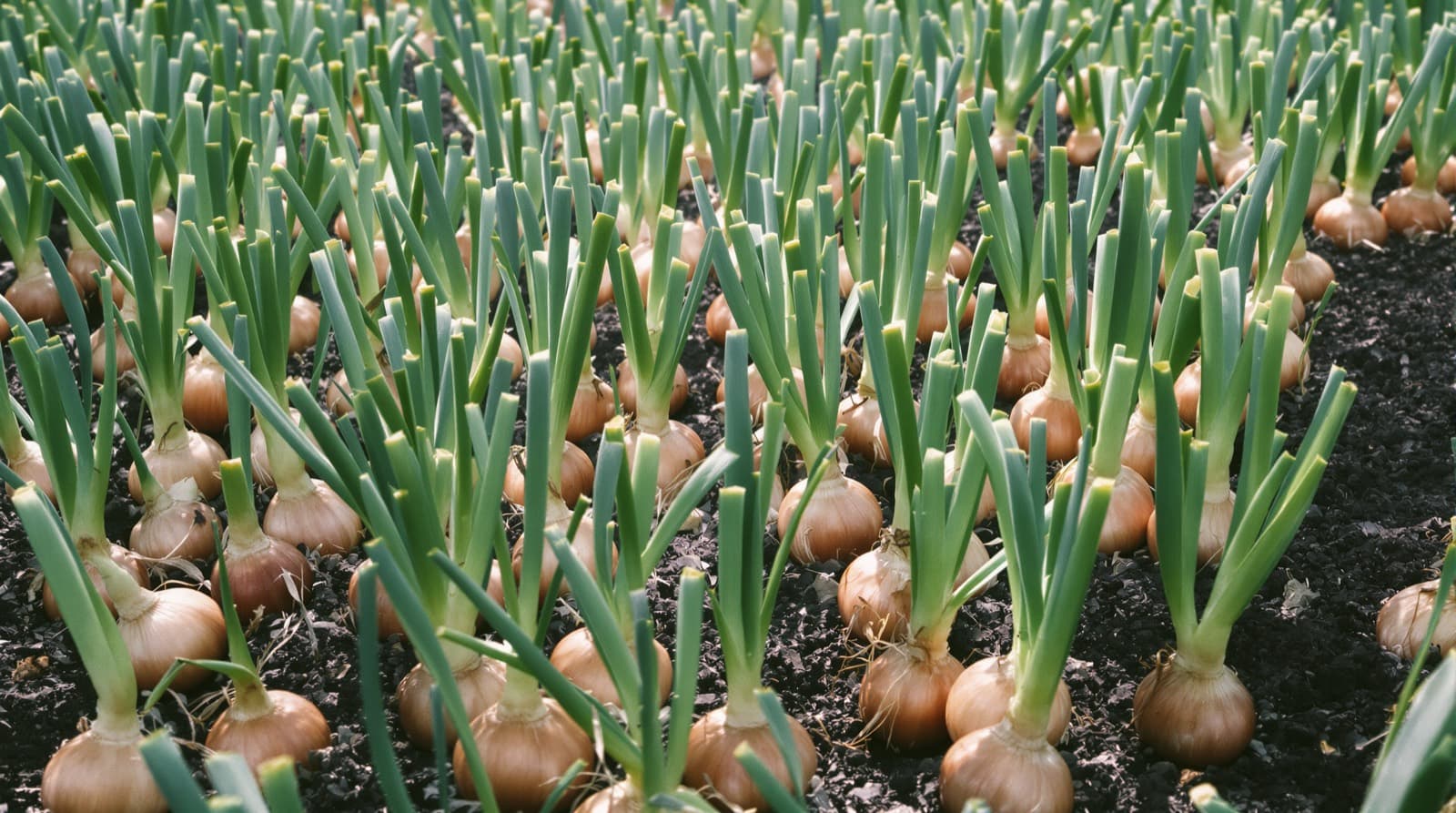
Onions in a home garden bed.
The season, on your ground
Save this bed — freeWhen to plantCareWhen to harvestPestsGarden pests
TomatoesPeppersBeansLettuceSquash
What the sources say — at a glance
One source per card. Facts are not averaged.
Illinois Extension (Illinois)
Cool-season vegetable. Grown from sets, transplants, or seed. Long-day vs short-day varieties are not interchangeable North and South.
Details and limits (6)
Season
Onion is a cool-season vegetable that can be grown successfully throughout most of temperate North America. Season note on their sheet — not a BioArva climate zone.
Start
Onions may be grown from sets, transplants, or seeds. Start-method note on their sheet — not a BioArva product SKU.
Day-length
Onions start bulb formation when the day length is of the proper duration and different varieties require different day lengths to initiate bulbing. Day-length context on their sheet — not a cultivar ranking.
Day-length
Most common varieties fall into long-day (northern latitudes) and short-day (southern latitudes); onion varieties grown in the South are not adaptable to the North and vice versa. Geography on their sheet — not a BioArva zone map.
Types
Their sheet lists Yellow and White Sweet Spanish as long-day varieties and Yellow and White Bermuda as short-day varieties. Type/geography on their sheet — not a ranking.
Limit
Illinois onion sheet only. Day-length is not a BioArva zone map.
Clemson HGIC 1314 (South Carolina)
Onions, shallots, leeks and garlic grow best in cool weather. Short-day types set bulbs with about 12 hours of daylight statewide.
Details and limits (4)
Season
Onions and related shallots, leeks and garlic all grow best during cool weather. Cool-weather context on their sheet — not a BioArva climate zone.
Day-length
Onions are classed as long or short day varieties based on hours of daylight required to make a bulb; short day varieties set bulbs with about 12 hours of daylight and are suitable for growing throughout South Carolina. Day-length on their sheet — not a cultivar ranking.
Day-length
Clemson’s sheet lists intermediate-day onions for the Upstate and says long-day onions cannot be successfully grown in the South. Source-specific day-length context—not a BioArva zone map.
Limit
South Carolina HGIC 1314 only.
Maryland Extension (Maryland)
Hardy through heavy spring frosts. Long-day 15–16 hours North; short-day about 12 hours deep South; long-day and intermediate for the mid-Atlantic.
Details and limits (5)
Hardiness
Onions are hardy (can withstand heavy spring frosts). Hardiness on their sheet — not a BioArva climate zone.
Life cycle
Bulb onions are biennials treated as annuals; their sheet lists two years to complete the life cycle. Life-cycle note on their sheet — not a perennial program.
Day-length
If the seed catalog lists the variety as long day, it sets bulbs at 15–16 hours of daylight in Northern summers; short-day types at about 12 hours in the deep South for winter production; long-day and intermediate types are listed for the mid-Atlantic. Day-length on their sheet — not a BioArva zone map.
Day-length
Bulbs enlarge as day length increases. Day-length context on their sheet — not a BioArva climate zone.
Limit
Maryland onion sheet only.
Utah State Extension (Utah)
Cool-season vegetable; full sun and well-drained soils. Leave bulbs until tops fall over; then lift and dry in the garden 1–2 weeks.
Details and limits (3)
Season
The onion is a cool-season vegetable; their sheet lists full sun and well-drained soils. Site note on their sheet — not a BioArva climate zone.
Harvest
Leave bulb onions in the ground until the tops fall over; once the tops fall over, lift the bulbs but leave them in the garden to dry for 1–2 weeks. Harvest/curing context on their sheet — not a BioArva program.
Limit
Utah onion sheet only. Harvest notes are not a storage promise.
UMN Extension (Minnesota)
Minnesota storage onions are generally long-day types needing 14 or more hours of daylight. Harvest when about half the tops fall over.
Details and limits (5)
Day-length
Storage onions grown in Minnesota generally are long-day types that require 14 or more hours of daylight to form bulbs; their sheet lists full sun. Day-length on their sheet — not a BioArva climate zone.
Day-length
Sweet or mild onions are short-day onions; although you can grow them in Minnesota, they will generally develop small bulbs. Geography on their sheet — not a cultivar ranking.
Harvest
Harvest onions when about half the tops are falling over and dry. Harvest context on their sheet — not a yield promise.
Cure
Curing is essential if you want to store onions; you must dry them in a warm, dry, well-ventilated area. Curing context on their sheet — not a BioArva program.
Limit
Minnesota onion sheet only.
Cornell (New York)
Long-day varieties need about 14 hours of light to form bulbs. Day-length on their sheet — not a BioArva zone map.
Details and limits (2)
Day-length
Their sheet lists long-day varieties which need about 14 hours of light to form bulbs. Day-length on their sheet — not a BioArva zone map.
Limit
New York onion sheet only.
Penn State Extension (Pennsylvania)
Bulbing is primarily induced by photoperiod. Long-day and intermediate-day varieties listed for the northeastern United States.
Details and limits (3)
Day-length
Bulbing of onions is primarily induced by photoperiod, or day length. Day-length context on their sheet — not a BioArva climate zone.
Day-length
Their sheet lists long-day and intermediate-day onion varieties for the northeastern United States. Geography on their sheet — not a BioArva zone map.
Limit
Pennsylvania onion sheet only.
UMass Extension (Massachusetts)
Onions bulb according to day length; long-day and intermediate-day types listed for New England.
Details and limits (2)
Day-length
Onions bulb according to day length; their sheet lists long-day and intermediate-day types for New England. Geography on their sheet — not a BioArva zone map.
Limit
Massachusetts onion sheet only.
Make it yours
Save the bed in the Field Book so next season is not a guess.
Verified suppliers only
No supplier on this page
When a partner is listed, it will be outbound and disclosed. Nothing to buy here. Fertilizer, soils, and pesticides stay off this slot.
What to record in the Field Book
Save the bed with the crop and the date. You may add a photo and notes. Compare entries you have recorded with each other — not with a diagnosis from this page. If you want an identification, bring the record to local Extension.
What is the trick to growing onions?
There is no single trick. Illinois Extension (Illinois): onions start bulb formation when the day length is of the proper duration and different varieties require different day lengths to initiate bulbing. Day-length context on their sheet — not a cultivar ranking.
How we know — methodology. Ranges and assertions are cited per source, not blended.