Crop guide
Growing sweet corn
Growing sweet corn means matching genetic type and isolation on the cited sheets, planting in a block with source-specific spacing, and recording the bed. There is no single national planting date.
Growing guidance is general information. Timing, spacing, and care depend on cultivar, weather, soil, and local conditions. Check the sources and adjust the plan for your garden.
Steps (range, not a promise)
- 01Know the genetic type on the cited sheet. Isolation distances stay source-specific.
- 02Direct seed after the soil has warmed on the cited sheet.
- 03Use in-row and between-row spacing from one cited source. Plant in a block, not one long row.
- 04Log the bed so next season is not a guess.
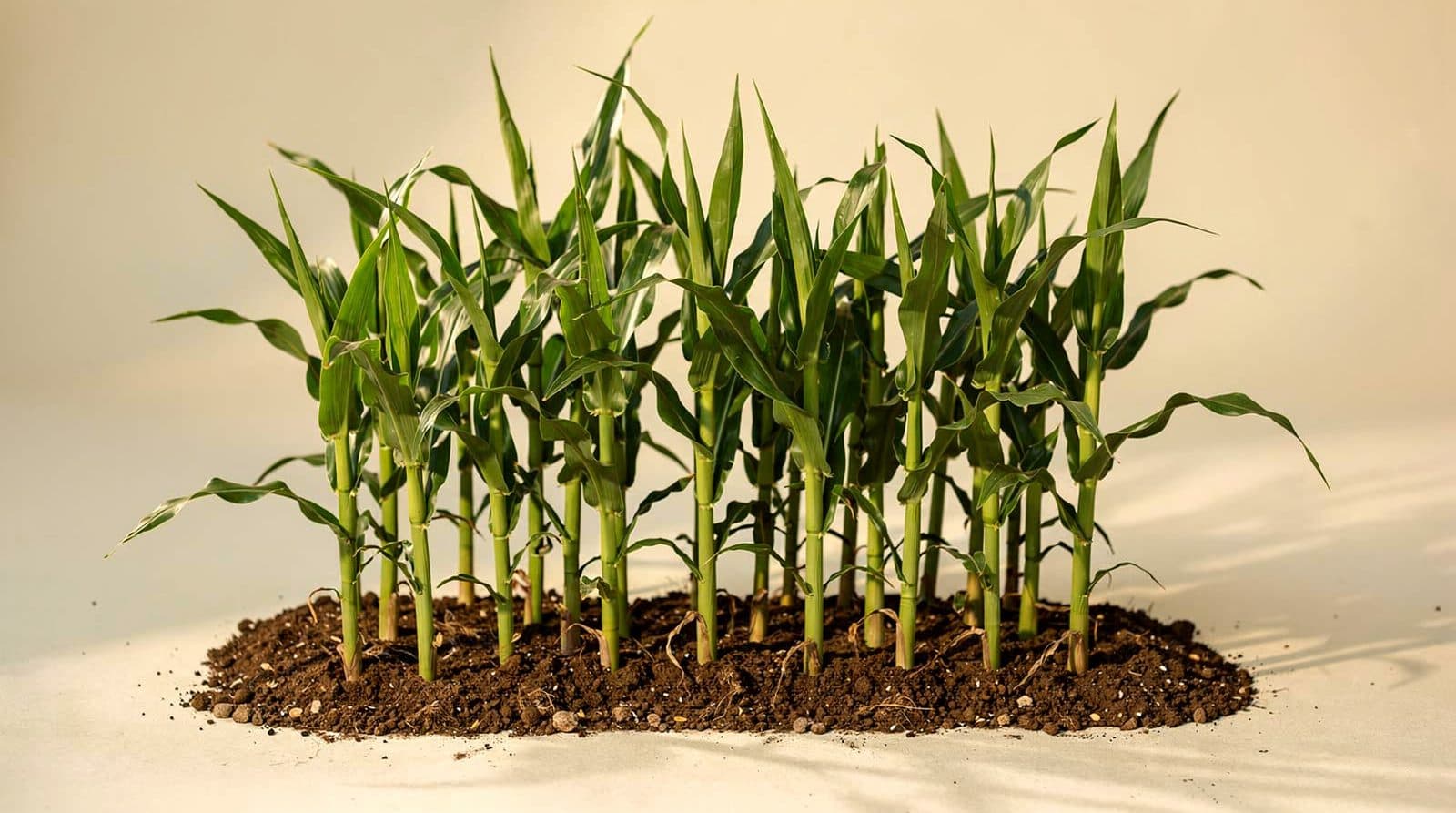
Illustrative photograph — types, timing, and spacing stay on the cited sheets.

The season, on your ground
Save this bed — freeWhen to plantCareWhen to harvestPestsGarden pests
What the sources say — at a glance
One source per card. Facts are not averaged.
Clemson HGIC 1308 (South Carolina)
su / se / sh2. Extra-sweet vs standard 400 yd or one month. Warm-season; soil ≥50 °F at 4 in; extra-sweet 65 °F. 3 ft × 10 in.
Details and limits (4)
Types
Clemson HGIC 1308 (South Carolina): standard sweet corn (su), sugar-enhanced (se), and supersweet hybrid (sh2). Extra-sweet and standard types 400 yards apart, or plant so maturity dates are one month apart, to avoid crossing. Type notes on their sheet — not a cultivar mill.
Timing
Clemson HGIC 1308 (South Carolina): warm-season crop that grows best at 60 to 80 °F. Do not plant before the soil temperature at the 4-inch depth is at least 50 °F. Wait to plant extra-sweet varieties until soil temperatures reach 65 °F. Timing on their sheet — not a national plant date.
Spacing
Clemson HGIC 1308 (South Carolina): plant in rows 3 feet apart with 10 inches between seed in the row. Early, small varieties can be planted 8 to 9 inches apart in rows 30 inches apart. Plant the seed about 1 inch deep. Wind-pollinated: plant in blocks of several rows rather than 1 or 2 long rows. Spacing on their sheet — not a BioArva average.
Limit
South Carolina HGIC 1308. Types, timing, and spacing stay on this sheet. Not fertilizer and not a cultivar mill.
Maryland Extension (Maryland)
Very tender. After frost; super-sweet soil 65 °F. Three hybrid types. 400 yd or two weeks. 9–12 × 24–36 in; min three rows.
Details and limits (4)
Types
Maryland Extension (Maryland): three basic types of hybrid sweet corn; many cultivars combine more than one type. Extra-sweet and standard sweet corn isolated by 400 yards or by planting time (two weeks). Isolate from field corn as well. White and yellow types also cross-pollinate. Type notes on their sheet — not a cultivar mill.
Timing
Maryland Extension (Maryland): very tender warm-season annual. Frost will injure top growth; needs warm weather to grow. Seed after the danger of frost is past; super-sweet varieties should be planted when soil temperatures reach 65 °F. Timing on their sheet — not a national plant date.
Spacing
Maryland Extension (Maryland): spacing 9 to 12 inches in-row by 24 to 36 inches between rows; minimum of three rows side by side (preferably four) for pollination. Early-maturing types: rows 30 inches apart with plants 8 to 9 inches apart. Medium to large plants: 36-inch rows with plants 12 inches apart. Spacing on their sheet — not a BioArva average.
Limit
Maryland sweet corn garden page. Types, timing, and spacing stay on this sheet. Not fertilizer.
UMN Extension (Minnesota)
su / se / sh / sy. Isolate types; shrunken from all other. After soil warms; ~60 °F; untreated ≥65. 1 in deep; 8–12 × 30–36; ≥4-row blocks; sh ¾–1 in.
Details and limits (4)
Types
UMN Extension (Minnesota): three genes control sweetness — sugary (su), sugary enhancer (se), and shrunken-2 (sh, also called supersweet); synergistic (sy) types combine genes. Isolate types to prevent cross-pollination. Isolate shrunken from all other sweet-corn types. Type notes on their sheet — not a cultivar mill.
Timing
UMN Extension (Minnesota): direct seed after the soil has warmed. Seeds germinate best when soil temperatures are close to 60 °F. If you use untreated seed, be sure garden soil is at least 65 °F. Minnesota timing — not a national plant date.
Spacing
UMN Extension (Minnesota): plant seeds one inch deep, eight to 12 inches apart, with rows 30 to 36 inches apart. Plant in blocks of at least four rows rather than a long single row. Small shrunken (sh) kernels: do not plant deeper than three-fourths to one inch. Spacing on their sheet — not a BioArva average.
Limit
Minnesota sweet corn sheet. Types, timing, and spacing stay on this sheet. Not fertilizer and not a cultivar mill.
Illinois Extension (Illinois)
SU / SE / Sh2; Sh2 isolate 500 ft+. Standard soil >55 °F; supersweet ~65. Frost-free date; successive at 3–4 leaves; to first week of July.
Details and limits (4)
Types
Illinois Extension (Illinois): three types by genetic background — normal sugary (SU), sugary enhancer (SE), and supersweet (Sh2). Supersweets should be isolated from any other type of corn tasseling at the same time; isolation can be 500 feet or more, especially downwind. Type notes on their sheet — not a cultivar mill.
Timing
Illinois Extension (Illinois): warm soil for germination — above 55 °F for standard varieties and about 65 °F for supersweet. Early plantings of standard sweet corn at, or just before, the mean frost-free date. Successive plantings when three to four leaves have appeared on the previous planting; as late as the first week of July. Illinois timing on their sheet — not a national plant date.
Spacing
Illinois Extension (Illinois): plant kernels 1/2 inch deep in cool, moist soils and 1 to 1 1/2 inches deep in warm, dry soils. Space 9 to 12 inches apart in the row. Plant two or more rows of each variety side by side. Allow 30 to 36 inches between rows. Spacing on their sheet — not a BioArva average.
Limit
Illinois corn page. Types, timing, and spacing stay on this sheet. Not fertilizer and not a cultivar mill.
Make it yours
Save the bed in the Field Book so next season is not a guess.
Sources differ
When do you plant sweet corn?
Compare timing on the cited sheets. Clemson HGIC 1308 (South Carolina): warm-season 60 to 80 °F; soil at 4 inches at least 50 °F; extra-sweet 65 °F. Maryland: very tender; seed after frost danger; super-sweet soil 65 °F. Minnesota: after the soil has warmed; about 60 °F; untreated seed at least 65 °F. Illinois: standard above 55 °F, supersweet about 65 °F; mean frost-free date; as late as the first week of July on that sheet.
How far apart do you plant sweet corn?
The sheets do not agree on one grid. Clemson: 10 inches in 3-foot rows; early small types 8 to 9 inches in 30-inch rows. Maryland: 9 to 12 by 24 to 36 inches; minimum three rows. Minnesota: 8 to 12 by 30 to 36 inches, blocks of at least four rows. Illinois: 9 to 12 inches in-row; two or more rows; 30 to 36 inches between rows.
What to record in the Field Book
Save the bed with the crop and the date. You may add a photo and notes. Compare entries you have recorded with each other — not with a diagnosis from this page. If you want an identification, bring the record to local Extension.
Verified suppliers only
No supplier on this page
When a partner is listed, it will be outbound and disclosed. Nothing to buy here. Fertilizer, soils, and pesticides stay off this slot.
How we know — methodology. Ranges and assertions are cited per source, not blended.