Crop guide
How to grow green onions
How to grow green onions means matching cited type, spacing, and container notes to your bed, keeping sources separate by geography. There is no single trick. Green onion, scallion, and spring onion are names on cited sheets; this page does not replace the onion hub.
Growing guidance is general information. Timing, spacing, and care depend on cultivar, weather, soil, and local conditions. Check the sources and adjust the plan for your garden.
Steps (range, not a promise)
- 01Read cited names and types — they are not one BioArva average.
- 02Match spacing and container notes to the sheet for your geography.
- 03Log the bed so next season is not a guess.
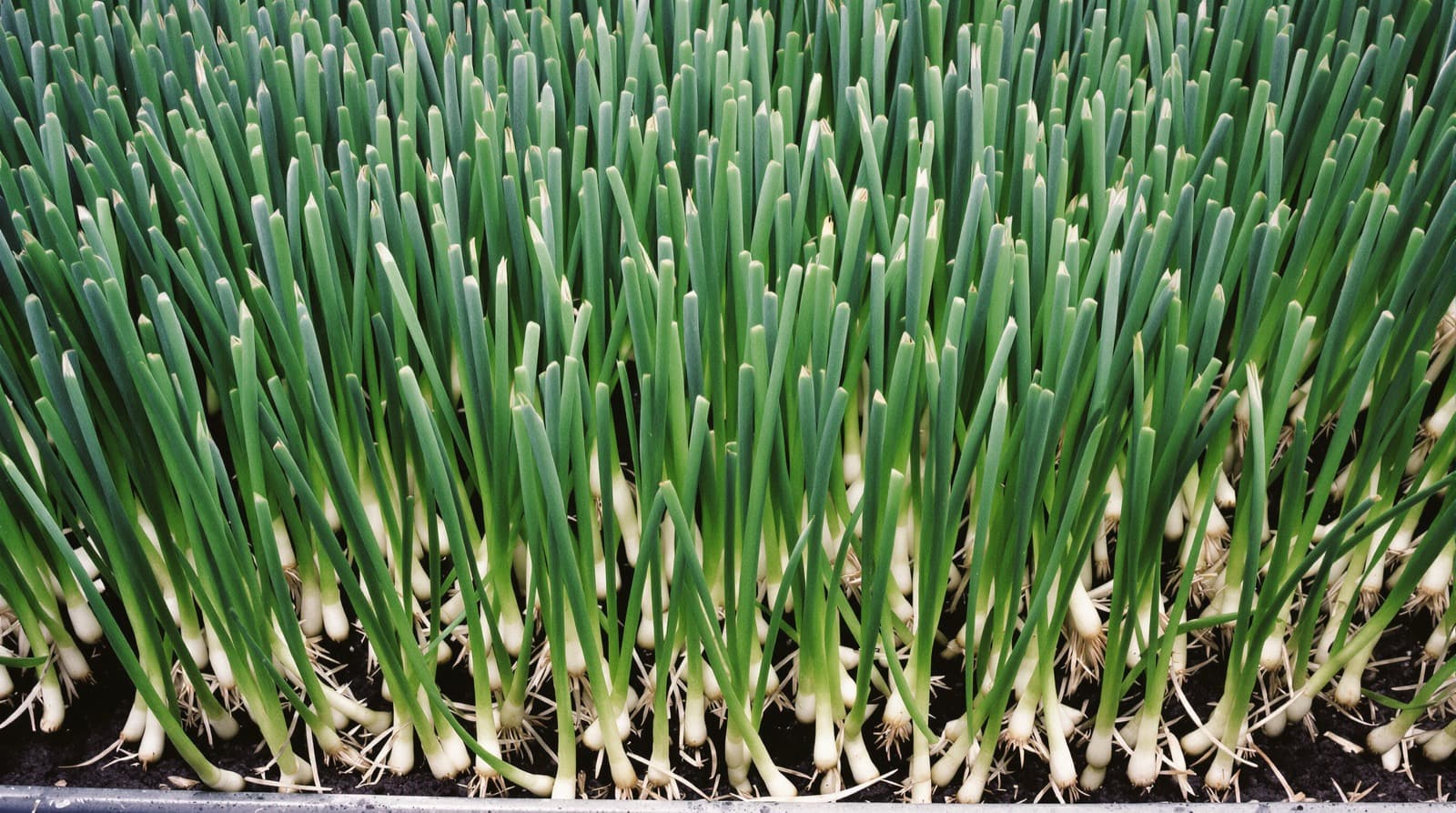
Green onions in a home garden bed.
The season, on your ground
Save this bed — freeWhen to plantCareWhen to harvestGarden pestsTomatoesPeppersBeansLettuceSquashOnionsZucchini
What the sources say — at a glance
One source per card. Facts are not averaged.
Oregon State Extension (Oregon)
Bunching onions are also called green onions, scallions and spring onions. Space at least 1 inch. Containers at least 6 inches deep with drainage.
Details and limits (5)
Names
Bunching onions are called by different names, including green onions, scallions and spring onions. Name list on their sheet — not a ranking.
Site
Plant in fertile, well-drained soil in full sun or part shade. Site note on their sheet — not a BioArva climate zone.
Spacing
Space plants at least 1 inch apart from each other. Spacing on their sheet — not a BioArva average.
Container
Bunching onions grow well in containers; choose a container at least 6 inches deep with holes near the bottom for water drainage. Container note on their sheet — not a pot ranking.
Limit
Oregon bunching-onion sheet only. Does not cover a kitchen water-glass method.
UMN Extension (Minnesota)
Scallions (Allium fistulosum), also called bunching onions and green onions, do not form bulbs. Thin to one plant every inch.
Details and limits (4)
Types
Scallions (Allium fistulosum), also called bunching onions and green onions, have green and white stalks that do not form bulbs. Type note on their sheet — not a ranking.
Spacing
Sow seeds in a two-inch wide band, one-fourth to one-half inch deep, in rows 12 to 18 inches apart; after seedlings emerge, thin to one plant every inch. Spacing on their sheet — not a BioArva average.
Depth
Their sheet lists a narrow furrow, or trench, about two inches deep for transplanting. Depth context on their sheet—not a BioArva transplant method.
Limit
Minnesota scallion sheet only.
Cornell Cooperative Extension (New York)
Green or bunching onions (sometimes called scallions) don’t form bulbs; some are Allium fistulosum. Thin to 1-inch spacings for scallions.
Details and limits (3)
Types
Green or bunching onions (sometimes called scallions) don’t form bulbs; some are a different species, Allium fistulosum. Type note — not a ranking.
Spacing
Plant seed ¼ inch deep, ½ inch apart, in rows 12 to 18 inches apart; thin to 1-inch spacings for scallions. Spacing on their sheet — not a BioArva average.
Limit
Cornell Cooperative Extension Onions.pdf only.
Maryland Extension (Maryland)
Green onions will grow with 5 hours of sun per day. Thin to 2 inches in the row if harvesting as green onions.
Details and limits (4)
Sun
Green onions will grow with 5 hours of sun per day. Light note on their sheet — not a BioArva climate zone.
Spacing
Onions should be thinned to a spacing of 2 inches apart in the row if you intend to harvest green onions. Spacing on their sheet — not a BioArva average.
Culture
Plant seeds thickly, then thin, using thinnings as green onions. Culture note on their sheet — not a yield claim.
Limit
Maryland onion sheet. Green-onion harvest spacing is not bulb-onion thinning.
UC Master Gardeners of Santa Clara County (California)
Direct seed or transplant 2 to 3 inches apart. Start small patches in succession every 3 to 4 weeks.
Details and limits (3)
Spacing
Direct seed or transplant 2 to 3 inches apart. Spacing on their page — not a BioArva average.
Succession
Their page lists starting small patches in succession every 3 to 4 weeks. Succession interval on their page — not a BioArva calendar.
Limit
Santa Clara County Master Gardener page only.
Clemson HGIC 1314 (South Carolina)
Plant 1 to 2 inches apart for green onions. Spacing on their sheet — not a BioArva average.
Details and limits (2)
Spacing
Plant 1 to 2 inches apart for green onions. Spacing on their sheet — not a BioArva average.
Limit
South Carolina HGIC 1314. Green-onion spacing is not bulb-onion thinning.
Make it yours
Save the bed in the Field Book so next season is not a guess.
Sources differ
Verified suppliers only
No supplier on this page
When a partner is listed, it will be outbound and disclosed. Nothing to buy here. Fertilizer, soils, and pesticides stay off this slot.
What to record in the Field Book
Save the bed with the crop and the date. You may add a photo and notes. Compare entries you have recorded with each other — not with a diagnosis from this page. If you want an identification, bring the record to local Extension.
Is it better to grow green onions in water or dirt?
This guide covers green onions grown in soil, from seed, or in containers. Oregon State Extension (Oregon) lists fertile, well-drained soil in full sun or part shade. It does not cover a kitchen water-glass method.
Do green onions grow back when cut?
This guide does not make a cut-and-regrow claim or provide a cutting method. It covers soil-grown green onions.
Can you grow green onions from a green onion?
This guide does not provide a grocery-onion regrow method. It covers soil-grown green onions from cited seed and container context.
How many times can you regrow green onions?
This guide does not state a regrowth count or provide a regrow method.
What is the secret to growing green onions?
There is no single trick. Oregon State Extension (Oregon): bunching onions are called by different names, including green onions, scallions and spring onions. Name list on their sheet — not a ranking.
How far apart should green onions be planted?
UMN Extension (Minnesota): sow seeds in a two-inch wide band, one-fourth to one-half inch deep, in rows 12 to 18 inches apart; after seedlings emerge, thin to one plant every inch. Spacing on their sheet — not a BioArva average.
Can you grow green onions in pots?
Oregon State Extension (Oregon): bunching onions grow well in containers; choose a container at least 6 inches deep with holes near the bottom for water drainage. Container note on their sheet — not a pot ranking.
How much sun do green onions need?
Maryland Extension (Maryland): green onions will grow with 5 hours of sun per day. Light note on their sheet — not a BioArva climate zone.
How we know — methodology. Ranges and assertions are cited per source, not blended.