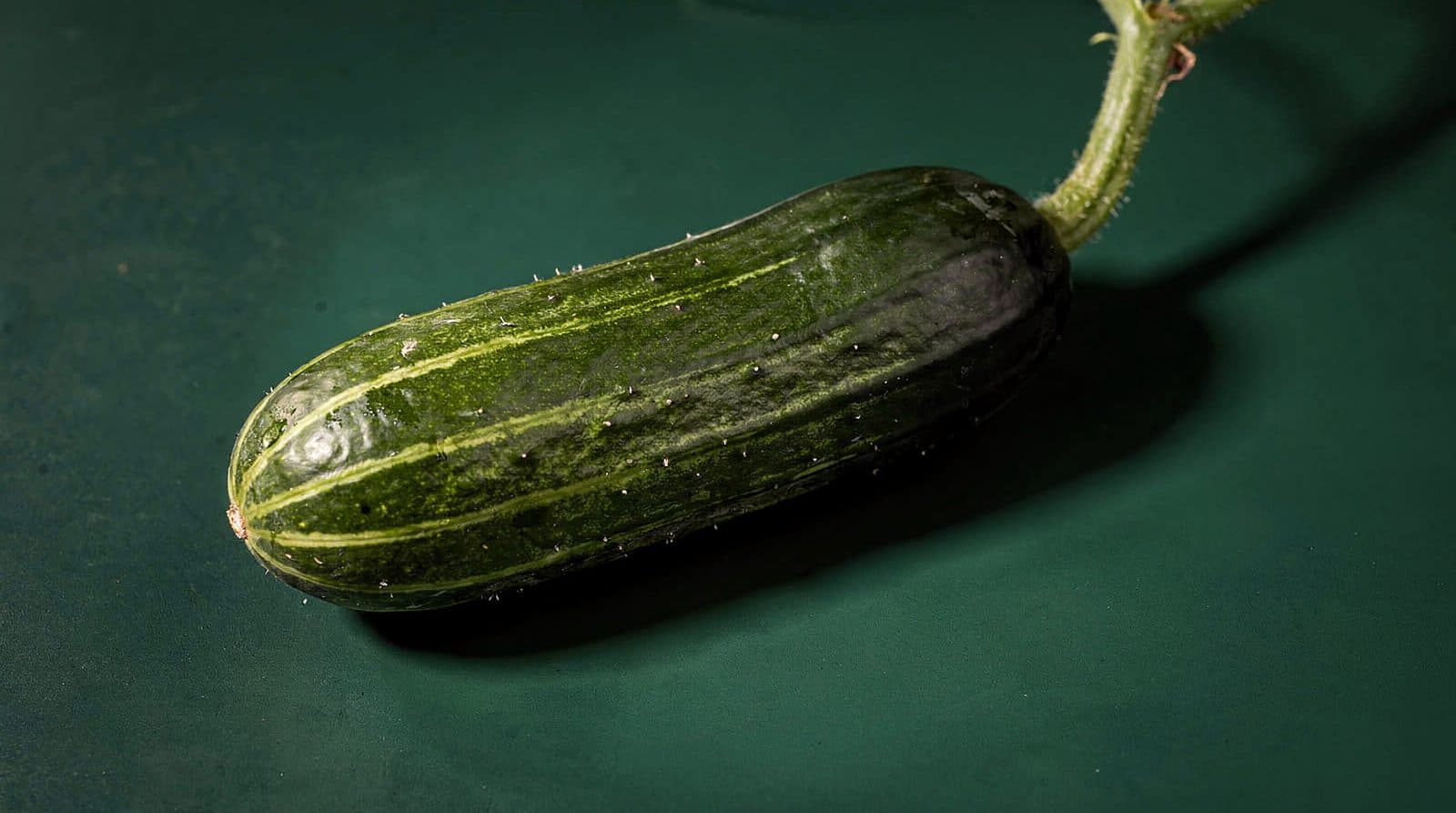
Crop guide
Growing cucumbers
Growing cucumbers means sowing a warm-season crop after frost risk has passed, matching cited spacing by source, and recording the bed. There is no single national planting date.
Growing guidance is general information. Timing, spacing, and care depend on cultivar, weather, soil, and local conditions. Check the sources and adjust the plan for your garden.
Steps (range, not a promise)
- 01Sow after frost risk has passed and the soil has warmed. Cited soil temperatures stay on their sheets.
- 02Use in-row and between-row spacing from one cited source. The sheets do not agree on one grid.
- 03Slicing, pickle, bush, Armenian, Asian, and burpless types stay type-separated on the Maryland sheet.
- 04Log the bed so next season is not a guess.
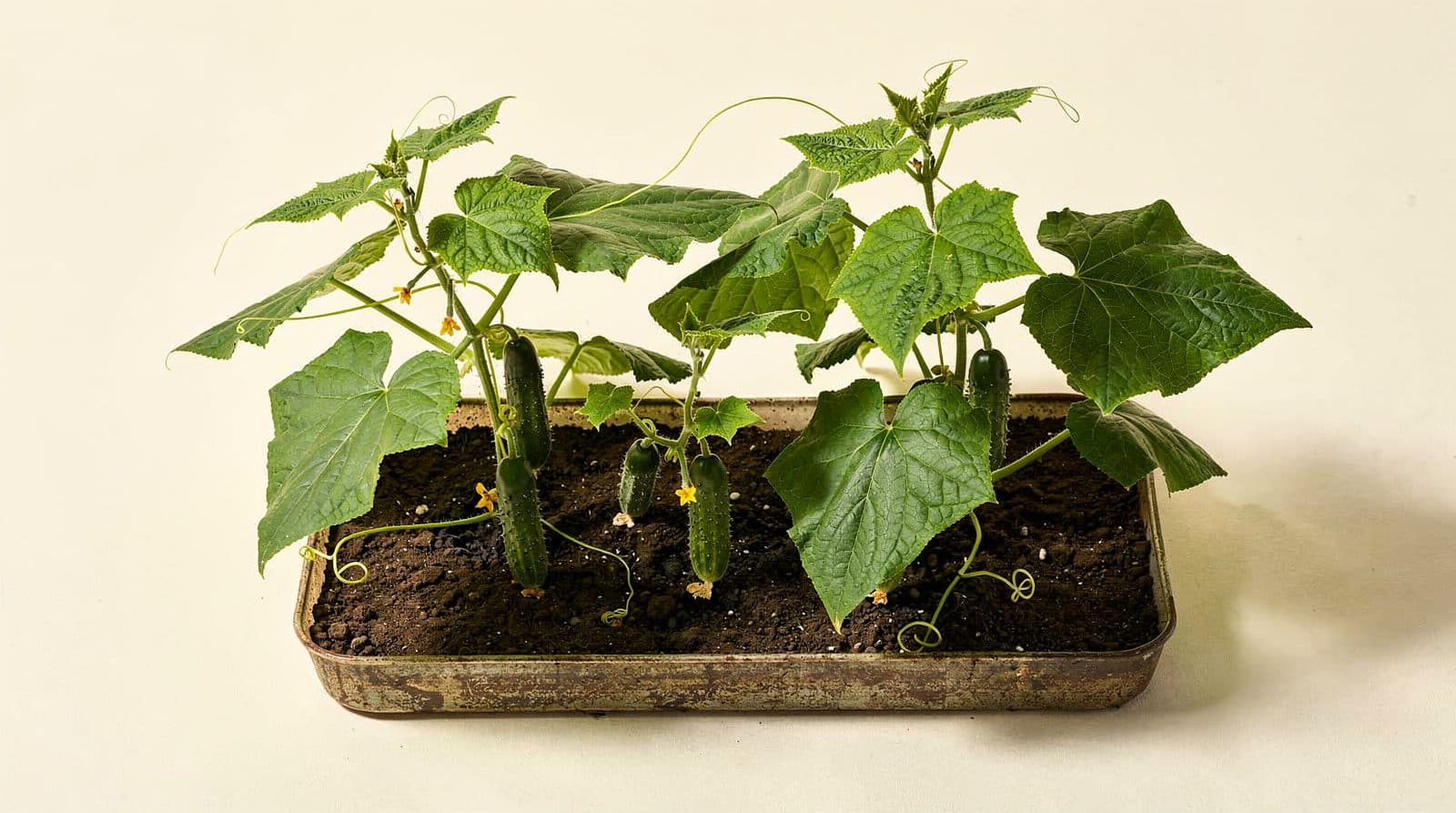
Illustrative photograph — timing and spacing stay on the cited sheets.
The season, on your ground
Save this bed — freeWhen to plantCareWhen to harvestPestsPowdery mildewDowny mildewGarden pests
What the sources say — at a glance
One source per card. Facts are not averaged.
Clemson HGIC 1309 (South Carolina)
Pickling vs slicing vs bush. Warm-season. After frost and soil 70 °F. No germ below 50 °F. Indoor 2–3 weeks. Non-trellis 8–10 in × 5 ft; trellis 4–5 seeds/ft × 3 ft, thin 9–12 in.
Details and limits (4)
Types
Clemson HGIC 1309 (South Carolina): cucumbers are typically divided into pickling and slicing. Pickling types produce shorter, blockier fruit with bumpy skin. Slicing types have softer flesh, thicker skin, and are long and slender. Bush varieties are a limited-space option when trellising is not possible. Type notes on their sheet — not a cultivar mill.
Timing
Clemson HGIC 1309 (South Carolina): cucumber is a warm-season vegetable. Plants are very tender and can be killed by light frosts. Plant seed or transplants after the fear of frost has passed and the soil temperature has reached 70 °F. Seeds will not germinate at soil temperatures below 50 °F. Seeds may be started indoors two to three weeks prior to planting outdoors. Timing on their sheet — not a national plant date.
Spacing
Clemson HGIC 1309 (South Carolina): for non-trellised cucumbers, space plants 8 to 10 inches apart in rows that are 5 feet apart. If cucumbers are trellised, plant four to five seeds per foot in rows spaced 3 feet apart. When plants are 4 to 5 inches high, thin so they are 9 to 12 inches apart. Spacing on their sheet — not a BioArva average and not a trellis SKU.
Limit
South Carolina HGIC 1309. Timing and spacing stay on this sheet. Not fertilizer and not a cultivar mill.
Maryland Extension (Maryland)
After frost, soil warmed; indoor 3 weeks; thin by cutting. Sun ≥6 h. 12 in × 48–72 in or hill 2–3 plants. Slicing, pickle, bush, Armenian, Asian, burpless.
Details and limits (4)
Timing
Maryland Extension (Maryland): seed directly after danger of frost has passed and soil has warmed, or use plants grown indoors 3 weeks prior to planting time. Handle transplants gently. If direct sowing, thin seedlings by cutting excess plants with scissors rather than by pulling. Full sun at least 6 hours/day; prefers 8–10 hours/day. Timing and light on their sheet — not a national plant date.
Spacing
Maryland Extension (Maryland): spacing 12 inches in-row by 48–72 inches between rows; or plant in a hill (two to three plants per hill). Spacing on their sheet — not a BioArva average.
Types
Maryland Extension (Maryland): cultivars are available for slicing and pickle types, dwarf-vined or bush types, Armenian, and Asian types. Burpless cucumbers are long and slender with tender skin. Type notes on their sheet — not a cultivar mill.
Limit
Maryland cucumber garden page. Timing, spacing, and types stay on this sheet. Not fertilizer.
UMN Extension (Minnesota)
Direct seed. Soil ≥70 °F at 1 in. Minnesota late May. ½ in. Vine 2 in seed, 2–3 ft sides; hill 3–4 seeds, 5–6 ft; bush 2–3 ft; thin 8–12 in; trellis 3–4 ft.
Details and limits (3)
Timing
UMN Extension (Minnesota): start cucumbers by direct seeding. Sow after the last frost date, once the soil is at least 70 °F at the one-inch depth. In most of Minnesota, this will be sometime in late May. Sow seeds about one-half inch deep. Timing on their sheet — not a national plant date.
Spacing
UMN Extension (Minnesota): for vining types that will spread, sow seeds two inches apart; allow about two or three feet on either side of the row. A hill of three or four seeds sown close together, five to six feet between hills. Bush types with very short vines: two to three feet between rows or hills. After emergence, thin seedlings to stand 8 to 12 inches apart. You may train vines on a three- to four-foot trellis. Spacing on their sheet — not a BioArva average and not a trellis SKU.
Limit
Minnesota cucumber sheet. Spacing as cited. Not fertilizer and not a cultivar mill.
Illinois Extension (Illinois)
After frost, soil warmed. Second planting mid–late summer. Indoor 3–4 weeks; transplants 1–2 ft × 5–6 ft. No bare-root. Seed ½–1 in. Thin 12 in or 3 plants / 36 in hill.
Details and limits (3)
Timing
Illinois Extension (Illinois): plant after the danger of frost has passed, and the soil has warmed in the spring. Warm soil is necessary for germination. A second planting for fall harvest may be made in mid- to late summer. Transplants: sow two or three seeds in containers 3 to 4 weeks before the frost-free date; thin to one plant; set when they have two to four true leaves, 1 to 2 feet apart in rows 5 to 6 feet apart. Like other vine crops, cucumbers do not transplant successfully as bare-root plants. Timing on their sheet — not a national plant date.
Spacing
Illinois Extension (Illinois): plant seeds 1/2 to 1 inch deep. Thin the seedlings to one plant every 12 inches in the row or to three plants every 36 inches in the hill system. If you use transplants, plant them carefully in warm soil 12 inches apart in the row. Spacing on their sheet — not a BioArva average.
Limit
Illinois cucumber page. Timing and spacing stay on this sheet. Not fertilizer.
Make it yours
Save the bed in the Field Book so next season is not a guess.
Sources differ
When do you plant cucumbers?
Compare timing on the cited sheets. Clemson HGIC 1309 (South Carolina): after frost and soil 70 °F; seeds will not germinate below 50 °F. Maryland: after frost and soil warmed. Illinois: after frost and soil warmed, with a second planting mid- to late summer. Not a national plant date.
How far apart do you plant cucumbers?
The sheets do not agree on one grid. Clemson: 8 to 10 inches in 5-foot rows if not trellised. Maryland: 12 inches by 48–72 inches, or a hill of two to three plants. Illinois: thin to 12 inches, or three plants every 36 inches in a hill.
What to record in the Field Book
Save the bed with the crop and the date. You may add a photo and notes. Compare entries you have recorded with each other — not with a diagnosis from this page. If you want an identification, bring the record to local Extension.
Verified suppliers only
No supplier on this page
When a partner is listed, it will be outbound and disclosed. Nothing to buy here. Fertilizer, soils, and pesticides stay off this slot.
How we know — methodology. Ranges and assertions are cited per source, not blended.