Squash · Symptom guide
Squash bugs
Squash bugs in a garden bed are a look-and-compare job. This page covers squash, zucchini, and winter squash as cucurbits named on the cited sheets. Pumpkin is named where the sheets name it — it is not a claimed pumpkin-pest page. Cited notes are observations, not a ranked or confirmed cause. This page does not diagnose, name a spray, or sell a treatment.
Cited observations are comparisons—not a confirmed diagnosis. Check the cited sources and local requirements before taking action.
Save this bed. See it coming next year.
Your checks stay in the Field Book so next season is not a guess.
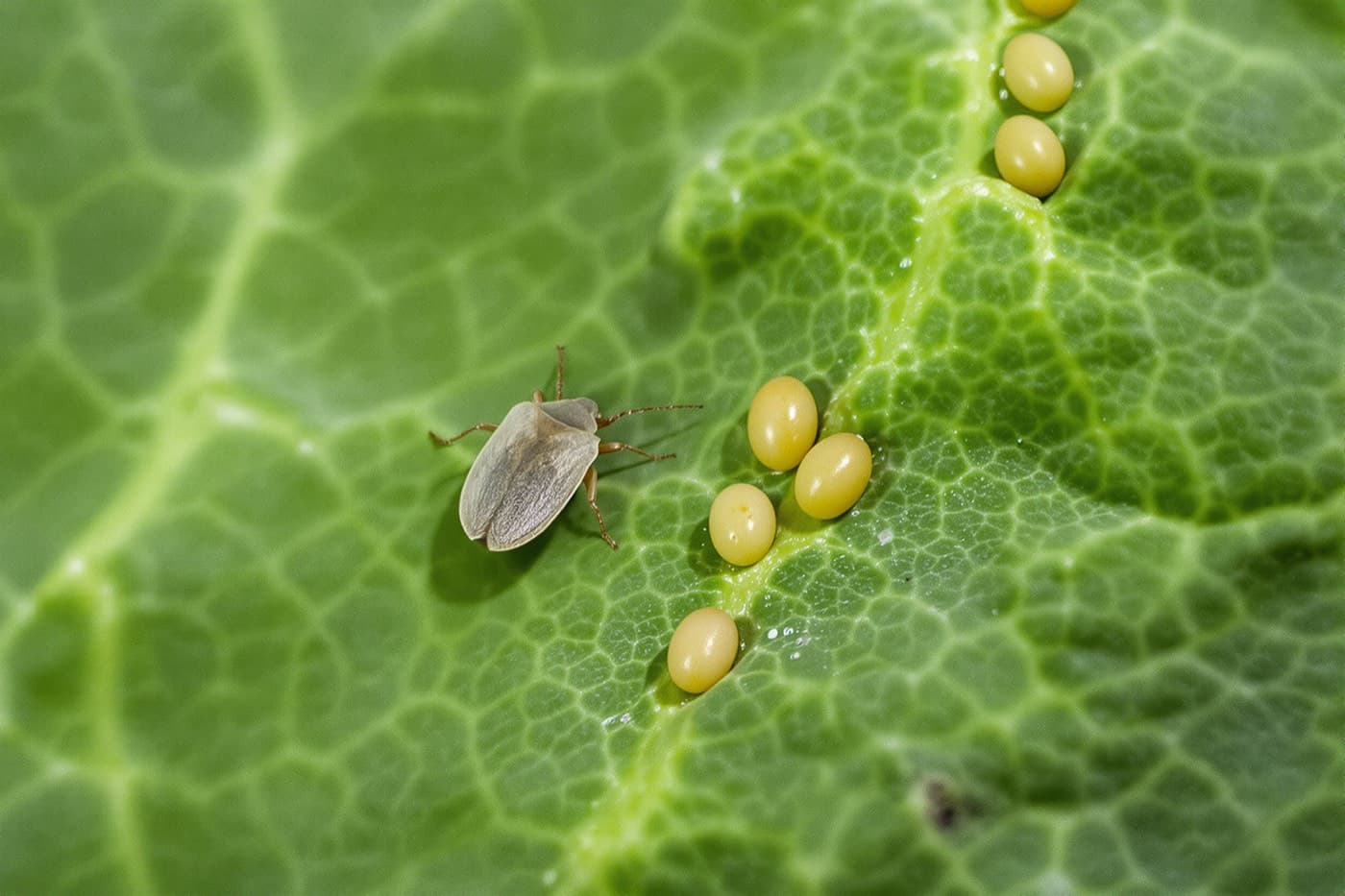
Illustrative photograph — not identification proof.
Look
Compare the insect and egg masses in front of you with the cited notes. Damage or wilt alone does not name a squash bug. Squash vine borer is a different insect; species notes live on squash vine borer.
Other causes
Growing notes live on how to grow squash. Zucchini notes live on zucchini. Winter types live on winter squash varieties. Garden-wide looks live on garden pests.
What the sources say — at a glance
One source per card. Facts are not averaged.
UMN Extension (Minnesota)
Adult squash bug 5/8 inch, dark gray to dark brown, orange and brown abdomen stripes. Eggs 1/16 inch, yellowish to bronze. Hand-crush eggs; remove debris.
Details and limits (7)
Adult
UMN Extension (Minnesota): adult squash bugs (Anasa tristis) are flattened, large insects. They measure 5/8 inch long. They are usually dark gray to dark brown. Their abdomens have alternating orange and brown stripes. Identification on their squash-bug sheet — not a diagnosis.
Eggs
UMN Extension (Minnesota): eggs are oval-shaped, 1/16 inch long, and yellowish to bronze. Female squash bugs lay small clusters of eggs (about 20) on the undersides of the leaves, especially between the veins where they form a V. Eggs may also be seen on stems. Look and sit — not a removal method.
Nymphs
UMN Extension (Minnesota): nymphs range from 1/10 to 1/2 inch long through five instars. At first, young nymphs have a light green abdomen and black heads and legs. As they grow they first turn light gray and then brownish-gray, with black legs and antennae. Adults and nymphs hide under leaves when disturbed. Minnesota color notes — not blended with Wisconsin.
When
UMN Extension (Minnesota): squash bugs can live through the winter as adults in sheltered places, such as under plant debris, around buildings, or under rocks. When adults come out in the spring, they fly to growing cucurbit plants. Females usually start appearing in gardens in early June and continue to lay eggs through mid-summer. Eggs hatch in about 10 days, and nymphs mature in about four to six weeks. One generation develops each year, although in some summers there may be a partial second generation. Minnesota geography — not a national calendar.
Feeding
UMN Extension (Minnesota): nymphs and adults suck sap from leaves, which causes wilting and yellowish-brown spots. Feeding can cause yellowing and wilting. Young plants are more susceptible to injury than older plants. Hosts include squash, pumpkins, and other cucurbits, like cucumbers and melons. Observation — wilt alone is not a diagnosis. Pumpkin is named, not claimed.
Containment
UMN Extension (Minnesota): start scouting for egg clusters in early summer and crush them. Squash bugs overwinter in debris from pumpkins and squash; clean and remove cucurbit debris so adults have fewer overwinter sites. Hand and sanitation only. Soapy water and pesticides on that sheet are not collected.
Limit
Minnesota squash-bug sheet. Observation, identification, and non-product containment only. Not a spray, rate, or efficacy claim.
Wisconsin Horticulture (Wisconsin)
Adults 1/2–3/4 inch, mottled brownish-black, flattened. Eggs 1/16 inch, reddish-orange to brown. Scout undersides. Board or shingle at night; crush eggs. Fall debris.
Details and limits (7)
Adult
Wisconsin Horticulture (Wisconsin): adult squash bugs, which often congregate in large numbers, are 1/2 to 3/4 inch long, mottled brownish-black and somewhat flattened. They give off a strong odor when crushed. Identification on XHT1135 — not a treatment.
Nymphs
Wisconsin Horticulture (Wisconsin): immature squash bugs initially have dark heads and legs with pale green bodies. Older nymphs have grayish bodies. Wisconsin XHT1135 color notes — not blended with the Anasa article or Minnesota.
Eggs
Wisconsin Horticulture (Wisconsin): squash bug eggs are 1/16 inch in diameter and reddish-orange to brown in color. They are often laid in clusters on the undersides of leaves along the center vein. Egg color vs Minnesota yellowish-to-bronze stays in Sources differ.
When
Wisconsin Horticulture (Wisconsin): adults overwinter in protected areas (plant debris, firewood piles, wooded areas, fence rows). Females lay eggs in late June and early July when vine crops begin to develop. Eggs hatch after about 10 days. Nymphs undergo five molts over four to six weeks. New adults appear in late July and early August. One generation per year in Wisconsin. Geography-specific — not a national calendar. Degree-day numbers on that sheet are not collected.
Scout
Wisconsin Horticulture (Wisconsin): check transplants and new seedlings for adults. Squash bugs tend to hide on the undersides of leaves. Inspect undersides of leaves for eggs beginning in early July and continue into September. Scouting — not a pesticide threshold.
Containment
Wisconsin Horticulture (Wisconsin): remove/destroy plant debris in the fall. In small-scale plantings, place a board, old shingle, or similar item on the ground; squash bugs congregate at night under the boards and can then be collected each morning. While inspecting plants, crush clusters of the reddish-orange eggs. Sanitation and hand collection. Soapy-water bucket and all chemical options on that sheet are not collected.
Limit
Wisconsin XHT1135. Observation and non-product containment only. No efficacy claim.
Wisconsin Horticulture (Wisconsin)
Adults about 5/8 inch, gray to black, orange and brown abdomen stripes. Young nymphs: red heads and legs. Handpick; boards; row cover on seedlings. Tachinid white eggs.
Details and limits (6)
Adult
Wisconsin Horticulture (Wisconsin): adult squash bugs are about 5/8 inch long. They are gray to black with orange and brown stripes along the edges of the abdomen. This shield-shaped insect sort of resembles a stink bug, but is a bit larger, more elongated and gray instead of green. Comparison — not a treatment.
Eggs
Wisconsin Horticulture (Wisconsin): elliptical eggs vary in color from tan to orange to brick red. They are laid in small clusters of a dozen or more, often in characteristic triangular or V shapes in the angles formed by leaf veins. The eggs get darker in color just before hatching in a week to 10 days. Separate URL from XHT1135.
Nymphs
Wisconsin Horticulture (Wisconsin): small nymphs have red heads and legs, and greenish bodies. As the nymphs age the red color turns to black and the older ones look like they are covered with a grainy gray powder. Five instars for up to 6 weeks. They commonly form groups at the base of the plant or under the leaves but disperse quickly when disturbed. One generation per year in Wisconsin. Young nymph head color vs Minnesota black-from-the-start stays in Sources differ. “Toxic substance / vines black” is not collected as a diagnosis.
Containment
Wisconsin Horticulture (Wisconsin): look on the underside of leaves for egg masses; destroying these and handpicking any adult bugs. Placing boards on the ground near the plants; at night the squash bugs will aggregate under the boards. Remove the foliage after harvest. Protect young seedlings with row covers. Resistant-variety ranking and sprays on that sheet are not collected.
Beneficial
Wisconsin Horticulture (Wisconsin): the tachinid fly Trichopoda pennipes lays its eggs externally on squash bug adults. Observation: do not kill any squash bugs that you notice carrying little white eggs. Beneficial ID — not an efficacy claim.
Limit
Wisconsin Anasa tristis article — a second URL, own card. Observation and non-product containment only.
Wisconsin Horticulture (Wisconsin)
Squash bugs and leaf-footed bugs can resemble brown marmorated stink bug in color but tend to be more slender. BMSB is shield-shaped, 1/2–5/8 inch.
Details and limits (2)
Compare
Wisconsin Horticulture (Wisconsin): other insects (e.g., squash bugs and leaf-footed bugs) can be somewhat similar in color to brown marmorated stink bug, but tend to be more slender. BMSB adults are approximately 1/2 to 5/8 inch long, have typical shield-shaped bodies, and are mottled brown to gray. Antennae are brownish with two pale bands towards the tips. Comparison only — not a squash-bug treatment.
Limit
Wisconsin BMSB article. Identification comparison only.
UMN Extension (Minnesota)
Squash vine borer is listed with squash bug and striped cucumber beetle as a separate insect to anticipate on squash and pumpkins.
Details and limits (2)
Separate insect
UMN Extension (Minnesota): striped cucumber beetle, squash bug and squash vine borer are three insects that farmers and gardeners should anticipate in their squash and pumpkins every year. Name-and-separate only. Squash vine borer is not a keyword target on this page. Species notes live on /pests/squash-vine-borer.
Limit
UMN common-insects sheet. Identification of a different insect — not claimed as a keyword here. Species notes live on /pests/squash-vine-borer.
Sources differ
Make it yours
Save the bed in the Field Book so next season is not a guess.
How do you tell if you have squash bugs?
Compare the cited looks. UMN Extension (Minnesota): adults 5/8 inch, dark gray to dark brown, orange and brown abdomen stripes; eggs oval, 1/16 inch, yellowish to bronze, about 20 in a V of veins. Wisconsin Horticulture (Wisconsin) lists mottled brownish-black adults and reddish-orange to brown eggs. Identification only — not a confirmed cause for a given planting. Contact local Extension if you want an identification.
How do you tell the difference between a squash bug and a stink bug?
Wisconsin Horticulture (Wisconsin): squash bugs and leaf-footed bugs can resemble brown marmorated stink bug in color but tend to be more slender. BMSB is shield-shaped, 1/2–5/8 inch, mottled brown to gray, with pale bands on the antennae. Comparison only — not a treatment.
Why do I keep getting squash bugs?
Cited overwintering and debris notes are geography-specific. UMN Extension (Minnesota): adults overwinter under plant debris, around buildings, or under rocks. Wisconsin Horticulture (Wisconsin): remove plant debris in the fall; boards or shingles are night hiding spots for hand collection. Those notes are not a product and not a promise that bugs stop returning.
Do squash bugs ever go away?
Cited life-cycle notes, not an eradication promise. UMN Extension (Minnesota): one generation each year; some summers a partial second. Wisconsin Horticulture (Wisconsin): one generation per year; because egg-laying is extended, adults and nymphs may be present through the summer.
What does the cited source describe squash bugs doing to plants?
UMN Extension (Minnesota): nymphs and adults suck sap from leaves, which causes wilting and yellowish-brown spots. That is the sap-feeding observation on their sheet — not a severity ranking and not a human-health verdict.
How do I keep bugs from eating my zucchini plants?
Cited containment is source-bound: crush egg clusters by hand, collect bugs from boards or shingles in the morning, remove debris, and use row cover on young seedlings. Those notes are not a prevention or control promise, not soap, and not a spray.
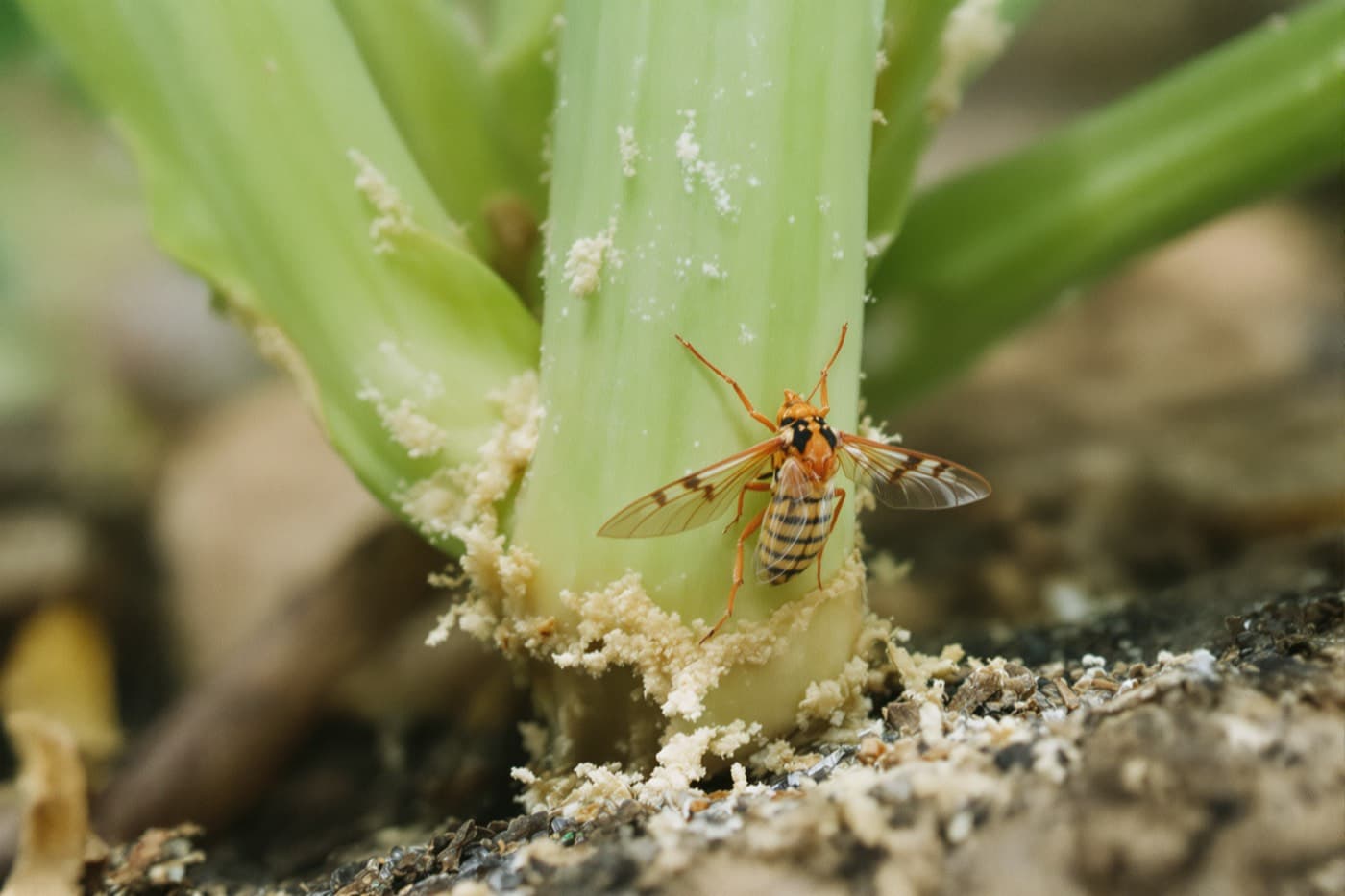
Illustrative photograph — not identification proof. Squash vine borer is named as a different insect, not claimed on this page.
How we know — methodology. Ranges and assertions are cited per source, not blended.