Crop guide
Growing potatoes
Growing potatoes means planting seed pieces after soil has warmed on the cited sheets, matching spacing by source, and recording the bed. There is no single national planting date.
Growing guidance is general information. Timing, spacing, and care depend on cultivar, weather, soil, and local conditions. Check the sources and adjust the plan for your garden.
Steps (range, not a promise)
- 01Use seed pieces, not true seed. Piece size and eyes stay on their sheets.
- 02Plant when soil has warmed on the cited sheet. Regional dates stay geography-bound.
- 03Use in-row and depth spacing from one cited source. The sheets do not agree on one grid.
- 04Log the bed so next season is not a guess.

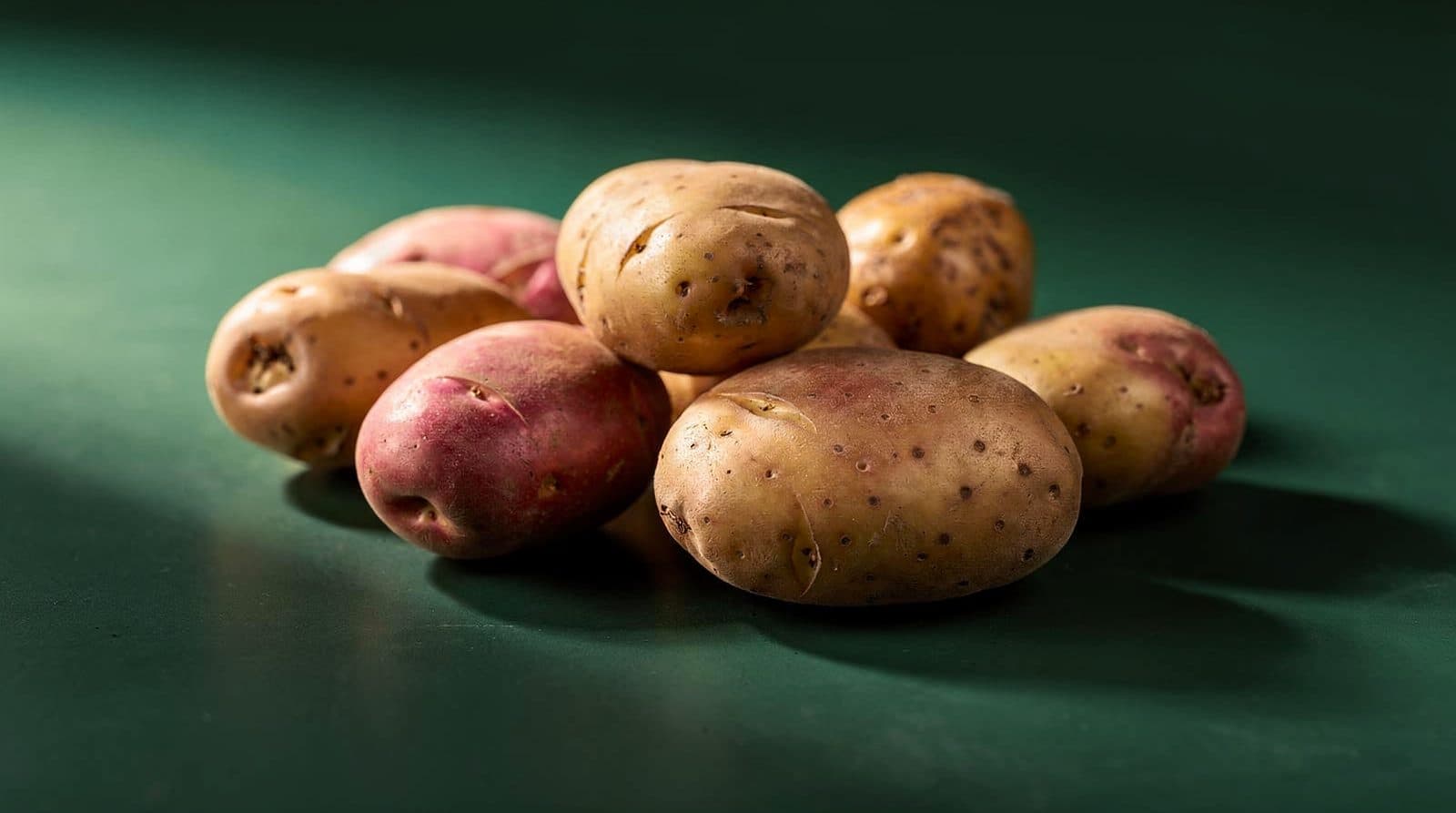
Illustrative photograph — timing and spacing stay on the cited sheets.
The season, on your ground
Save this bed — freeWhen to plantCareWhen to harvestPestsGarden pests
What the sources say — at a glance
One source per card. Facts are not averaged.
Clemson HGIC 1317 (South Carolina)
White/red. Early- and medium- to late-maturing types. Cut side down 3–5 in (later 5–6). Seed pieces 8–10 in. Ridge the row.
Details and limits (3)
Types
Clemson HGIC 1317 (South Carolina): white-skinned and red-skinned potatoes. Early-maturing and medium- to late-maturing types. Type notes on their sheet — not a cultivar mill.
Spacing
Clemson HGIC 1317 (South Carolina): plant potatoes in furrows with the cut side down 3 to 5 inches deep. Later crops should be planted 5 to 6 inches deep. Space the seed pieces 8 to 10 inches apart. Pull a ridge of soil over each row when planting. Spacing on their sheet — not a BioArva average.
Limit
South Carolina HGIC 1317. Types and spacing stay on this sheet. Not fertilizer and not a purchase surface.
Maryland Extension (Maryland)
Half-hardy. Mar 15–May 1. Soil ≥45 °F. Early types through June 1. 1½–2 oz pieces, 1–3 eyes. Dry a few days. 8–12 × 24–36 in. Furrow 3–5 in (later 5–6).
Details and limits (4)
Timing
Maryland Extension (Maryland): half-hardy annual. They can withstand light frosts, but not heavy frosts or freezing. Plant from March 15 to May 1 depending on your location. The soil temperature should be at least 45 °F. Seed potatoes of early-maturing varieties can also be planted through June 1. Maryland’s attributed hardiness wording — not a planting-safety promise. Timing on their sheet — not a national plant date.
Pieces
Maryland Extension (Maryland): plant 1½ to 2 oz. seed pieces (1½-inch cubes) with 1 to 3 buds (eyes) or small, whole seed potatoes. A 6-ounce potato can be cut into four seed pieces, each with at least one good bud or eye. Let pieces dry for a few days before planting. Certified disease-free seed potatoes is Maryland’s cultural note only. Seed-piece notes on their sheet — not a purchase surface.
Spacing
Maryland Extension (Maryland): spacing 8 to 12 inches in-row by 24 to 36 inches between rows. Plant in furrows cut side down, 3 to 5 inches deep. Later crops 5 to 6 inches deep. Spacing on their sheet — not a BioArva average.
Limit
Maryland potato garden page. Timing, pieces, and spacing stay on this sheet. Not a purchase surface.
UMN Extension (Minnesota)
Seed tubers, not true seed. Russet, red, white, purple, fingerling. Soil warms: Twin Cities early April. Chunks 1¼ in, ≥1 eye. 10–12 in × 30–36. 3–5 in deep.
Details and limits (4)
Types
UMN Extension (Minnesota): potatoes grow from seed tubers, not true seed. Types include russet, red, white, purple, and fingerling. Type notes on their sheet — not a cultivar mill.
Timing
UMN Extension (Minnesota): plant seed pieces as soon as the soil warms. This period is early April in the Twin Cities area of Minnesota. Gardeners in southern Minnesota may plant earlier, while locations further north may not have warmer soil until May. Minnesota timing — not a national plant date.
Spacing
UMN Extension (Minnesota): small whole seed tubers one to 1¼ inches need not be divided. Cut larger tubers into 1¼-inch chunks with at least one eye. Dry cut surfaces at 60–70 °F for a few days. Plant cut side down, 10 to 12 inches apart and about 3 to 5 inches deep, in rows 30 to 36 inches apart. Spacing on their sheet — not a BioArva average.
Limit
Minnesota potato sheet. Types, timing, and spacing stay on this sheet. Not a purchase surface.
Illinois Extension (Illinois)
Cool-season. No tuber set at 80 °F soil. Mar–early Apr; mid/late to July 1. 1½–2 oz pieces. 10–12 in; furrow 1–3 in; rows 24–36.
Details and limits (3)
Timing
Illinois Extension (Illinois): potatoes are a cool-season vegetable. Tubers fail to form when the soil temperature reaches 80 °F. Early, midseason, and late varieties all may be planted in March or early April. Midseason and late varieties may be planted as late as the first of July. Illinois timing — not a national plant date.
Spacing
Illinois Extension (Illinois): potatoes are started from seed pieces rather than true seed — small whole potatoes or 1½ to 2-ounce pieces with at least one good eye. Certified disease-free seed potatoes is Illinois’s cultural note only. Plant seed pieces 10 to 12 inches apart and cover in a furrow between 1 and 3 inches deep. Space rows 24 to 36 inches apart. Spacing on their sheet — not a BioArva average and not a purchase surface.
Limit
Illinois potato page. Timing and spacing stay on this sheet. Not fertilizer and not a purchase surface.
Make it yours
Save the bed in the Field Book so next season is not a guess.
Sources differ
When do you plant potatoes?
Compare timing on the cited sheets. Maryland: March 15 to May 1 depending on location; soil at least 45 °F. Minnesota: as soon as the soil warms — early April in the Twin Cities. Illinois: March or early April; midseason and late varieties as late as July 1.
How far apart do you plant potatoes?
The sheets do not agree on one grid. Clemson: 8 to 10 inches. Maryland: 8 to 12 inches in-row by 24 to 36 between rows. Minnesota and Illinois: 10 to 12 inches in-row.
What to record in the Field Book
Save the bed with the crop and the date. You may add a photo and notes. Compare entries you have recorded with each other — not with a diagnosis from this page. If you want an identification, bring the record to local Extension.
Verified suppliers only
No supplier on this page
When a partner is listed, it will be outbound and disclosed. Nothing to buy here. Fertilizer, soils, and pesticides stay off this slot.
How we know — methodology. Ranges and assertions are cited per source, not blended.