Sweet corn · Symptom guide
Bugs on sweet corn plants
Bugs on sweet corn plants in a garden bed are a look-and-compare job. Cited sheets list corn earworm as observations, not a ranked or confirmed cause. This page does not diagnose, name a spray, or sell a treatment.
Cited observations are comparisons—not a confirmed diagnosis. Check the cited sources and local requirements before taking action.
Save this bed. See it coming next year.
Your checks stay in the Field Book so next season is not a guess.
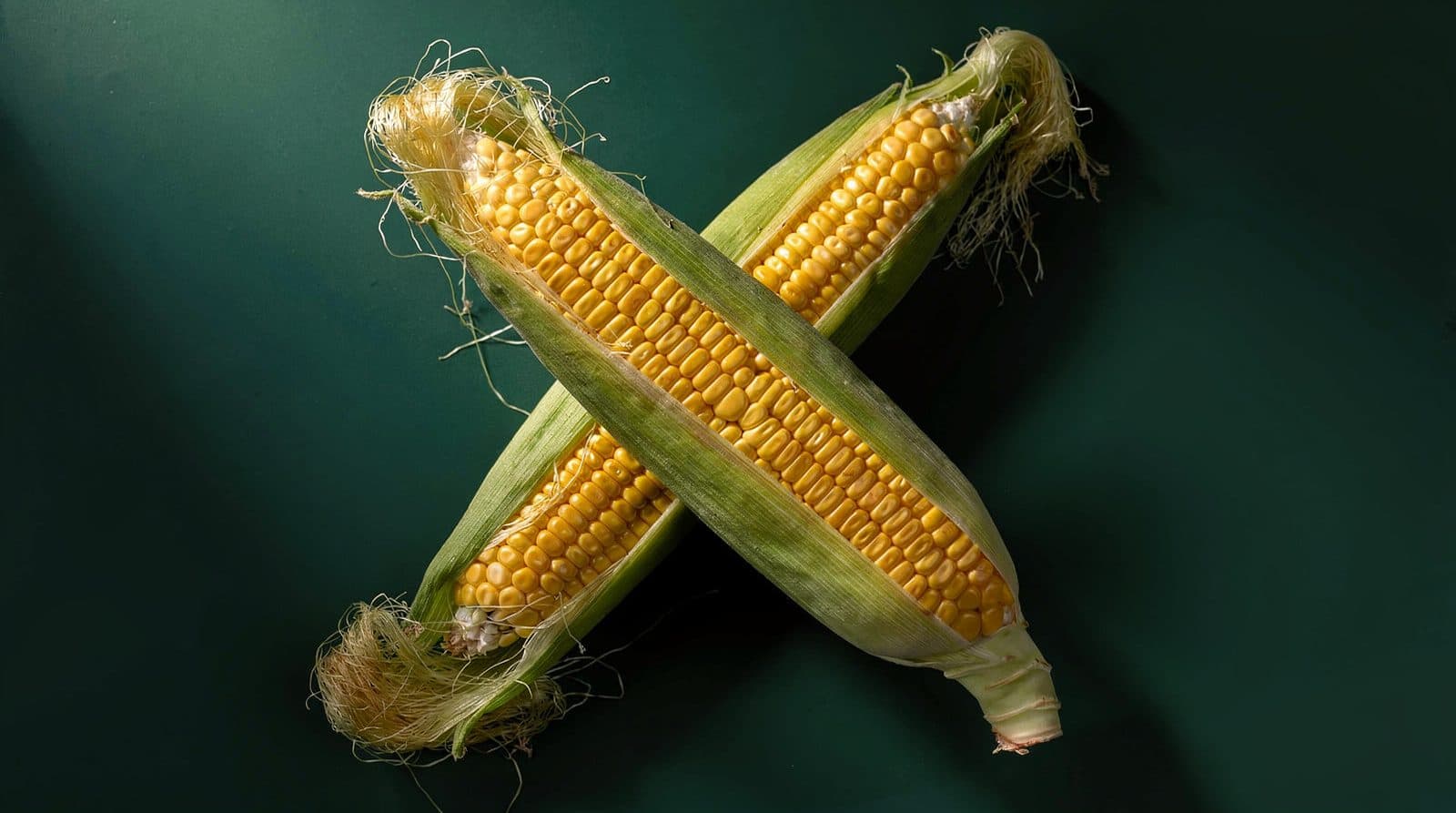
Illustrative photograph — not identification proof.
Look
Compare the plant in front of you with the cited notes after Other causes. Chewed ear tips alone do not name a cause on this page.
Other causes
Growing notes live on how to grow sweet corn. Garden-wide looks live on garden pests. Tomato hornworm is a separate species page — not this crop-pest list.
What the sources say — at a glance
One source per card. Facts are not averaged.
Clemson HGIC (South Carolina)
Corn earworm named on sweet corn.
Details and limits (2)
Look
Clemson HGIC (South Carolina) names corn earworm on sweet corn. Naming on that sheet — not a ranking and not a diagnosis.
Limit
South Carolina sweet-corn sheet. Naming-on-sheet only.
Maryland Extension (Maryland)
Larvae to 1 3/4 in. Moths 1 1/4 to 1 3/4 in. Host corn. Rubber band.
Details and limits (6)
Look
Maryland Extension (Maryland): larvae are caterpillars up to 1 3/4 inches, variable colors, with dark lengthwise stripes. Observation — not a diagnosis.
Look
Maryland Extension (Maryland): adults are moths with wingspans of 1 1/4 to 1 3/4 inches; buff-colored forewings with a dark spot in the center. Observation — not a diagnosis.
Host
Maryland Extension (Maryland): host plants include corn. Host as named — not a ranking.
Look
Maryland Extension (Maryland): eggs laid singly on leaf hairs or corn silk. Observation — not a diagnosis.
Method
Maryland Extension (Maryland): after silk browns, rubber band ear tips. Method — not a prevention promise.
Limit
Maryland corn-earworm sheet. Observation, host, and method as named.
Illinois Extension (Illinois)
Eggs on silks. Feed on the tip. Rubber band or clothespin.
Details and limits (3)
Look
Illinois Extension (Illinois): corn earworms deposit eggs on the developing silks or on the leaves near the ear. Tiny caterpillars follow the silks down into the ear, where they feed on the tip. Observation — not a diagnosis.
Method
Illinois Extension (Illinois): tightening the tip of the husk with a rubber band or clothespin after the silk appears. Method — not a prevention promise.
Limit
Illinois corn page. Observation and method only.
UMN Extension (Minnesota)
Caterpillar near the tip. Chewed kernels.
Details and limits (2)
Look
UMN Extension (Minnesota): a caterpillar near the tip of the ear, and a chewed-up area of kernels. Observation — not a diagnosis.
Limit
Minnesota sweet-corn sheet. Observation only.
Sources differ
Make it yours
Save the bed in the Field Book so next season is not a guess.
How we know — methodology. Ranges and assertions are cited per source, not blended.