Tomato · Symptom guide
Bugs on tomato plants
Bugs on tomato plants in a garden bed are a look-and-compare job. This is a crop-pest router, not a single-species page. Hornworm identification belongs on tomato hornworm; it is not claimed here. Cited notes are observations, not a ranked or confirmed cause. This page does not diagnose, name a spray, or sell a treatment.
Cited observations are comparisons—not a confirmed diagnosis. Check the cited sources and local requirements before taking action.
Save this bed. See it coming next year.
Your checks stay in the Field Book so next season is not a guess.
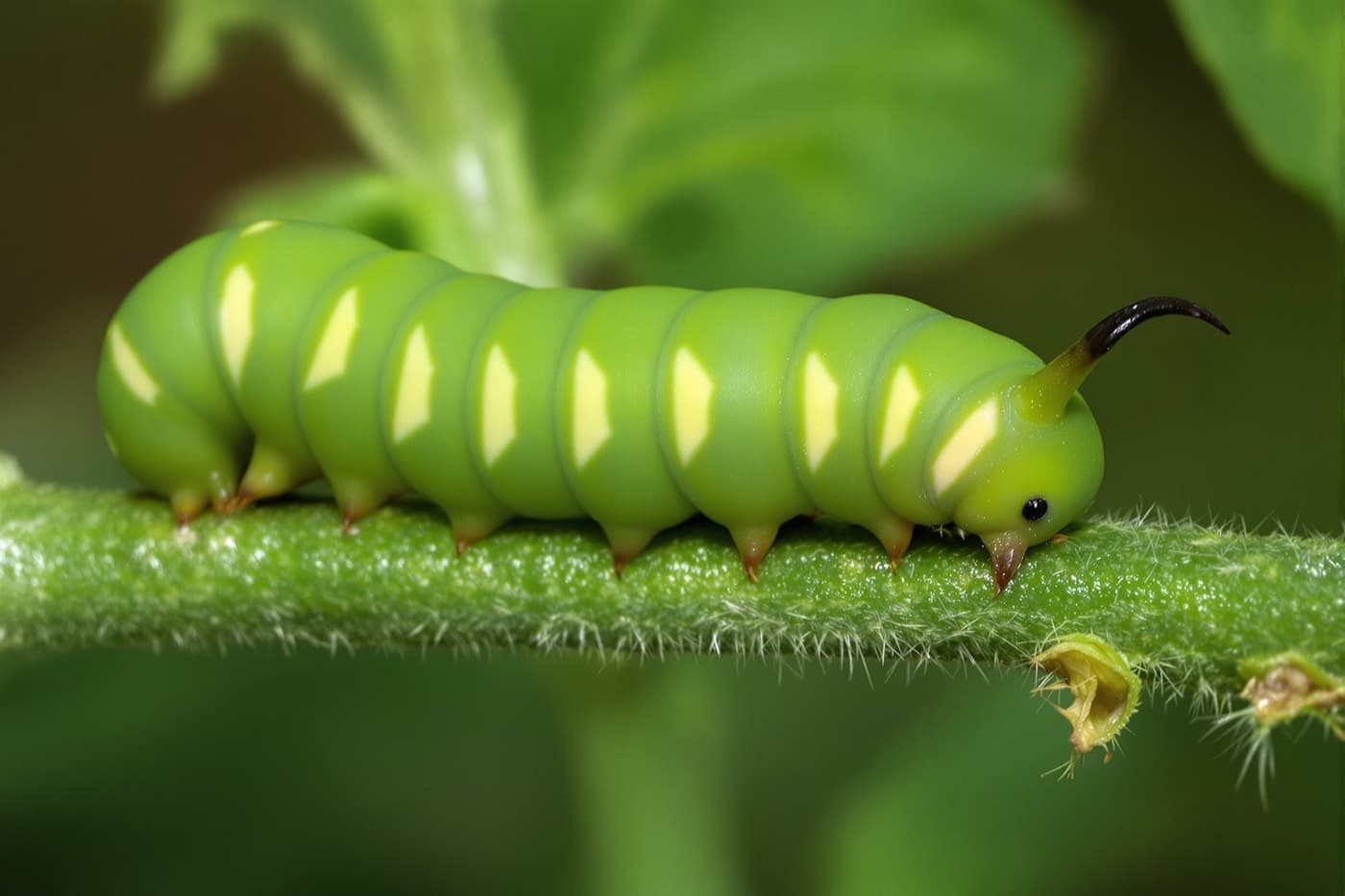
Illustrative photograph — not identification proof.
Look
Compare color, size, and where the insect sits with the cited notes. Holes, curl, or color alone do not name a pest on this page. Tomato hornworm as a species lives on tomato hornworm.
Other causes
Growing notes live on how to grow tomatoes. Leaf-color notes live on tomato leaves turning yellow. Garden-wide looks live on garden pests.
What the sources say — at a glance
One source per card. Facts are not averaged.
Clemson HGIC (South Carolina)
Aphids pear-shaped, about 1/8 inch, two cornicles. Stink bugs shield-shaped. Leaf-footed ~13/16 inch. Fruitworm about 1½ inches. Whitefly named on-sheet.
Details and limits (6)
Aphids
Clemson HGIC (South Carolina): this soft-bodied, pear-shaped insect may be solid pink, green and pink mottled, or light green with a dark stripe. Usually wingless, about 1/8-inch long, with two cornicles. Weeds named as other food plants: ragweed, lambsquarters, jimsonweed, pigweed, shepherd’s purse, and wild lettuce. Observation — not a spray.
Stink bugs
Clemson HGIC (South Carolina): all adult stink bugs are shield-shaped. Green stink bugs about 9/16 to 3/4 inch, bright green with a narrow orange-yellow border. Brown stink bugs dull grayish-yellow, 1/2- to 5/8-inch. Green stink bug eggs barrel-shaped, yellow to green when first laid, later pink to gray. Identification only. No food-safety judgment.
Leaf-footed bugs
Clemson HGIC (South Carolina): leaf-footed bugs about 13/16-inch long; dark brown; narrow cream-colored stripe across the back; flattened leaf-like hind legs. Tomato is named among host plants on that sheet — not a feeding or outcome claim.
Fruitworm
Clemson HGIC (South Carolina): tomato fruitworm (Helicoverpa zea, also called corn earworm or cotton bollworm). Young larvae yellowish-white with a brown head. Older larvae greenish-yellow to brown or even black with paler stripes lengthwise. About 1½ inches. Identification on their tomato-insect sheet — not a ranking and not a spray.
Whitefly
Clemson HGIC (South Carolina): silverleaf whitefly (Bemisia argentifolii) is named on that tomato-insect sheet. Occurs in tropical and subtropical areas and in greenhouses in temperate areas. Name-only — size and color not collected from this sheet.
Limit
South Carolina tomato-insect sheet. Identification and named hosts only. Not a product, rate, or efficacy claim.
Maryland Extension (Maryland)
Aphids small, soft-bodied; green, pink, or black; young growth and undersides. Flea beetles 1/10 inch, jump; shot holes. Row cover until flowering. Hornworm: large green caterpillar.
Details and limits (5)
Aphids
Maryland Extension (Maryland): aphids are small, soft-bodied insects that may be green, pink, or black, usually found on the young growth of the plant. Check the undersides of the leaves. Appearance and location only — curl, distortion, and yellowing are not collected on this page.
Flea beetles
Maryland Extension (Maryland): flea beetles are among the earliest emerging insects (late April-early May). Tiny, 1/10 of an inch, usually shiny black or brown. Adult beetles jump away when disturbed. Tiny round holes (shot holes) in the leaves. Source-bound damage language — holes alone are not a confirmed cause.
Containment
Maryland Extension (Maryland): use row cover fabric or insect mesh over plants from the time of planting until flowering. Exclusion context through flowering — not a protection or control promise.
Hornworm
Maryland Extension (Maryland): tobacco or tomato hornworm — a large green caterpillar chewing tomato leaves. Identification row only. Not a keyword target. Species notes live on /pests/tomato-hornworm.
Limit
Maryland tomato-problems key. Appearance, location, flea-beetle look, row-cover context, and hornworm ID-only.
UMN Extension (Minnesota)
Most adult flea beetles 1/16–1/8 inch. Black, bronze, bluish, or brown to metallic gray; some striped. Jump with large back legs. Tomato among named hosts.
Details and limits (2)
Flea beetles
UMN Extension (Minnesota): most adult flea beetles are very small (1/16–1/8 inch long). They can be black, bronze, bluish, or brown to metallic gray. Some species have stripes. All have large back legs which they use for jumping. Tomato is among vegetable hosts named. Monitor as soon as seedlings have emerged. Source-bound look — holes alone are not a diagnosis. Sticky-trap and treat-threshold lines are not collected.
Limit
Minnesota flea-beetle sheet. Identification and scouting look only.
UMN Extension (Minnesota)
Cutworms cut young plants at the base. Flea beetles: small, quick-moving; many small holes. Colorado potato beetle on leaves. Aphids can colonize. Hornworm: large caterpillars.
Details and limits (2)
Named insects
UMN Extension (Minnesota): cutworms can cut young tomato plants off at the base. Flea beetles are small, quick-moving insects whose feeding leads to many small holes in leaves. Colorado potato beetle larvae and adults feed on leaves. Aphids can colonize tomato plants in large numbers. Tomato hornworm are large caterpillars that feed on leaves and fruit. Naming and look. Curl and sticky from aphids not collected. Hornworm ID-only — not a keyword target.
Limit
Minnesota tomato sheet. Observation only. Not a diagnosis from holes or color.
UMN Extension (Minnesota)
Hornworms up to four inches. Small: yellow to white, no markings. Large: eight white V-shaped marks; black horn on the last segment. Favorite plant is tomato.
Details and limits (2)
Hornworm
UMN Extension (Minnesota): hornworms are among the largest caterpillars in Minnesota and can measure up to four inches. Small tomato hornworms are yellow to white with no markings. Large caterpillars develop eight white, V-shaped marks on each side. Tomato hornworms have a black projection or horn on the last abdominal segment. Favorite plant is tomato. Appearance and host only.
Limit
ID-only on this crop-pest page. Species notes live on /pests/tomato-hornworm. Hand-pick, soap, moth, eggs, droppings, and braconid not collected here.
Missouri Extension G6461 (Missouri)
Aphids pear-shaped on tops or undersides. Cutworms fat, up to 1¼ inches, near soil; wax-paper collar. Flea beetles 1/16 inch, jumping. Leaf miners: slender white tunnels. Mite: tannish, specks and webs.
Details and limits (7)
Aphids
Missouri Extension (Missouri): small, pear-shaped insects that congregate on the top growth or undersides of leaves. Appearance and location. Soap and chemicals not collected.
Cutworms
Missouri Extension (Missouri): fat gray, brown or black worms up to 1¼ inches long. They cut off plants close to the soil surface. Use a wax paper collar as described on that sheet. Appearance, near-soil observation, and collar as exclusion context — not a control promise.
Flea beetles
Missouri Extension (Missouri): black or brown jumping bugs 1/16 inch long that attack young transplants and leave them looking as if they have been shot full of small holes. Identification. Holes alone are not a confirmed cause.
Hornworm
Missouri Extension (Missouri): large green worms up to 4 inches long that eat foliage and fruit. Appearance and host only. ID-only. Handpick and sprays not collected.
Leaf miners
Missouri Extension (Missouri): larvae that make long, slender white tunnels in the leaves. Sign on the leaf. Sprays not collected.
Spider mite
Missouri Extension (Missouri): tiny tannish mite, barely visible to the naked eye, that causes many small yellow specks and fine webs. Look-and-compare clue — not a diagnosis. Water, soap, and chemicals not collected.
Limit
Missouri G6461 tomato insects section. Observation and named exclusion context only.
Cornell Garden-Based Learning (New York)
Inspect transplants for whiteflies. Hose knock-off for aphids. Hand-collect Colorado potato beetle. Cardboard collars for cutworms. Row covers for flea beetles at planting.
Details and limits (6)
Aphids
Cornell Garden-Based Learning (New York): a hard stream of water can be used to remove aphids from plants. Cited knock-off — not a pesticide.
Whiteflies
Cornell Garden-Based Learning (New York): do not purchase whitefly-infested transplants. Inspect carefully before purchasing. Inspection context — not a control promise.
Colorado potato beetle
Cornell Garden-Based Learning (New York): handpick and destroy beetles, eggs and larvae. Hand collection — not a control promise.
Cutworms
Cornell Garden-Based Learning (New York): cardboard collars around each plant give good protection. Collar as exclusion context — not a control promise.
Flea beetles
Cornell Garden-Based Learning (New York): use row covers to help protect plants from early damage. Use in place at planting and remove before temperatures get too hot. Row-cover context — not a control promise.
Limit
Cornell tomato growing guide. Hornworm hand-pick clause not collected. No control promise.
Cornell IPM (New York)
Colorado potato beetle adults oval; cream-colored on top with 10 black stripes lengthwise; bright orange underneath. Also attacks tomato.
Details and limits (2)
Colorado potato beetle
Cornell IPM (New York): Colorado potato beetle adults are oval shaped. They are bright orange underneath, but are cream colored on top with 10 black stripes running lengthwise down their body. Also attacks tomato. Identification only. Defoliation and yield language not collected as an outcome.
Limit
Cornell IPM Colorado potato beetle fact sheet. Identification only.
Make it yours
Save the bed in the Field Book so next season is not a guess.
What does the cited source list as a host for leaf-footed bugs?
Clemson HGIC (South Carolina) names tomato among the leaf-footed bug’s host plants, along with bean, cowpea, sorghum, eggplant, potato, peach, strawberry, okra, and watermelon. That is a named-host list — not a feeding or outcome claim.
How do you protect tomato plants from being eaten?
Maryland Extension (Maryland): use row cover fabric or insect mesh over plants from the time of planting until flowering. That is exclusion context through flowering — not a protection or control promise, and not a product.
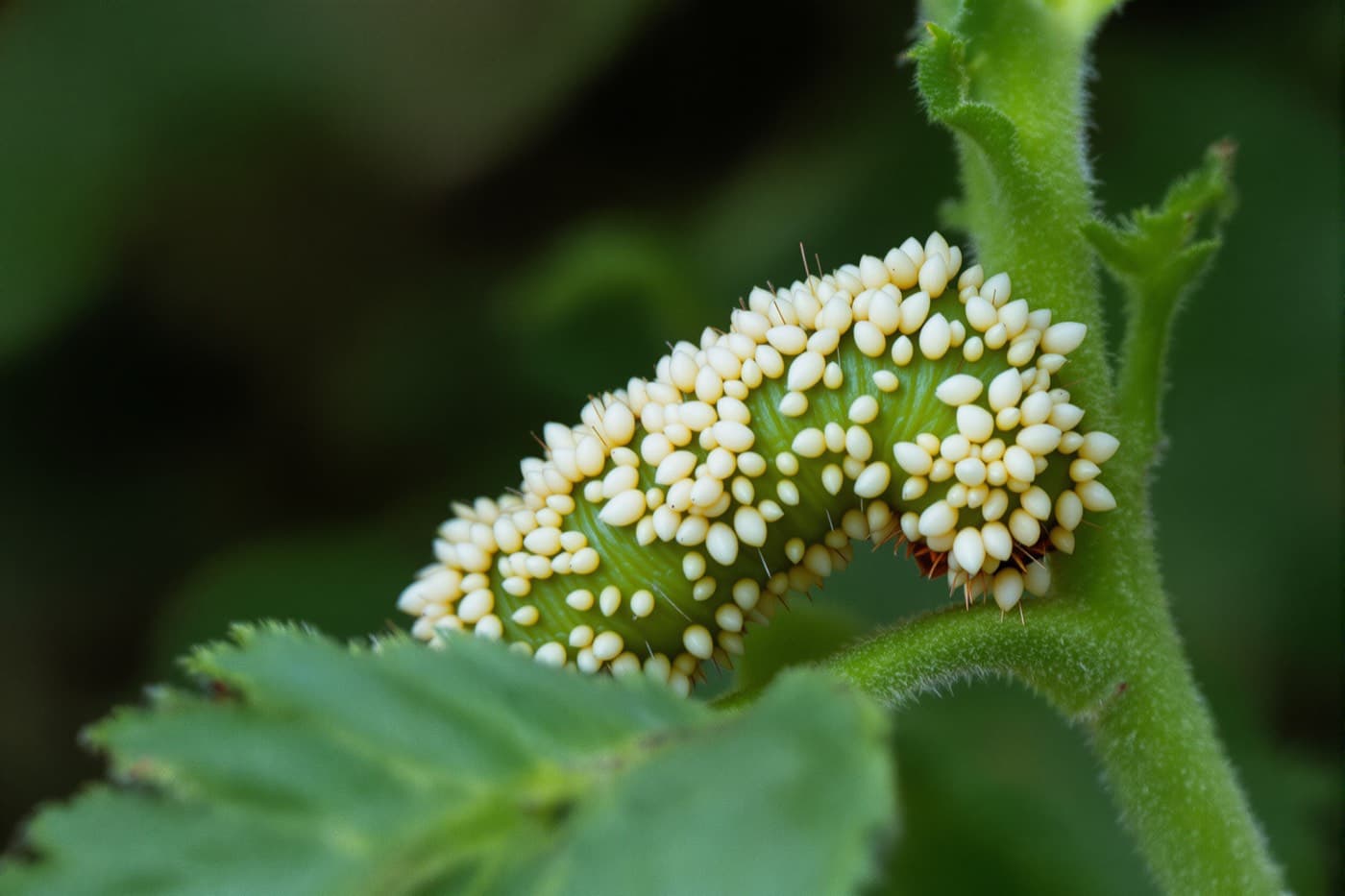
Illustrative photograph — not identification proof.
How we know — methodology. Ranges and assertions are cited per source, not blended.