Tomato problem · Symptom guide
Tomato leaves turning yellow
Yellow tomato leaves often start on older bottom foliage when a canopy is dense, fruit is sizing, or water swings from dry to soaked. Note whether old leaves or new growth yellow first. These are common possibilities, not a confirmed cause and not a product recommendation.
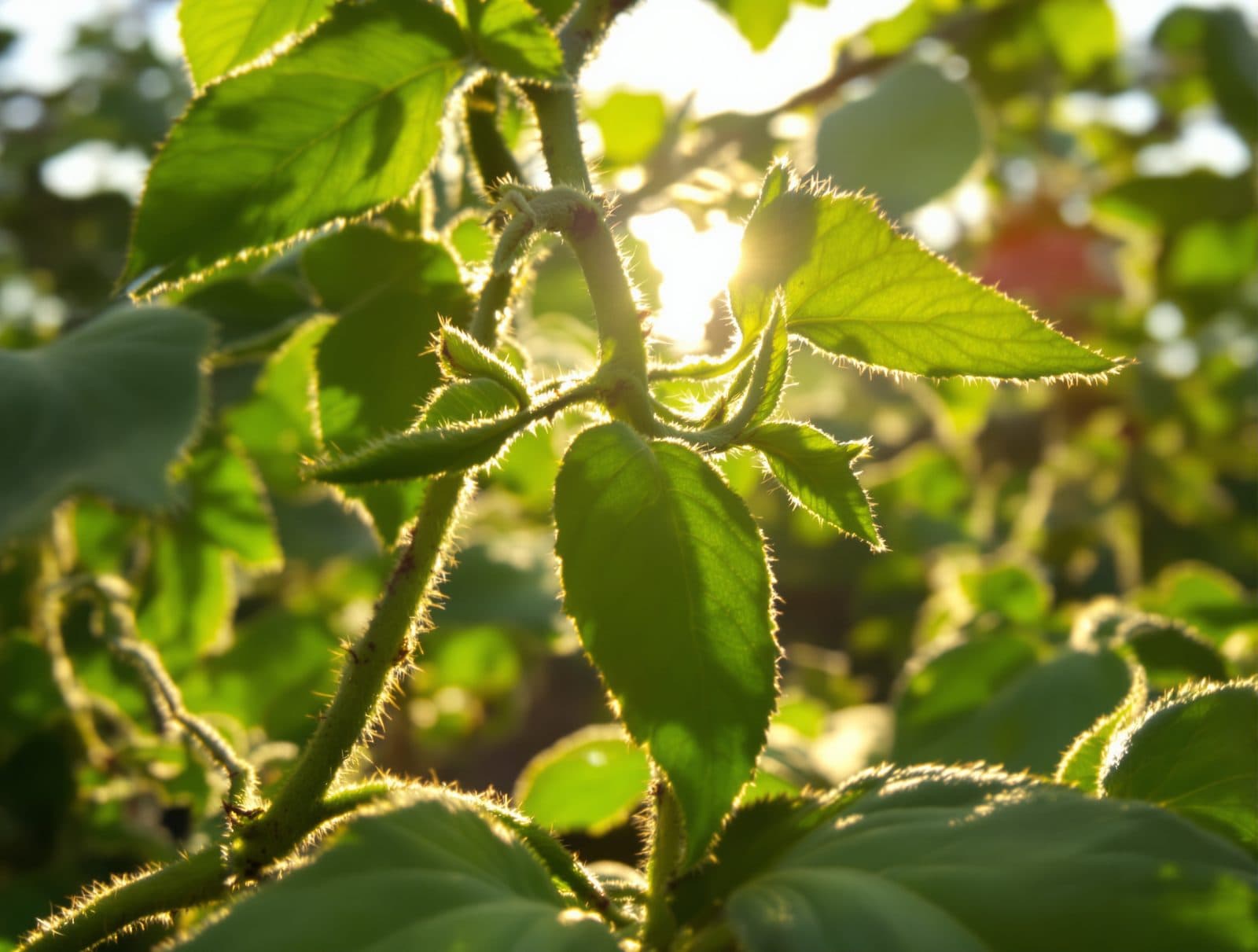
Healthy foliage for comparison — check your plant's newest growth.
Look
Yellowing on older bottom leaves vs new top leaves is a different picture. Note which.
Questions
- Old leaves first, or new growth first?
- Is the plant otherwise setting fruit?
- Water: bone dry, then soaked?
- Any spots, rings, or sticky residue?
Most likely possibility
Cited observations are comparisons—not a confirmed diagnosis. Check the cited sources and local requirements before taking action.
Save this bed. See it coming next year.
Your checks stay in the Field Book so next season is not a guess.
Common possibilities: aging lower leaves in a heavy canopy; nitrogen the plant already used on fruit; wet/dry swings. Contact local Extension if yellowing races up the plant with spots or wilt. No product is recommended here.
What to do now
- Check which leaves yellowed first (bottom vs top).
- Consider whether the canopy is so dense that lower leaves never dry.
- Monitor spread over a week; yellow that stays on a few old leaves is not the same as a plant going pale overnight.
- Contact local Extension if yellowing races up the plant with spots or wilt.
Prevent
Mulch, even water, do not bury the stem deeper every week.
Other causes
Leaves curling if the yellow leaf also cups. Edible-only router: why are my plant leaves turning yellow.
For a different symptom, use the matching Field Book check: leaf curl, blossoms falling, or fruit splitting. They are separate guides; yellowing alone does not identify a cause.
What the sources say — at a glance
One source per card. Facts are not averaged.
UGA C1089 (Georgia)
Yellow starting on the oldest leaves at the bottom, then toward newer growth. High nitrogen: tall, dark-green, no blooming — pattern only.
Details and limits (6)
Pattern
They describe yellow starting on the oldest leaves at the bottom and then working toward newer growth.
Pattern
They describe a tall, dark-green plant with lots of growth and no blooming when nitrogen is high. Red pattern comparison only — not a confirmed cause and not a soil prescription.
Pattern
Potassium notes on that circular place the look mostly on upper leaves, pale between darker veins. Red pattern comparison only — not a confirmed cause and not a soil prescription.
Pattern
They say a sulfur look can be confused with nitrogen; leaves appear uniformly yellow and work down the plant. Red pattern comparison only — not a confirmed cause and not a soil prescription.
Pattern
They describe a pale look on the youngest, uppermost leaves, with darker veins and paler tissue between the veins. Red pattern comparison only — not a confirmed cause and not a soil prescription.
Limit
Georgia C1089. Color alone is not a diagnosis and not a product.
Iowa State (nitrogen) (Iowa)
Oldest leaves go pale first because the plant can move nitrogen into new growth when supply is short. Color alone is not a diagnosis.
Details and limits (2)
Pattern
Their note says the oldest leaves go pale first because the plant can move nitrogen into new growth when supply is short. Color alone is not a diagnosis.
Limit
Iowa nitrogen note URL. Not a watering diagnosis and not a fertilizer product.
Clemson (South Carolina)
Their sheet lists spacing plants so they do not touch. Cultural context only — not a cause of yellowing.
Details and limits (2)
Culture
Their sheet lists spacing plants so they do not touch. Cultural context only—not a cause of yellowing. Red pattern comparison only — not a confirmed cause and not a soil prescription.
Limit
Clemson disorders sheet. Not a product and not a confirmed cause.
Make it yours
Save the bed in the Field Book so next season is not a guess.
What do overwatered tomato plants look like?
Check for wet soil that never dries, yellowing lower leaves, and soft stems. The same look can have other causes. Monitor; contact local Extension if wilt races up the plant. Iowa State’s nitrogen note and UGA’s oldest-leaf note (cited above) are source context, not a watering diagnosis.
Should I trim yellow leaves off tomato plants?
You may consider removing leaves that stay wet on the soil. Trimming is culture you log. Do not strip a plant because a leaf is yellow.
Can a watering swing go with yellow tomato leaves?
Wet-to-dry swings are one common possibility among others. Not a yes/no from color alone. Check soil a finger deep, consider drainage, and monitor whether old leaves or new growth yellow first.

What to record in the Field Book
Save the bed with the crop and the date. You may add a photo and notes. Compare entries you have recorded with each other — not with a diagnosis from this page. If you want an identification, bring the record to local Extension.
How we know — methodology. Ranges and assertions are cited per source, not blended.