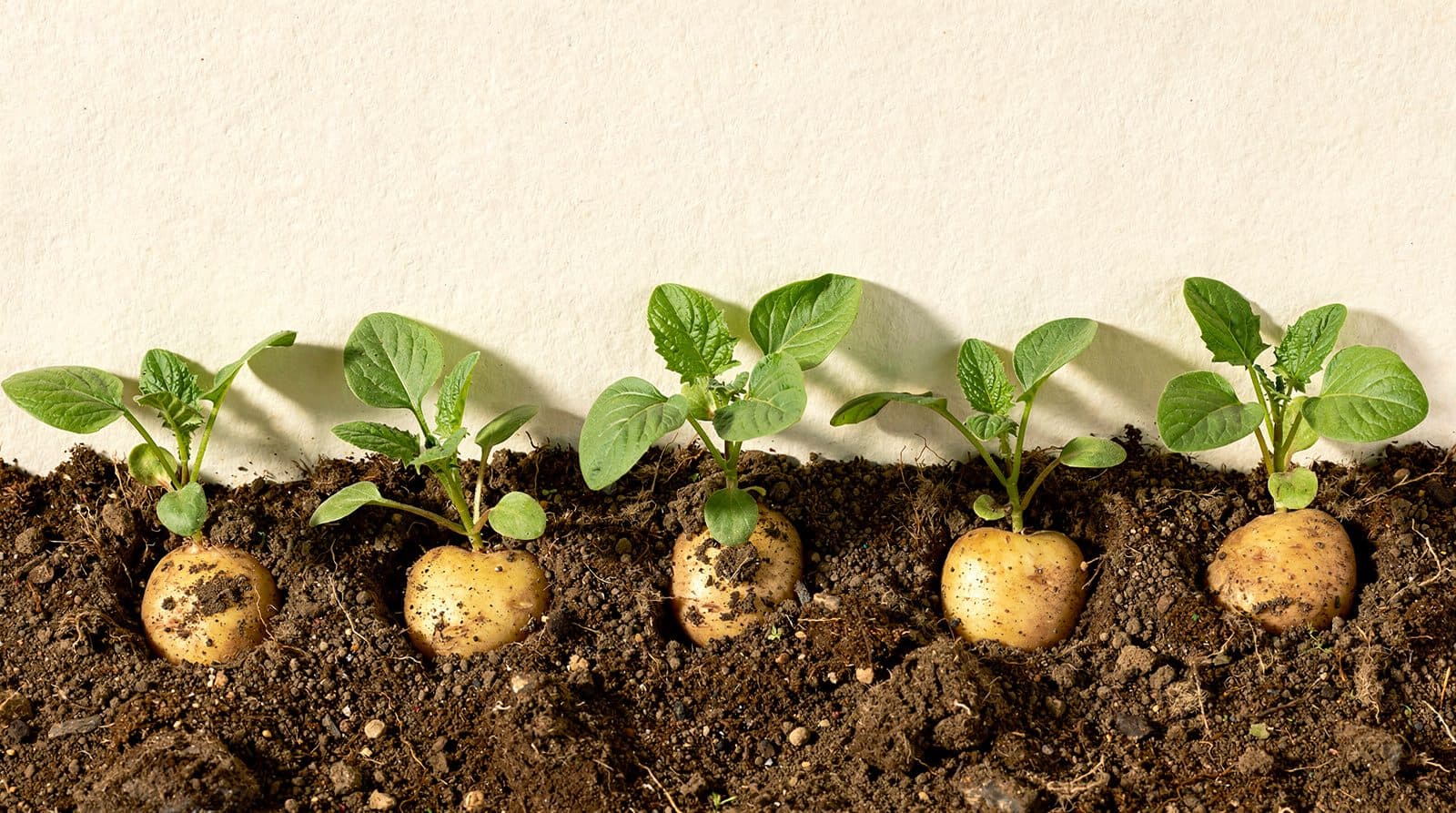
Crop guide · Care
Potato plant care
In-season potato care here is hilling, water, and mulch — not a fertilizer program. Cited start points, hill heights, and water amounts stay on their own sheets.
Growing guidance is general information. Timing, spacing, and care depend on cultivar, weather, soil, and local conditions. Check the sources and adjust the plan for your garden.
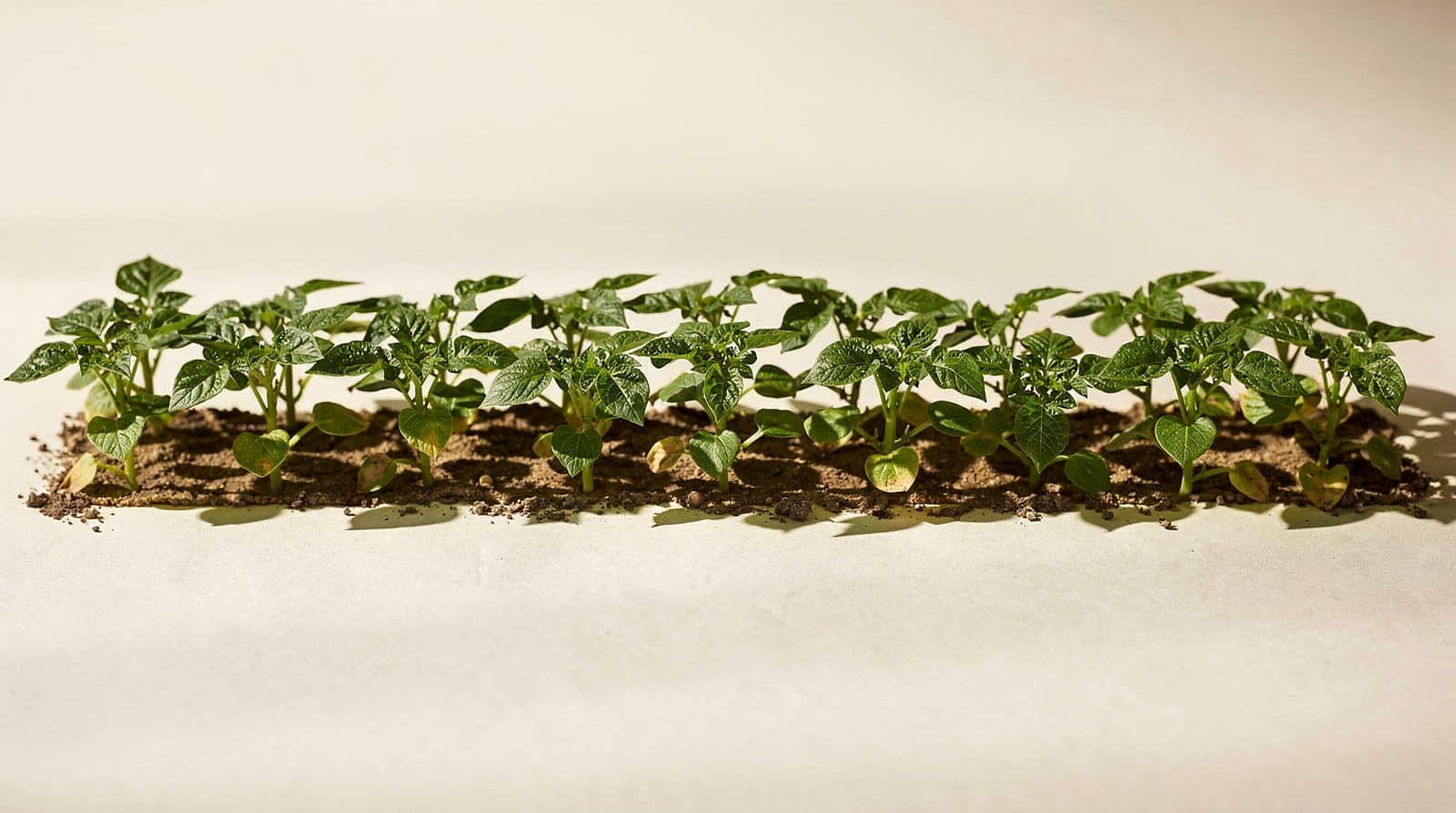
Hilling and water notes are source-specific — not a BioArva schedule.
Timing lives on when to plant potatoes. Types and spacing live on growing potatoes.
What the sources say — at a glance
One source per card. Facts are not averaged.
Maryland Extension (Maryland)
Hill when tops fully grown; hill tops ≤6 in above grade. Water if rain lacking, especially at tuber set. No overhead. Straw mulch after hilling.
Details and limits (4)
Hilling
Maryland Extension (Maryland): when the tops are fully grown, hill up soil over potatoes around the base of each plant. The tops of the hills should not be more than 6 in. above grade. Maryland hilling — not a BioArva protocol.
Water
Maryland Extension (Maryland): keep plants well-watered if rainfall is lacking, especially while tubers are developing. Avoid overhead watering (Maryland’s method note — attributed, non-diagnostic). Maryland watering — not a BioArva schedule.
Mulch
Maryland Extension (Maryland): hand-pull weeds. Any cultivation with a hoe or other tool should be shallow and far enough from the plants to prevent damage. Apply a thick straw mulch after hilling up the soil. Maryland method — not a BioArva protocol.
Limit
Maryland potato garden page. Hilling, water, and mulch stay on this sheet. Not fertilizer.
UMN Extension (Minnesota)
Hill at ~1 ft stems; once or twice more; 6–8 in total. Soak 1–2×/week. 1 in/week. Trowel. Frequent shallow hoe.
Details and limits (4)
Hilling
UMN Extension (Minnesota): start hilling when stems are about a foot tall, and once or twice more during the growing season. By the end of the season, six to eight inches of soil in total along the plants. Some gardeners plant seed tubers in shallow trenches and push soil into the trench. Minnesota hilling — not a BioArva protocol.
Water
UMN Extension (Minnesota): soak the soil thoroughly when watering, once or twice a week. One inch of rainfall per week is good. An inch of water wets sandy soil about 10 in and heavy clay about 6 in. If soil is sandy, water more often than once a week. Use a trowel to see how far down the soil is wet. Minnesota-specific — not a BioArva schedule.
Mulch
UMN Extension (Minnesota): frequent, shallow cultivation with a hoe or other tool. Do not cultivate too deeply. Hoe just deeply enough to cut the weeds off below the surface. Continue hilling soil up around the plants. Minnesota method — not a BioArva protocol.
Limit
Minnesota potato sheet. One inch a week and 6–8 in hilling stay Minnesota-specific. Not fertilizer.
Illinois Extension (Illinois)
Organic mulch after emergence. Optional clear film then remove. Ridge 4–6 in by summer. Uniform moisture while tubers develop.
Details and limits (4)
Mulch
Illinois Extension (Illinois): after the potato plants have emerged, organic mulch can be applied. Some gardeners cover rows of early potatoes with clear plastic film at planting; when the plants emerge, remove the film. Illinois method — not a BioArva protocol.
Hilling
Illinois Extension (Illinois): after the potatoes break the surface of the ground, gradually build up a low ridge of loose soil by cultivation and hoeing toward the plants. This ridge may become 4 to 6 inches high by summer. Illinois hilling — not a BioArva protocol.
Water
Illinois Extension (Illinois): irrigate to assure uniform moisture while the tubers are developing. Illinois watering — not a BioArva schedule.
Limit
Illinois potato page. Ridge 4–6 in and uniform moisture stay Illinois. Not fertilizer.
Sources differ
Make it yours
Save the bed in the Field Book so next season is not a guess.
Verified suppliers only
No supplier on this page
When a partner is listed, it will be outbound and disclosed. Nothing to buy here. Fertilizer, soils, and pesticides stay off this slot.
What to record in the Field Book
Save the bed with the crop and the date. You may add a photo and notes. Compare entries you have recorded with each other — not with a diagnosis from this page. If you want an identification, bring the record to local Extension.
How we know — methodology. Ranges and assertions are cited per source, not blended.