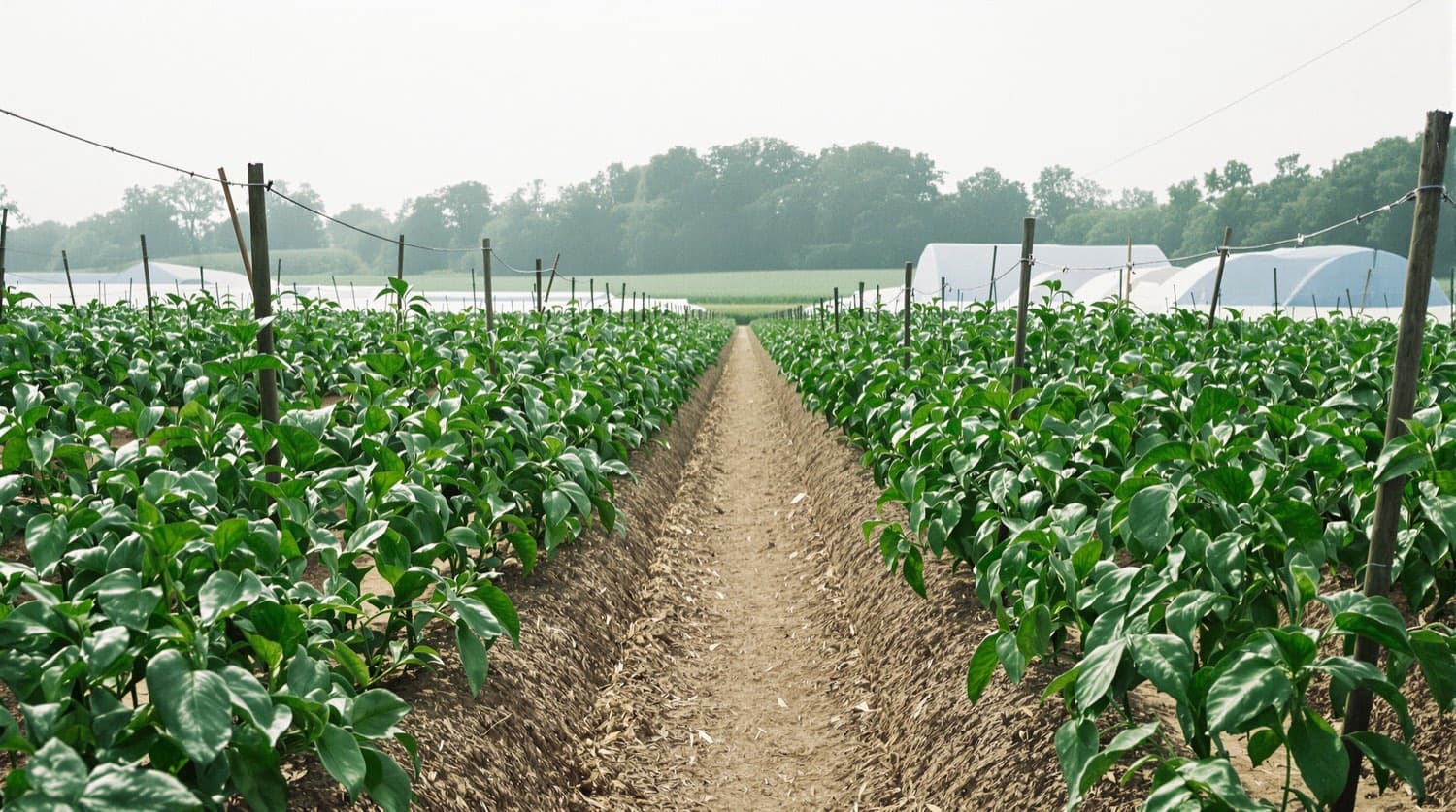
Harvest · Signals, not a promise
When to harvest peppers
When to harvest peppers here is cited harvest signals, then source-separated frost notes. Those ranges are not how long yours keeps. Planting and care are other pages.
Growing guidance is general information. Timing, spacing, and care depend on cultivar, weather, soil, and local conditions. Check the sources and adjust the plan for your garden.
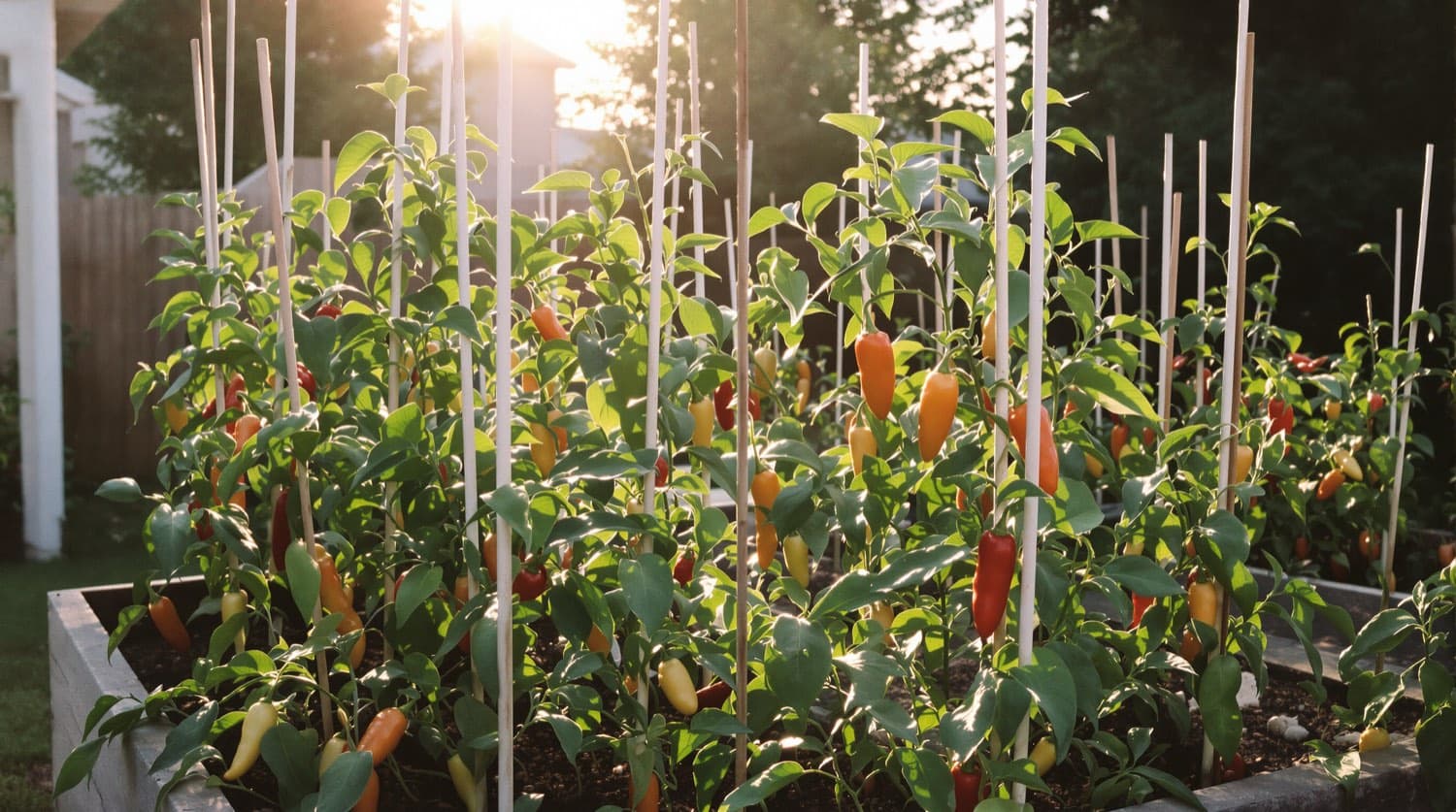
Illustrative photograph — harvest signals stay on the cited sheets.
Growing lives on how to grow peppers. Timing lives on when to plant peppers. Care lives on pepper plant care.
What the sources say — at a glance
One source per card. Facts are not averaged.
Clemson HGIC 1316 (South Carolina)
Sweet: full size, walls firm, green or yellow, or further for red/orange. Cut, don’t pull. Hot: hang whole plant before fall frosts; jalapeño black-green.
Details and limits (3)
Harvest
Clemson HGIC 1316 (South Carolina): harvest sweet peppers when they reach full size, the fruit walls are firm, and the peppers are still in the green or yellow state; otherwise, allow them to ripen further for red or orange peppers. The stems of pepper plants are brittle. When harvesting the fruit, cut the stems instead of pulling to avoid breaking branches. Harvest cue on their sheet — not a keeping promise.
Frost
Clemson HGIC 1316 (South Carolina): hot peppers may be picked green or allowed to ripen and change colors on the plant. Entire plants may be pulled and hung just before fall frosts. Jalapeno peppers should be harvested when the fruit turns black-green. Source-specific methods — not one BioArva protocol.
Limit
South Carolina HGIC 1316 Harvesting & Storage. Harvest cues and frost hang as cited. Not a fridge page.
Maryland Extension (Maryland)
Sweet: full size; green or color on the plant. Do not ripen further after harvest. Cut, don’t pull. Hang whole plant before a killing frost.
Details and limits (3)
Harvest
Maryland Extension (Maryland): harvest sweet peppers when they reach full size. Peppers can be harvested green or allowed to ripen and change color on the plant. They don't ripen further after harvesting. Cut pods, rather than pulling, to avoid breaking branches. Cue on their sheet — not a keeping promise.
Frost
Maryland Extension (Maryland): entire plants may be pulled just before a killing frost and hung upside down in a warmer area, such as a garage, to ripen. Source-specific frost method — not one BioArva protocol.
Limit
Maryland pepper garden page. Full-size cue and hang-to-ripen as cited. “Don’t ripen further” is Maryland’s statement, not a universal rule.
UMN Extension (Minnesota)
Mature size; need not wait for red. Clip the stem with shears; some separate easily.
Details and limits (2)
Harvest
UMN Extension (Minnesota): harvest peppers when they have reached mature size. You do not need to wait for peppers to turn red before harvesting. Harvest most peppers by clipping the stem of the fruit with sharp shears. Some varieties of pepper bear fruits that will separate easily from the plant. Cue on their sheet — not a quality ranking.
Limit
Minnesota pepper sheet. Mature-size and clip-stem cues as cited. Not a fridge page.
Iowa State University Extension (Iowa)
Green stage or fully ripe. Bell usually large and firm, immature green. Iowa sheet — not a national color rule.
Details and limits (2)
Harvest
Iowa State University Extension (Iowa): bell and hot peppers can be harvested in the immature green stage or when fully ripe. Bell peppers are usually harvested when large and firm in the immature, green stage. They also may be allowed to fully ripen to red, yellow, orange, purple, or other colors. Iowa sheet — not a national color rule.
Limit
Iowa pepper garden page. Green-or-ripe cue as cited. Not a yield or fridge page.
Utah State University Extension (Utah)
Fully colored but still firm. End of season: mature green and slightly colored at 55 °F. Utah cue — not a keeping promise.
Details and limits (2)
Harvest
Utah State University Extension (Utah): harvest peppers when the fruits are fully colored but still firm. At the end of the season, gather all mature green and slightly colored fruits and store at 55ºF. Utah cue and end-of-season note — not a keeping promise.
Limit
Utah peppers-in-the-garden sheet. Fully-colored cue and 55 °F end-of-season note as cited. Comparison only.
Sources differ
Make it yours
Save the bed in the Field Book so next season is not a guess.
Verified suppliers only
No supplier on this page
When a partner is listed, it will be outbound and disclosed. Nothing to buy here. Fertilizer, soils, and pesticides stay off this slot.
How do you know when a pepper is ready to pick?
Compare harvest signals on the cited sheets. Clemson HGIC 1316 (South Carolina): sweet peppers at full size with firm walls, still green or yellow, or further for red or orange; cut stems, don’t pull. Iowa State (Iowa): green stage or fully ripe; bell usually large and firm, immature green.
What can I check when frost is coming?
Compare the cited frost methods. Clemson (South Carolina): entire plants may be pulled and hung just before fall frosts. Maryland: pull the whole plant just before a killing frost and hang upside down in a warmer area. Utah: gather mature green and slightly colored fruits and store at 55 °F. Source-specific methods — not one protocol.
How we know — methodology. Ranges and assertions are cited per source, not blended.