Crop guide · Care
Pepper plant care
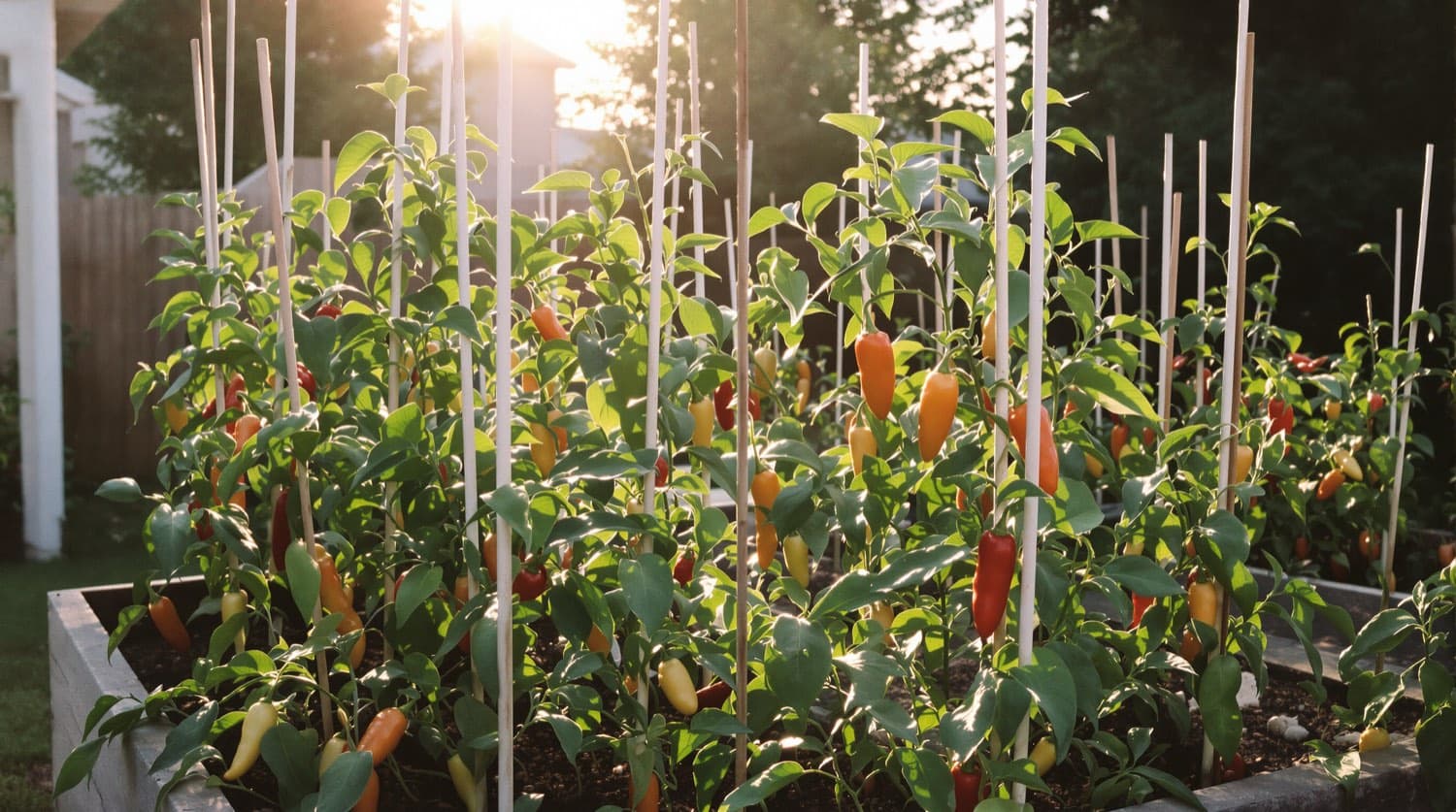
In-season pepper care here is water, support, and heat context — not a spray calendar and not a fertilizer program. Pruning and topping are HOLD until a cited row exists. This page does not prescribe products.
Growing guidance is general information. Timing, spacing, and care depend on cultivar, weather, soil, and local conditions. Check the sources and adjust the plan for your garden.
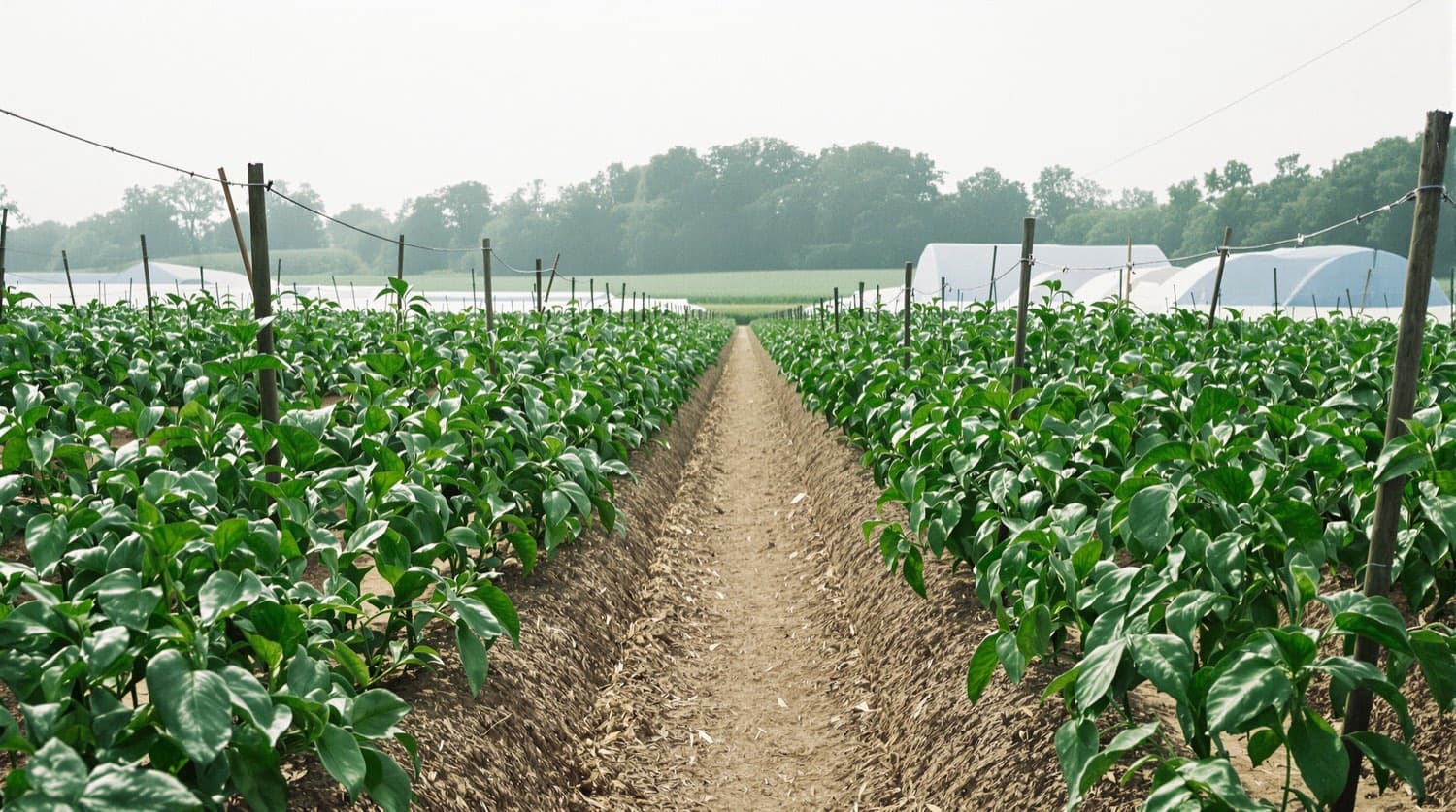
Water and support notes are source-specific — not a BioArva schedule.
Fertilizer terms are reserved for a future peppers fertilizer page. Timing lives on when to plant peppers.
What the sources say — at a glance
One source per card. Facts are not averaged.
Clemson HGIC 1316 (South Carolina)
Moisten soil at least 6 inches. Critical moisture during fruit set and development. Space 12 inches in-row, rows 3 feet (pimento differs).
Details and limits (4)
Water
Water sufficiently to moisten the soil to a depth of at least 6 inches. Water note on their sheet — not a BioArva irrigation schedule.
Water
The critical period for moisture is during fruit set and fruit development; they say not to allow the soil to dry out in between watering during fruit development. Water note on their sheet — not a BioArva irrigation schedule.
Spacing
Peppers should be spaced 12 inches apart in the row with rows 3 feet apart; pimento peppers require 18 to 24-inch spacing in the row with rows 42 inches apart. Spacing on their sheet — not a BioArva average.
Limit
South Carolina HGIC 1316. Water and spacing only — not fertilizer or pruning.
Utah State Extension (Utah)
Irrigation should be deep and infrequent, 1–2 inches per week. Drip if possible. Raised bed if the site does not drain well.
Details and limits (5)
Water
Irrigation should be deep and infrequent. Water note on their sheet — not a BioArva irrigation schedule.
Water
Water peppers deeply and infrequently, applying 1–2 inches per week; use drip irrigation if possible. Water note on their sheet — not a BioArva irrigation schedule.
Site
Peppers need well-drained soil and do poorly in heavy, wet soils; if planting in an area that does not drain well, it is advised to plant in a raised bed. Site note on their sheet — not a BioArva product SKU.
Culture
Cultivate shallowly to avoid root damage if weeds are a problem. Cultural note on their sheet — not a yield promise.
Limit
Utah pepper sheet only.
UMN Extension (Minnesota)
If rain is under one inch weekly, soak thoroughly at least once a week. Sandy soil more often. Mulch 3 to 4 inches.
Details and limits (6)
Water
If the plant does not receive one inch of rain weekly, soak the soil thoroughly at least once a week. Water note on their sheet — not a BioArva irrigation schedule.
Water
If your soil is sandy, it is important to water more often than once a week. Water note on their sheet — not a BioArva irrigation schedule.
Water
Their sheet lists sprinkling that just wets the surface of the soil. Water note on their sheet — not a BioArva irrigation schedule.
Mulch
Mulching with herbicide-free grass clippings, weed-free straw or other organic material to a depth of three to four inches. Cultural note on their sheet — not a BioArva mulch program.
Culture
Frequent, shallow cultivation with a garden hoe or trowel; cultivate just deeply enough to cut the weeds off below the surface of the soil. Cultural note on their sheet — not a yield promise.
Limit
Minnesota pepper sheet only.
Maryland Extension (Maryland)
Uniform soil moisture. Support with cages or short trellises. Stems can reach 3–4 ft and become semi-woody.
Details and limits (7)
Water
Their sheet lists uniform soil moisture as the watering goal. Source-observed water context only—not a diagnosis.
Water
Drip irrigation and soaker hoses are excellent methods for watering peppers on their sheet. Method note — not a BioArva product SKU.
Support
Plant stems can become brittle and should be supported with cages or short trellises. Support note on their sheet — not a BioArva trellis SKU.
Habit
Peppers are produced on bushy plants that can reach 3–4 ft in height; stems become semi-woody when mature. Habit note on their sheet — not a BioArva trellis SKU.
Heat
Their sheet notes very hot conditions, especially evenings above 75°F, in the context of pepper fruit set. Source-observed heat context only—not a diagnosis or outcome promise.
Heat
Their sheet describes late-afternoon shade and water sprays in hot, dry weather. Source-specific heat-handling context—not a site ranking or diagnosis.
Limit
Maryland pepper sheet. Heat notes are not a diagnosis.
Iowa State Extension (Iowa)
During dry periods, water thoroughly once a week. Alternate method: two staggered rows 12–18 inches apart, plants 18 inches within rows.
Details and limits (3)
Water
During dry periods, thoroughly water plants once a week; mulching helps conserve soil moisture. Water note on their sheet — not a BioArva irrigation schedule.
Spacing
An alternate method is to plant two staggered rows 12–18 inches apart with plants spaced 18 inches apart within rows; the double rows should be spaced 30–36 inches apart. Spacing on their sheet — not a BioArva average.
Limit
Iowa pepper sheet only.
Penn State Extension (Pennsylvania)
Soak thoroughly; frequent light watering encourages a weak root system. Space 18 inches in-row, rows 24 inches or more.
Details and limits (6)
Water
Soak the soil thoroughly when watering; frequent light watering will encourage a weak root system. Water note on their sheet — not a BioArva irrigation schedule.
Water
Their sheet lists watering early in the day or using soaker hoses. Method note — not a BioArva product SKU.
Spacing
Space plants 18 inches apart in rows 24 inches apart or more, depending on the type of cultivation used. Spacing on their sheet — not a BioArva average.
Mulch
Their sheet lists mulch after plants are established. Source-specific cultural note—not a BioArva mulch program.
Culture
Hand-pulling or shallow cultivation to avoid injuring plant roots. Cultural note on their sheet — not a yield promise.
Limit
Pennsylvania pepper sheet only.
UF/IFAS (Florida)
Staking can help keep plants upright as fruits weigh them down. Prefer moist, but not wet, soil.
Details and limits (3)
Support
As your plants grow and fruits begin to weigh them down, staking can help keep them upright. Support note on their sheet — not a BioArva product SKU.
Water
Pepper plants prefer moist, but not wet, soil. Water note on their sheet — not a BioArva irrigation schedule.
Limit
Florida UF/IFAS pepper sheet. Not a fertilizer or pruning page.
Make it yours
Save the bed in the Field Book so next season is not a guess.
Verified suppliers only
No supplier on this page
When a partner is listed, it will be outbound and disclosed. Nothing to buy here. Fertilizer, soils, and pesticides stay off this slot.
What to record in the Field Book
Save the bed with the crop and the date. You may add a photo and notes. Compare entries you have recorded with each other — not with a diagnosis from this page. If you want an identification, bring the record to local Extension.
How we know — methodology. Ranges and assertions are cited per source, not blended.