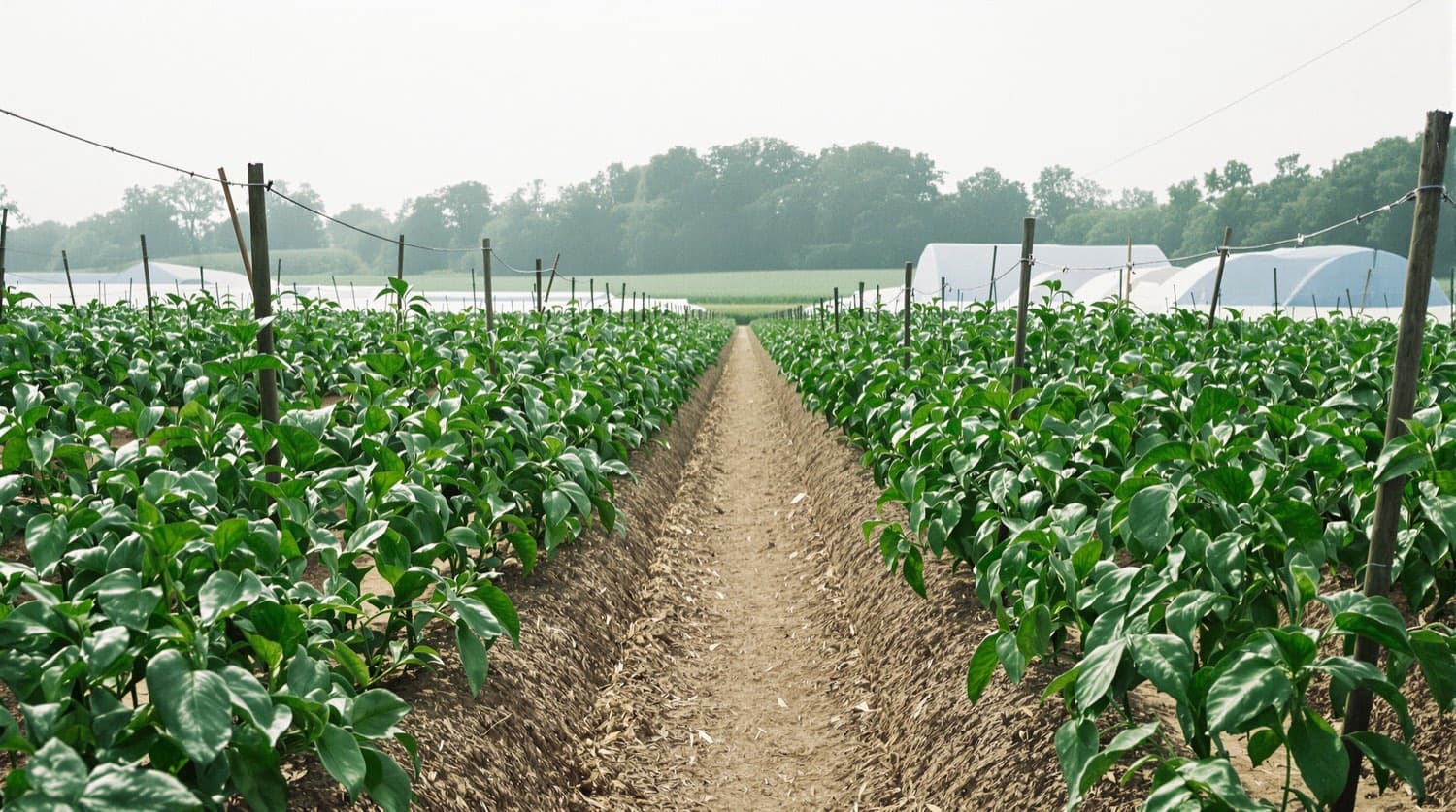
Planting timing · Frost-anchored
When to plant peppers
Plant peppers outdoors after frost risk has passed at your location, not on a national calendar month. Indoor start is earlier. Cited soil and night notes are source-specific — not one US date.
Growing guidance is general information. Timing, spacing, and care depend on cultivar, weather, soil, and local conditions. Check the sources and adjust the plan for your garden.
Your window
Use your last-spring-frost history — not a national month.
A ZIP calculator is not live on this page. Save the bed to store the window you actually used.
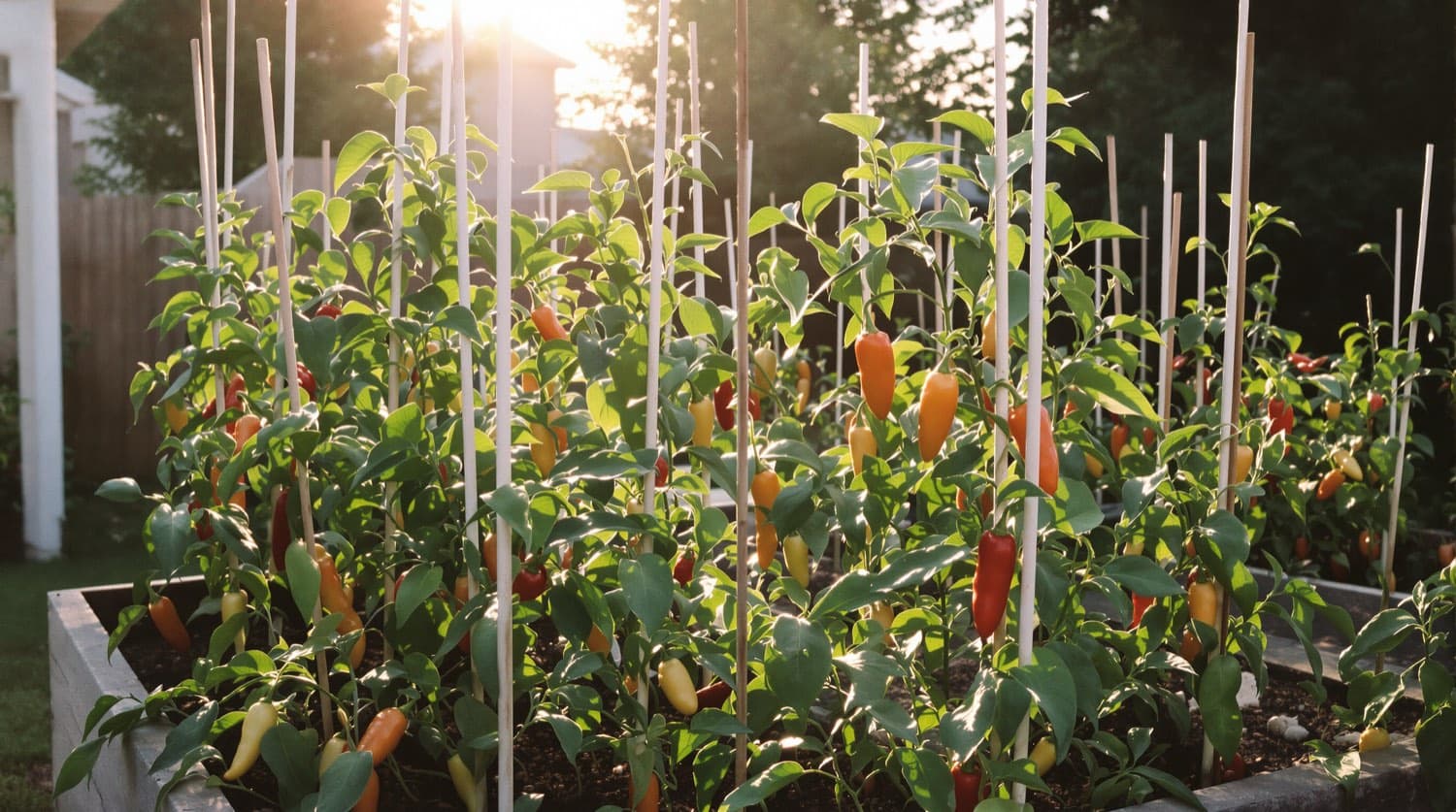
Set out after frost risk passes at your site — not on a national month.
Harvest-timing terms are not this page. Spacing and containers stay on the peppers hub. In-season water and support live on pepper plant care.
What the sources say — at a glance
One source per card. Facts are not averaged.
UMN Extension (Minnesota)
Transplant after nighttime lows are above 50°F. Heating mat 80–90°F until emergence. Hardening: indoors if nights drop below 55°F.
Details and limits (15)
Germination
Use a heating mat to keep the flat at 80°F to 90°F until seedlings emerge. Germination-temperature note on their sheet — not a BioArva climate zone.
Seedling
Their pepper sheet lists 70°F soil temperature after emergence. Source-specific seedling context—not a BioArva universal target.
Start
Plant seeds one-fourth inch deep in flats containing sterile, soilless germination mix. Seed-starting note on their sheet — not a BioArva mix SKU.
Spacing
Thin or transplant seedlings after true leaves appear so that seedlings are two to three inches apart. Seedling-spacing note on their sheet — not a BioArva average.
Water
Their pepper sheet lists reduced watering when plants are four to five inches tall and six to eight weeks old. Source-specific seedling context—not a BioArva irrigation schedule.
Light
Provide bright overhead light for the seedlings. Seedling-light note on their sheet — not a BioArva lighting program.
Climate
Dry soil, temperatures above 90°F, or night temperatures below 60°F or above 70°F, can weaken plant growth. Source-observed climate note — not a diagnosis.
Timing
Transplant in late afternoon or on a cloudy, calm day. Timing note on their sheet — not a national plant date.
Timing
Transplant outdoors after nighttime low temperatures are above 50°F. Timing note on their sheet — not a national plant date.
Hardening
When hardening seedlings, bring them indoors if night temperatures drop below 55°F. Hardening note on their sheet — not a national calendar.
Mulch
Their pepper sheet lists black plastic mulch in the context of warming the soil. Source-specific soil-warmth note—not a BioArva mulch program.
Hardening
Place plants outside where they will receive wind protection and a couple hours of sunlight; gradually expose them to more sunlight over the next week or two. Hardening note on their sheet — not a national calendar.
Types
In general, smaller-fruited peppers are more tolerant of both cool and hot temperatures. Type note only — no cultivar ranking, product, or promise.
Climate
Their sheet notes hot days and hot nights in Minnesota in the context of pepper flower drop. Source-observed climate context only—not a diagnosis or outcome promise.
Limit
Minnesota pepper sheet only.
Maryland Extension (Maryland)
Start seed indoors 8 to 10 weeks before frost-free date; some types 12 weeks. Very tender; frost injures top growth. Soil 65°F in planting guidance.
Details and limits (6)
Timing
Start seed indoors 8 to 10 weeks before the average frost-free date; some types and cultivars require 12 weeks. Timing on their sheet — not a national plant date.
Temperature
Their pepper sheet lists a soil temperature of 65°F in planting guidance. Source-specific soil-temperature context—not a BioArva universal target.
Hardiness
They describe peppers as a very tender warm-season plant; frost will injure top growth. Hardiness note on their sheet — not a national plant date.
Maturity
Most sweet and hot types, 70–85 days from transplanting. Days-to-maturity on their sheet — not a yield promise.
Climate
Their sheet notes slow, early season growth alongside cool conditions and over-grown, stressed transplants. Source-observed context only—not a diagnosis.
Limit
Maryland pepper sheet only.
Utah State Extension (Utah)
Germinate at 80°F until the seed root emerges. Seed in the garden 2 weeks before last frost. No organic mulch until soils have warmed to 75°F.
Details and limits (7)
Germination
Germinate seeds at 80°F until the seed root emerges, then transfer to sterile seeding mix. Germination note on their sheet — not a BioArva climate zone.
Mulch
Do not apply organic mulches until soils have warmed to 75°F. Timing note on their sheet — not a BioArva mulch program.
Climate
Their sheet notes nights lower than 55°F or days above 90°F in the context of fruit set and flower abort. Source-observed climate context only—not a diagnosis.
Timing
Seed can be planted in the garden 2 weeks before the last frost. Timing on their sheet — not a national plant date.
Seedling
Transplants should have 6–9 mature leaves and a well-developed root system before planting. Seedling note on their sheet — not a BioArva average.
Spacing
Plant 4–6 pepper seeds ½ inch deep and 18 inches apart in the row. Spacing on their sheet — not a BioArva average.
Limit
Utah pepper sheet only.
UF/IFAS (Florida)
Start from seed indoors; small seeds wash away easily in the garden. Late winter indoor start for planting after last frost. Full sun, well-drained soil.
Details and limits (4)
Start
They recommend starting peppers from seed indoors, noting small seeds are easily washed away during watering in the garden. Seed-starting note on their sheet — not a national method ranking.
Timing
Seeds planted indoors can be started in late winter for planting after the last frost date. Timing on their sheet — not a national plant date.
Site
Their sheet lists planting peppers in full sun and well-drained soil. Site note on their sheet — not a site ranking.
Limit
Florida UF/IFAS pepper sheet only.
Penn State Extension (Pennsylvania)
Set out when weather has warmed and soil is above 60°. Seedlings below 80° but not lower than 50°. About 10 days of outdoor acclimation.
Details and limits (8)
Seedling
Daily temperatures for seedlings should be kept below 80 degrees, but not lower than 50 degrees. Seedling-temperature note on their sheet — not a BioArva climate zone.
Hardening
About 10 days before transplanting, set plants outdoors for a few hours each day to acclimate them gradually. Hardening note on their sheet — not a national calendar.
Hardening
Bring plants indoors at night and on days when temperatures fall below 60 degrees. Hardening note on their sheet — not a national calendar.
Timing
Set peppers in the garden when the weather has warmed and soil temperatures are above 60 degrees. Timing on their sheet — not a national plant date.
Water
Water plants thoroughly after transplanting. Water note on their sheet — not a BioArva irrigation schedule.
Climate
Their sheet lists nighttime temperatures of 60° and 75° in the context of fruit set. Source-observed climate context only—not a yield promise.
Climate
Their sheet notes daytime temperatures above 95° in the context of blossom abort. Source-observed climate context only—not a diagnosis or outcome promise.
Limit
Pennsylvania pepper sheet only.
Iowa State Extension (Iowa)
Transplant after frost danger. Last practical date on their sheet is approximately June 20. At least six hours of direct sun.
Details and limits (4)
Timing
Transplant after the danger of frost is past; on their sheet the last practical date for planting peppers is approximately June 20. Iowa calendar on their sheet — not a national plant date.
Sun
The planting site should receive at least six hours of direct sun each day. Light note on their sheet — not a site ranking.
Climate
Their sheet notes night temperatures below 60°F or daytime temperatures above 85°F in the context of bell pepper flower abort. Source-observed climate context only—not a diagnosis or outcome promise.
Limit
Iowa pepper sheet. June 20 is Iowa, not a national cutoff.
Clemson HGIC 1316 (South Carolina)
Long growing season; grow very slowly during cool periods. From seed, expect 100 to 120 days to maturity.
Details and limits (3)
Season
Peppers generally require a long growing season and grow very slowly during cool periods. Season-length note on their sheet — not a BioArva climate zone.
Maturity
When starting from seed, expect 100 to 120 days to maturity. Days-to-maturity on their sheet — not a yield promise.
Limit
South Carolina HGIC 1316 only.
Make it yours
Save the bed in the Field Book so next season is not a guess.
Verified suppliers only
No supplier on this page
When a partner is listed, it will be outbound and disclosed. Nothing to buy here. Fertilizer, soils, and pesticides stay off this slot.
Do peppers prefer full sun or shade?
Iowa State (Iowa): the planting site should receive at least six hours of direct sun each day. Light note on their sheet — not a site ranking. Late-afternoon shade notes on Maryland’s care sheet are separate.
What to record in the Field Book
Save the bed with the crop and the date. You may add a photo and notes. Compare entries you have recorded with each other — not with a diagnosis from this page. If you want an identification, bring the record to local Extension.
How we know — methodology. Ranges and assertions are cited per source, not blended.