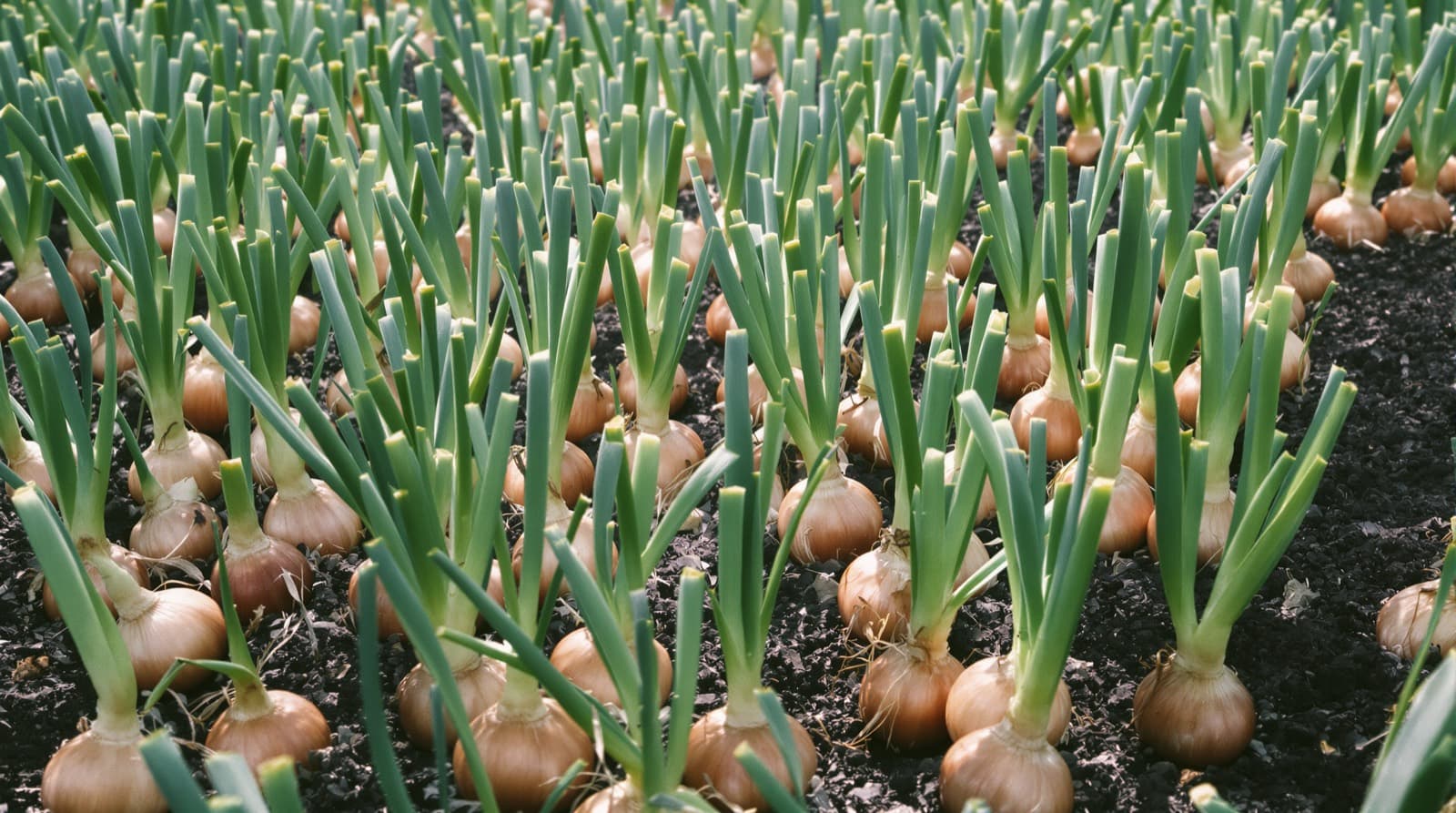
Crop guide · Care
Onion plant care: spacing, depth and watering
Cited onion care here is thinning, water, and mulch — not a spray calendar and not a fertilizer program. Harvest/cure notes below are a source comparison only. This page does not prescribe products.
Growing guidance is general information. Timing, spacing, and care depend on cultivar, weather, soil, and local conditions. Check the sources and adjust the plan for your garden.
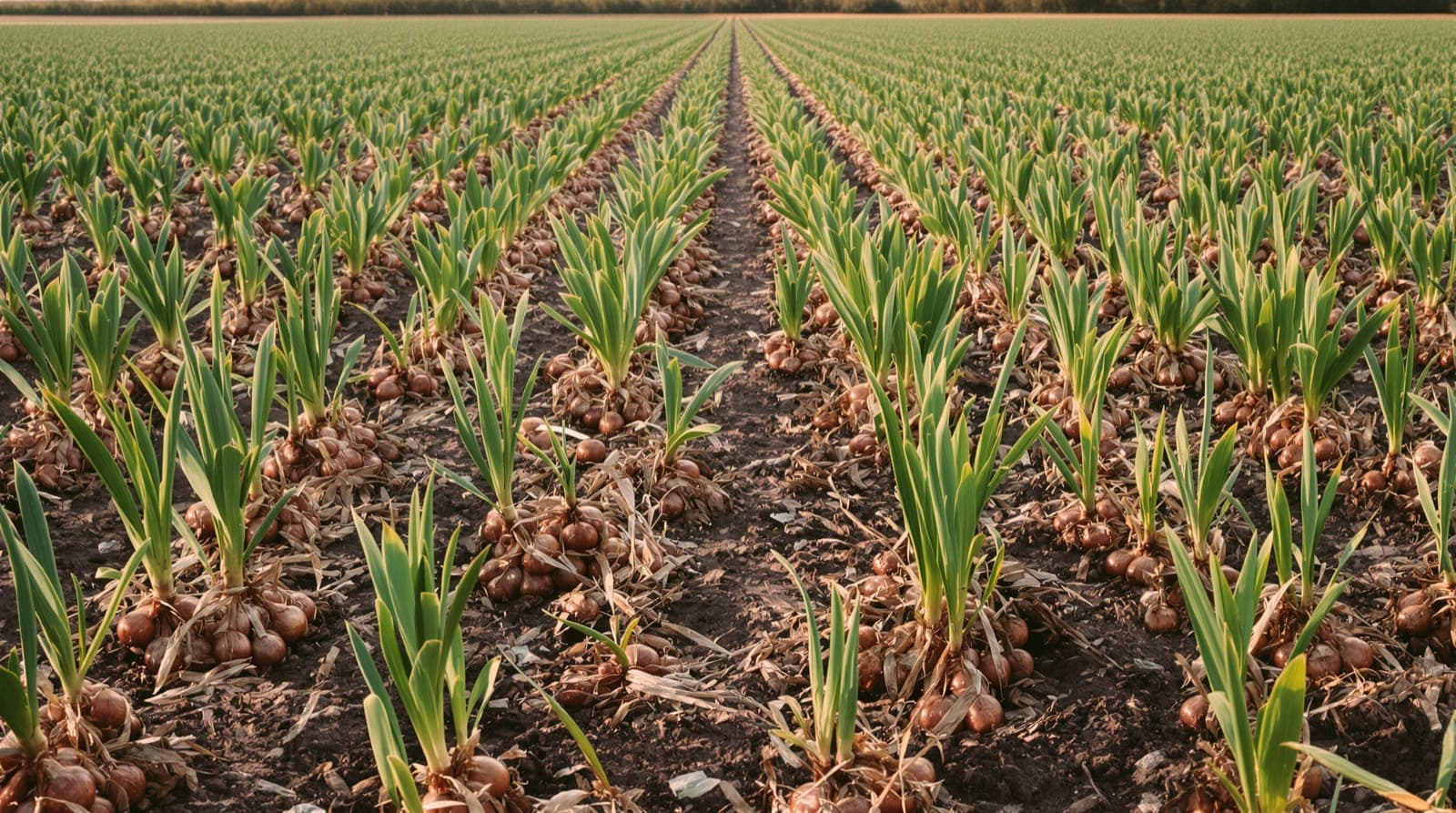
Spacing and water notes are source-specific — not a BioArva average.
Timing lives on when to plant onions. Types live on the onions hub.
What the sources say — at a glance
One source per card. Facts are not averaged.
Maryland Extension (Maryland)
Thin to 4 inches for moderate bulbs, 8 inches for large. Ample moisture after bulbs enlarge. Do not hill up soil.
Details and limits (5)
Thinning
Onions should be thinned to 4 inches apart if you intend to harvest moderate-size bulbs, and 8 inches apart for large bulbs. Thinning on their sheet — not a BioArva average.
Water
Ensure ample moisture, especially after bulbs begin enlarging. Watering on their sheet — not a yield claim.
Mulch
Do not hill up the soil on onions; apply an organic mulch to maintain soil moisture. Care note on their sheet — not a BioArva how-to.
Harvest
Bulb onions should be harvested when about two-thirds of the dried tops have fallen over; onions may be pulled and left in the field for several days to dry, then cured, with tops intact, in a well-ventilated attic or porch out of the direct sun for 1 to 2 weeks. Cure context on their sheet — not a storage promise.
Limit
Maryland onion sheet only. Harvest/cure is comparison, not a protocol.
Clemson HGIC 1314 (South Carolina)
Thin in spring to four inches; transplants 3 to 4 inches in-row. Cultivate shallowly; do not hill soil around plants.
Details and limits (6)
Thinning
Their sheet lists thinning onions in spring to four inches apart. Thinning on their sheet — not a BioArva average.
Spacing
Transplants should be spaced 3 to 4 inches apart in the row. Spacing on their sheet — not a BioArva average.
Water
Their sheet describes discontinuing watering a week before harvest in the context of protective scales. Source-specific harvest-adjacent context—not a BioArva irrigation schedule or storage promise.
Culture
Cultivate shallowly as often as needed, but do not hill up soil around the plants. Care note on their sheet — not a BioArva how-to.
Harvest
Harvest bulb onions when about three-fourths of the tops have fallen over; thoroughly air-dry bulbs in a shaded area before storage. Cure context on their sheet — not a storage promise.
Limit
South Carolina HGIC 1314 only. Harvest/cure is comparison, not a protocol.
Illinois Extension (Illinois)
For dry onions, plant smaller sets 1 inch deep, 2 to 4 inches between sets; 12 to 18 inches between rows.
Details and limits (2)
Spacing
To produce dry onions, plant the smaller sets 1 inch deep, with 2 to 4 inches between sets; allow 12 to 18 inches between rows. Spacing on their sheet — not a BioArva average.
Limit
Illinois onion sheet only.
UMN Extension (Minnesota)
Thin seedlings to 3 to 4 inches. Shallow-rooted; soak thoroughly at least once a week if rain is under one inch.
Details and limits (6)
Thinning
After seedlings emerge, thin to 3 to 4 inches apart. Thinning on their sheet — not a BioArva average.
Water
Onions are shallow-rooted and require constant moisture for good growth; if the planting does not receive one inch of rain each week, soak the soil thoroughly at least once a week. Watering on their sheet — not a BioArva schedule.
Water
If your soil is sandy, it is important to water more often than once a week. Watering on their sheet — not a BioArva schedule.
Water
Their sheet describes stopping watering when tops begin to fall. Source-specific harvest-adjacent context — not a BioArva irrigation schedule or storage promise.
Mulch
Mulch with herbicide-free grass clippings, weed-free straw, or other organic material to a depth of 3 to 4 inches. Mulch note on their sheet — not a product ranking.
Limit
Minnesota onion sheet only.
Utah State Extension (Utah)
Moisten soil thoroughly to 12 inches; drip irrigation if possible. Organic mulches listed for water conservation.
Details and limits (3)
Water
Moisten the soil thoroughly to a depth of 12 inches and use drip irrigation if possible. Watering on their sheet — not a BioArva schedule or product SKU.
Mulch
Their sheet lists organic mulches for water conservation. Mulch note on their sheet — not a fertility claim or product ranking.
Limit
Utah onion sheet only.
Sources differ
Make it yours
Save the bed in the Field Book so next season is not a guess.
Verified suppliers only
No supplier on this page
When a partner is listed, it will be outbound and disclosed. Nothing to buy here. Fertilizer, soils, and pesticides stay off this slot.
How far apart do you put onions?
Maryland Extension (Maryland): onions should be thinned to 4 inches apart if you intend to harvest moderate-size bulbs, and 8 inches apart for large bulbs. Thinning on their sheet — not a BioArva average.
How many onions can I plant in a 4x8 bed?
This guide does not calculate a bed count.
Do onions need to be watered every day?
This guide does not set a daily watering schedule. Maryland Extension (Maryland): ensure ample moisture, especially after bulbs begin enlarging. Watering on their sheet — not a yield claim.
What depth of soil do onions need?
This guide does not state a soil-depth requirement.
What is the secret to growing big onions?
There is no single trick. This page does not prescribe fertilizer.
Can you just leave onions in the ground?
This guide does not tell you to leave onions in the ground. Harvest/cure notes on this page are a source comparison only — not a protocol.
What not to plant next to onions?
This guide does not provide companion-planting guidance.
What to record in the Field Book
Save the bed with the crop and the date. You may add a photo and notes. Compare entries you have recorded with each other — not with a diagnosis from this page. If you want an identification, bring the record to local Extension.
How we know — methodology. Ranges and assertions are cited per source, not blended.