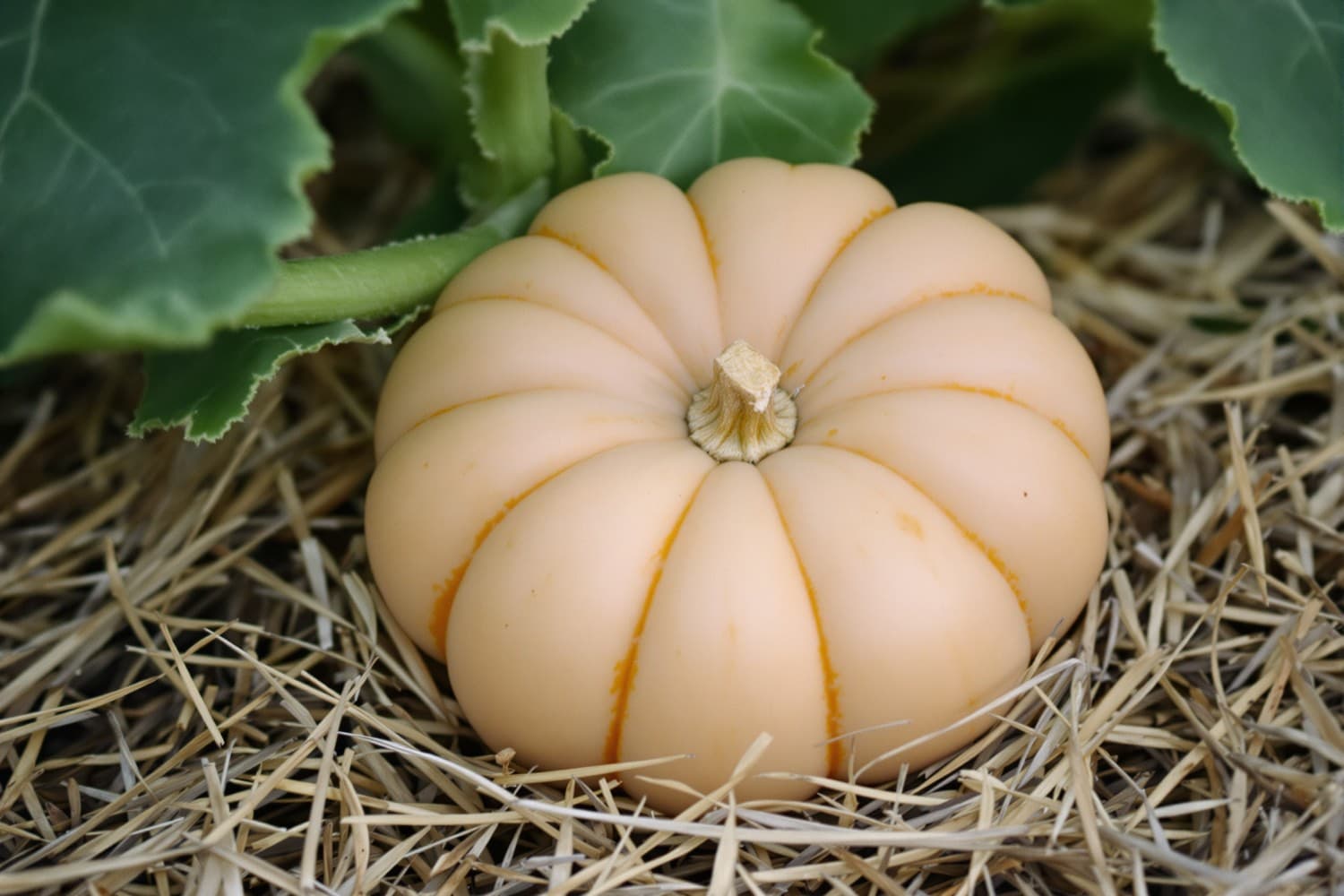
Harvest · Signals, not a promise
When to harvest butternut squash
When to harvest butternut squash here is cited harvest signals, then source-separated cure and storage notes. Those ranges are not how long yours keeps. Planting and variety lists are other pages.
Growing guidance is general information. Timing, spacing, and care depend on cultivar, weather, soil, and local conditions. Check the sources and adjust the plan for your garden.
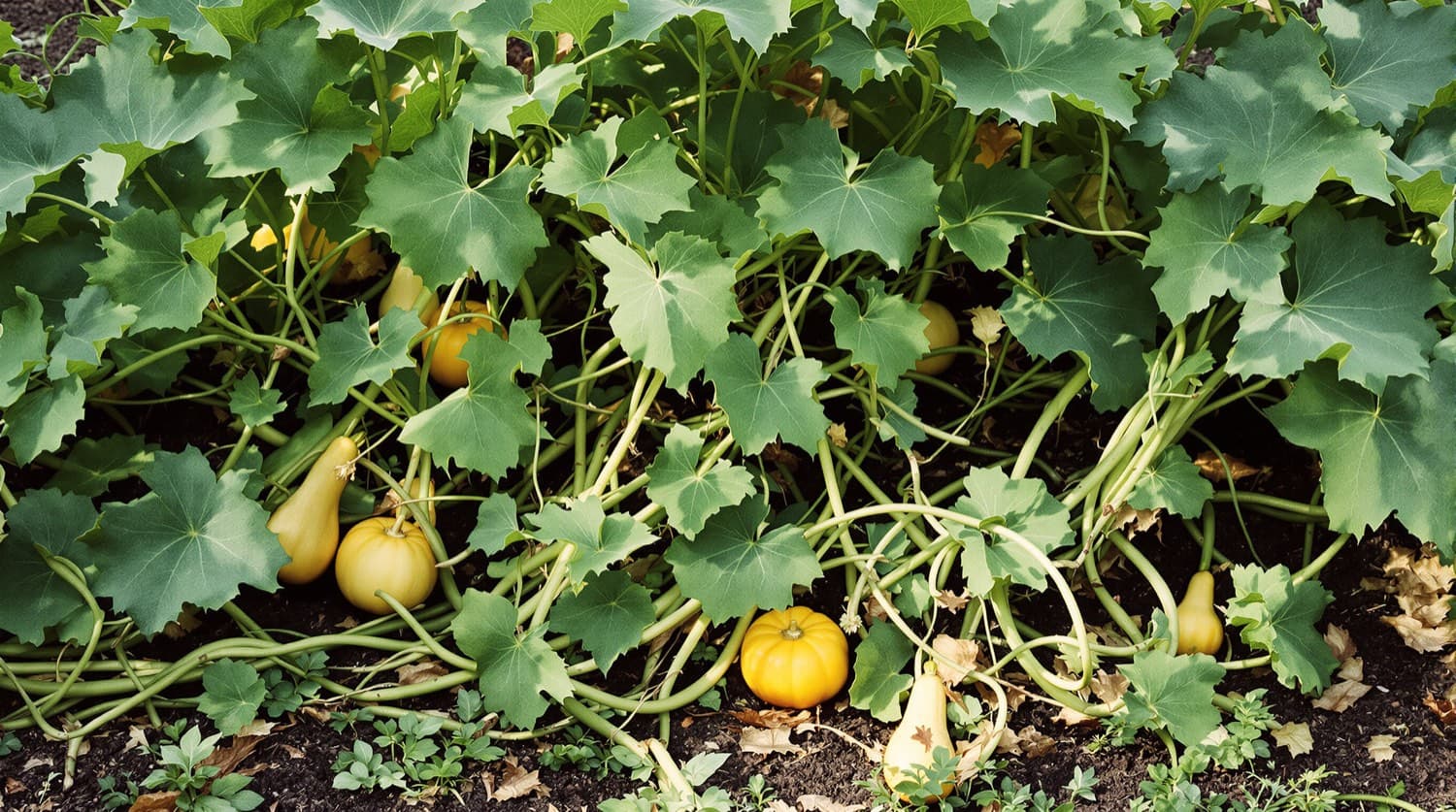
Illustrative photograph — harvest signals stay on the cited sheets.
Types live on winter squash varieties. Timing lives on when to plant winter squash.
What the sources say — at a glance
One source per card. Facts are not averaged.
UMN Extension (Minnesota)
Pick before a hard freeze. Light frost killing the vine usually does not harm fruit. Cut; few inches of stem. Field-cure 1–2 weeks or indoor 80°F. Store around 55°F.
Details and limits (4)
Harvest
UMN Extension (Minnesota): pick winter squash and pumpkins before a hard freeze. A light frost that kills the vine will usually not harm the fruit. Cut the fruit from the vine, leaving a few inches of stem attached. Be careful not to cut or bruise the fruit. Harvest signal on their sheet — not a keeping promise.
Cure
UMN Extension (Minnesota): after cutting, field-cure them in place for a week or two in dry, sunny weather. If the weather has turned cold or rainy, you can cure squash indoors in a warm (80 degrees Fahrenheit), well-ventilated space. Their sheet’s two cure settings — not one BioArva protocol.
Storage
UMN Extension (Minnesota): winter squash should be stored in a cool but not cold place, ideally around 55 degrees Fahrenheit, with good air movement. Relative humidity between 50 and 75 percent is best. Source range — not how long yours keeps.
Limit
Minnesota winter-squash sheet. Harvest and storage as cited. Not a kitchen or fridge page.
Maryland Extension (Maryland)
Typically September or October before heavy frosts. Cut; about 2 inches of stem. Rinds hard and firm. Store dry, 50–55°F; single layer.
Details and limits (3)
Harvest
Maryland Extension (Maryland): winter squash is typically harvested in September or October before heavy frosts arrive. Use a sharp knife or pruning shears to cut squash from the vine, leaving about two inches of stem attached if possible. When harvesting pumpkins, leave 3 to 4 inches of stem attached. Rinds need to be hard and firm for the squash to store well. Calendar band on their Maryland sheet — not a national month and not a keeping promise.
Storage
Maryland Extension (Maryland): stored winter squash in a dry area that stays between 50°F and 55°F. If you need to store them for an extended period of time, place them in a single layer, preferably not touching each other. Source range — not how long yours keeps.
Limit
Maryland winter-squash sheet. Harvest and storage as cited. Not a cure protocol from this sheet.
Virginia Cooperative Extension 426-406 (Virginia)
Deep solid color and hard rind. Ripen on the vine as harvest context. After vine dries, before heavy frost. Stem 2–3 inches. Store 45–55°F, 2–6 months — their range.
Details and limits (3)
Harvest
Virginia Cooperative Extension 426-406 (Virginia): harvest winter squash when fruits turn a deep, solid color and the rind hard. Allow to ripen on the vine — harvest context on their sheet, not a cultivation instruction. Harvest after vine dries up before heavy frost. Cut the stem 2 to 3 inches from the vine as fruit without a stem tends not to store well.
Storage
Virginia Cooperative Extension 426-406 (Virginia): winter squash — warm (45 to 55°F), very dry (50 to 60% RH) conditions for 2 to 6 months. Source range on their sheet — not a BioArva keeping time.
Limit
Virginia 426-406 squash section. Harvest and storage as cited. Not food handling.
Illinois Extension (Illinois)
Deep solid color and hard rind. September or October before heavy frosts. Stem about 2 inches. Store 50–55°F. Cure ~70°F 10–20 days except acorn, sweet dumpling, delicata.
Details and limits (4)
Harvest
Illinois Extension (Illinois): winter squash can be harvested whenever the fruits have turned a deep, solid color and the rind is hard. Harvest the main part of the crop in September or October, before heavy frosts. Cut squash from the vines carefully, leaving two inches of stem attached if possible. Harvest cue on their garden page — not a keeping promise.
Storage
Illinois Extension (Illinois): store in a dry building where the temperature is between 50 and 55°F. Prefer a single layer so fruits do not touch; do not pile squash more than two fruits deep. Source range — not how long yours keeps.
Cure
Illinois Extension (Illinois): most winter squash benefits from a curing stage; the exceptions on their sheet are acorn, sweet dumpling, and delicata. Curing is holding the squash at room temperature (about 70 degrees) for 10 to 20 days. After curing, transfer to a cool (45 to 50 degrees), dry place; do not allow them to freeze. Large hard-rind winter squash listed up to six months; smaller acorn and butternut only up to 3 months — their ranges, not a BioArva keeping time.
Limit
Illinois winter-squash garden page. Harvest, cure exceptions, and storage ranges as cited. Fridge line not collected. Comparison only — not a shared protocol.
Illinois Extension (harvest news) (Illinois)
Light frost kills vines, usually not fruit. Thumbnail should not puncture. Cure 70–80°F 10 days except acorn and delicata. Acorn 2 mo; butternut 3; Hubbard 6 — their ranges.
Details and limits (4)
Harvest
Illinois Extension harvest news (Illinois): squash is generally harvested in September or October and must be harvested before a hard frost. A light frost will kill the vines, but won’t harm the fruit. Rinds are dull, dry, and hard and cannot be punctured with a fingernail. When cutting, leave a 2- to 3-inch stem. Cue on this news URL — not a keeping promise.
Cure
Illinois Extension harvest news (Illinois): most winter squash, with exception of acorn and delicata, benefit from a curing process. To cure, place squash at a temperature of 70°F to 80°F for 10 days. Exception on this news URL — not blended with the garden-page exception list.
Storage
Illinois Extension harvest news (Illinois): acorn squash can be stored up to two months, butternut up to three months, and Hubbard up to six months on that page. Optimum storage around 55°F with 50 to 75% humidity. All winter squash except Hubbards should be stored with stems attached. Source ranges — not how long yours keeps. Not food.
Limit
Second Illinois URL — own card. Not a state of keeping. Fridge line not collected.
Clemson HGIC 1318 (South Carolina)
Thumbnail cannot puncture; sheen dull and dry. Cut, leave a generous stem. Do not handle wet fruit. Cure 80–85°F ~10 days. Store 50–55°F; eight weeks or more on their sheet.
Details and limits (3)
Harvest
Clemson HGIC 1318 (South Carolina): mature winter squash have very hard skins that cannot be punctured with your thumbnail. The fresh, bright, juvenile surface sheen changes to a dull, dry-appearing surface. Cut the fruits from the vine, do not tear them. Leave a generous stem. Do not harvest or handle wet fruit. Harvest cue — bleach-wash not collected.
Cure
Clemson HGIC 1318 (South Carolina): curing involves maintaining storage temperatures between 80 to 85 °F with 75 to 80 percent relative humidity for approximately 10 days. Store fruit at 50 to 55 °F and 50 to 75 percent relative humidity with good ventilation. Under these conditions, squash and pumpkins can last eight weeks or more on their sheet. Protect harvested fruit from temperatures above 95 or below 50 °F. Source range — not a keeping promise.
Limit
South Carolina HGIC 1318. Harvest and storage as cited. Not a shared cure protocol.
Penn State Extension (Pennsylvania)
Harden 7–14 days at 80–85°F, 80–85% RH. Store 50–60°F. Acorn 5–8 weeks; Hubbard 5–6 months. Curing acorn can be detrimental.
Details and limits (4)
Cure
Penn State Extension (Pennsylvania): harden off the squash for about seven to fourteen days by letting them sit in the field if conditions are favorable, or in single layers in a dry, well-ventilated spot. Ideally 80° to 85°F with 80 to 85% relative humidity. Their harden-off band — not one BioArva protocol.
Storage
Penn State Extension (Pennsylvania): once cured, unmarked intact squash can go into storage at 50° to 60°F and relative humidity 50 to 75%. Resources on that page say storage time is two or three months for most squash, with acorn shorter (five to eight weeks) and Hubbard longer (five to six months). Temperatures should not drop below 50°F. Source ranges — not how long yours keeps.
Cure
Penn State Extension (Pennsylvania): curing acorn squash can actually be detrimental since the skins are thinner and more delicate, and storage time is already the shortest of all the squashes. Acorn-cure note on their sheet — comparison with Illinois skip-cure and Clemson 10-day cure stays in Sources differ.
Limit
Pennsylvania harvesting-and-storing sheet. Comparison only. Not food handling.
Sources differ
Make it yours
Save the bed in the Field Book so next season is not a guess.
Verified suppliers only
No supplier on this page
When a partner is listed, it will be outbound and disclosed. Nothing to buy here. Fertilizer, soils, and pesticides stay off this slot.
How do you know when butternut squash is ripe?
Compare harvest signals on the cited sheets. VCE 426-406 (Virginia): deep, solid color and a hard rind; ripen on the vine as harvest context, not a cultivation instruction. UMN (Minnesota): pick before a hard freeze; a light frost that kills the vine usually does not harm the fruit.
How to tell when winter squash is ready?
Maryland Extension (Maryland): typically September or October before heavy frosts; rinds hard and firm; about two inches of stem. That is their Maryland band — not a national month.
Does winter squash need to be cured?
UMN Extension (Minnesota) lists field-cure in place for a week or two in dry, sunny weather, or indoor 80°F, well-ventilated, if cold or rainy. Two settings on their sheet — not one BioArva cure.
Should you cure squash in the sun?
UMN Extension (Minnesota) names dry, sunny weather for field-cure, and indoor 80°F when it is cold or rainy. Those are their two settings — not a sun protocol.
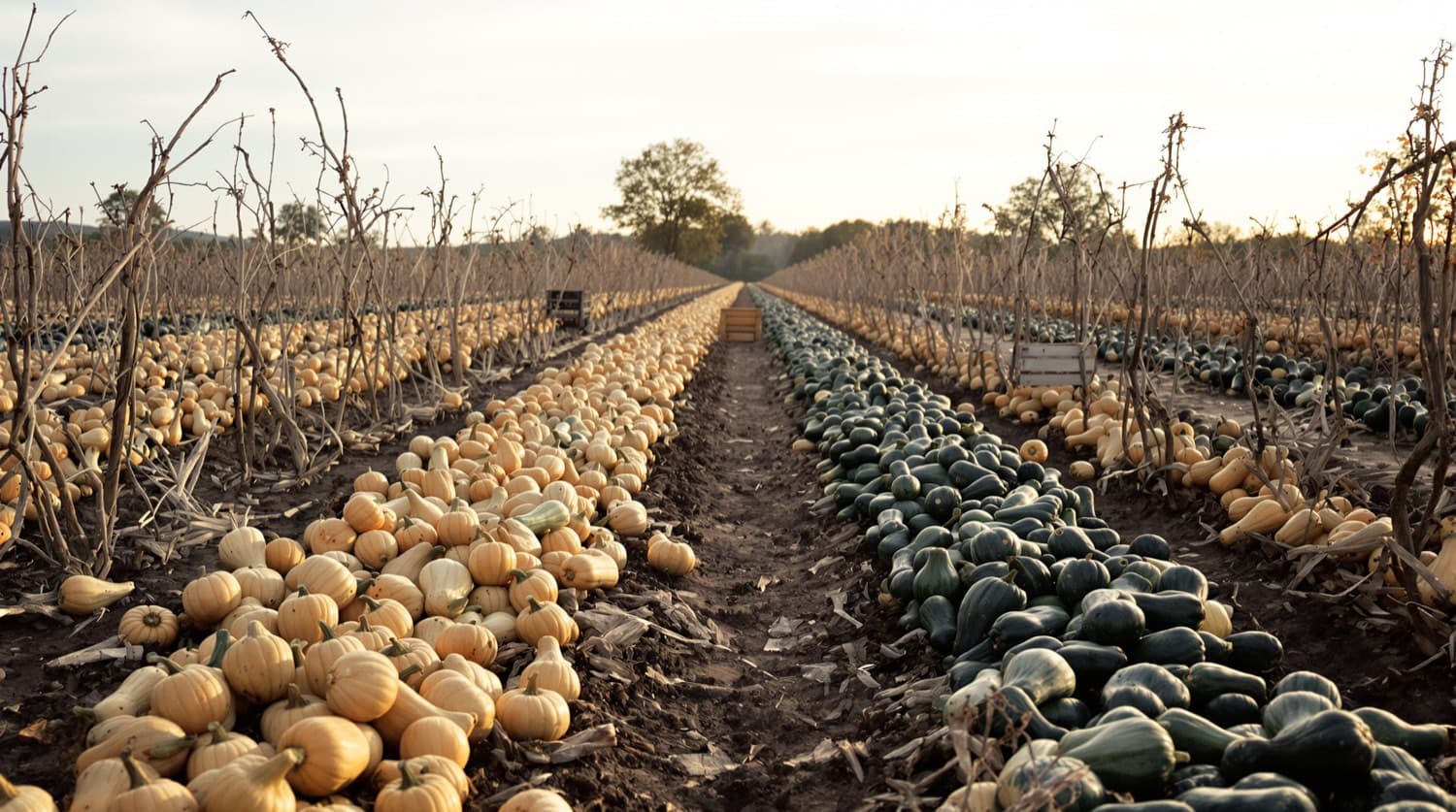
Illustrative photograph — not a cited pairing.
How we know — methodology. Ranges and assertions are cited per source, not blended.