Tomato problem · Symptom guide
Tomato leaves curling
Tomato leaves often cup or roll from heat, wind, or uneven water — especially on new growth — without that meaning a confirmed disease. Compare what you see, check moisture, and monitor whether only the tops are curled. This page lists common possibilities, not a treatment.
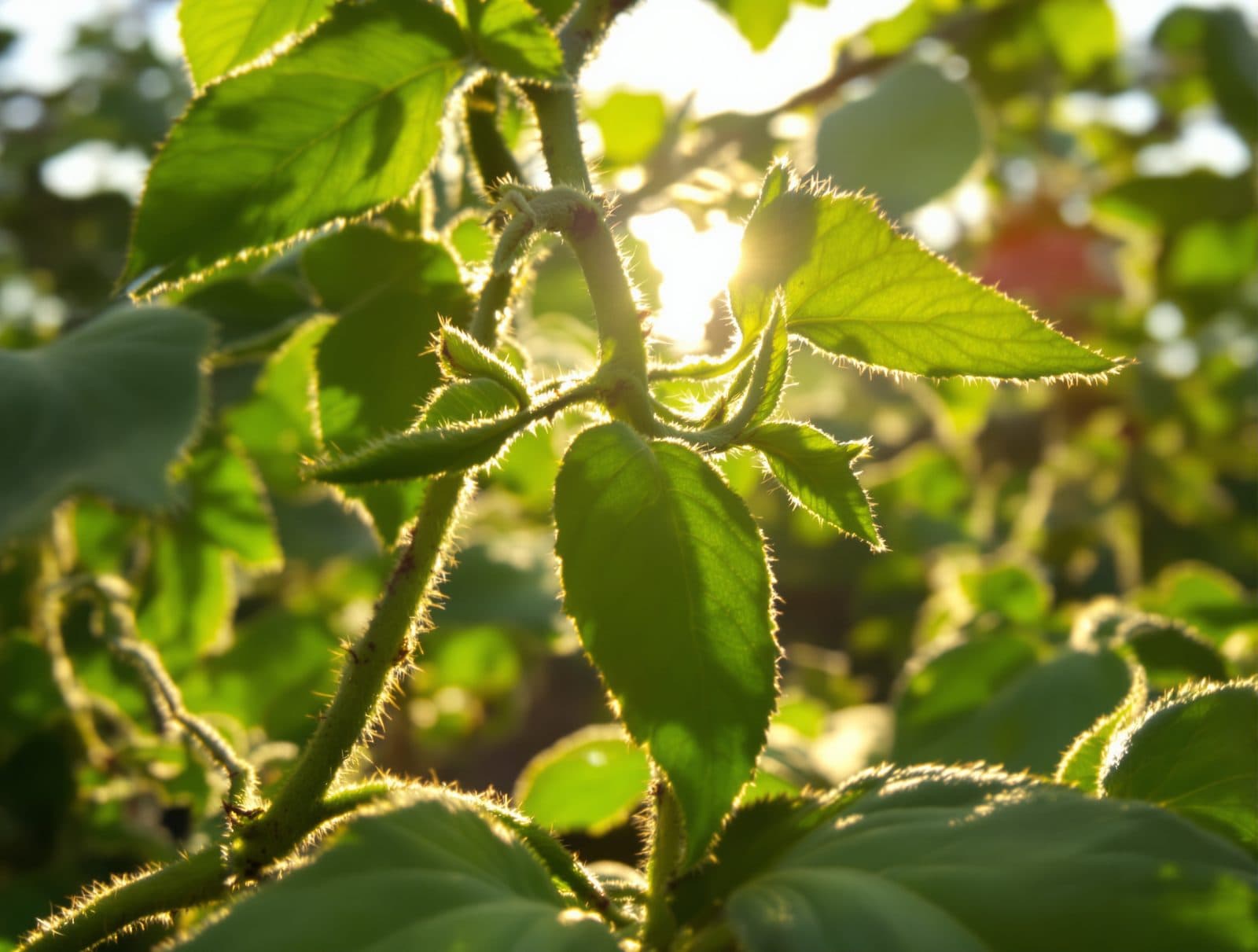
Healthy foliage for comparison — check your plant's newest growth.
Look
New leaves cup upward or roll inward. Older leaves may look normal. You do not need a pathogen name to start comparing.
Questions
- Is it the newest growth, or the whole plant?
- Has it been very hot, windy, or dry?
- Did you recently transplant or prune hard?
- Are stems otherwise firm, and is there new growth?
Most likely possibility
Cited observations are comparisons—not a confirmed diagnosis. Check the cited sources and local requirements before taking action.
Save this bed. See it coming next year.
Your checks stay in the Field Book so next season is not a guess.
Common possibilities (hedged): heat or wind stress; uneven water; physiological leaf roll; herbicide drift from off the bed. This page does not name a disease or sell a treatment.
What to do now
- Check soil moisture a finger deep. Consider evening the water pattern.
- Consider afternoon shade cloth in a heat wave; monitor new leaves.
- Monitor whether only the top is curled vs spotted, sticky, or collapsing.
- Contact local Extension if plants collapse, or you see unusual insects and want an ID.
Prevent
Even water, airflow, plant when nights have settled. Log the episode on the bed.
Other causes
Nutrient issues are not diagnosed from curl alone. A lab report you already have is a record, not a prescription. Sampling notes live on garden soil test.
What the sources say — at a glance
One source per card. Facts are not averaged.
Clemson (South Carolina)
Heat, long wet spells, and drought among conditions that can accompany leaf roll. Look mostly on older leaves; leaflets curl upward.
Details and limits (6)
Pattern
Their disorders sheet lists heat, long wet spells, and drought among conditions that can accompany leaf roll.
Pattern
They place the look mostly on older leaves, with an upward curling of the leaflets; they say it may progress across much of the foliage. Red pattern comparison only — not a confirmed cause.
Pattern
They say rolled leaves may feel leathery and stiff. Pattern comparison only — not a diagnosis.
Pattern
They note leaf roll often occurs once plants are under the stress of a heavy fruit set; some cultivars are more prone than others. Not a ranking and not a cause from a photo.
Culture
They say the look may be more noticeable on black plastic mulch, which gets hot in summer. Cultural context only — not a cause of curling from a photo.
Limit
Clemson disorders sheet. Not a disease name and not a treatment.
Iowa State Extension (Iowa)
Leaf roll after a soaking rain, hard pruning, or roots disturbed by deep tillage. Physiological disorders are not caused by a living organism on their sheet.
Details and limits (3)
Pattern
Their guide notes leaf roll showing up after a soaking rain, hard pruning, or roots disturbed by deep tillage.
Category
They describe physiological disorders as problems not caused by a living organism; they place them as environmental stresses on the plant. Category note — not a diagnosis of a given plant.
Limit
Iowa disorders page. Not a diagnosis from a photo.
UGA C1089 (Georgia)
Disorder in dry or cold spells, often right after planting. Leaves that suddenly roll up can look as if the plant needs water.
Details and limits (4)
Pattern
They place the disorder in dry or cold spells, often right after planting.
Pattern
They describe leaves that suddenly roll up and can look as if the plant needs water. Red pattern comparison only — not a confirmed cause and not a watering diagnosis.
Timing
They describe plants set before soils have warmed, and they list soils above 60°F on that sheet. Timing note on their sheet — not a BioArva plant date and not a confirmed cause of curl.
Limit
Georgia C1089. Not a watering diagnosis.
Make it yours
Save the bed in the Field Book so next season is not a guess.
What can I check when tomato leaves curl?
Check whether the newest growth cups or the whole plant rolls. Cited heat, wet spells, drought, rain, pruning, and cold notes on this page are source context, not a diagnosis. Contact local Extension if the plant is collapsing.

How we know — methodology. Ranges and assertions are cited per source, not blended.