Crop guide
Growing radish
Growing radish means matching type, timing, and spacing on the cited sheets. There is no single national planting date.
Growing guidance is general information. Timing, spacing, and care depend on cultivar, weather, soil, and local conditions. Check the sources and adjust the plan for your garden.
Steps (range, not a promise)
- 01Know the type on the cited sheet. Spring and winter notes stay source-specific.
- 02Plant on the cited sheet’s timing. Regional dates stay on their own cards.
- 03Use in-row depth and spacing from one cited source.
- 04Log the bed so next season is not a guess.
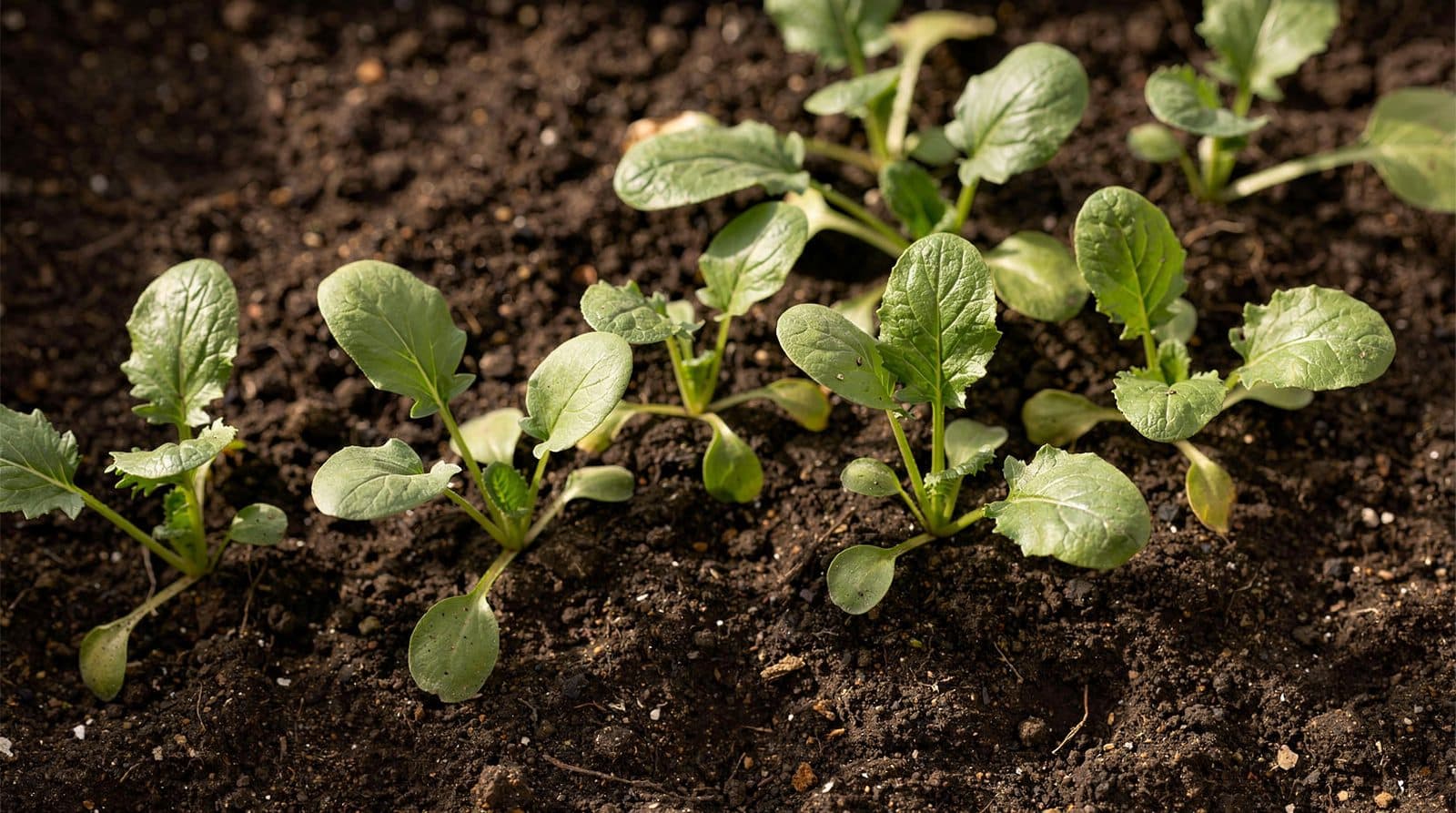
Illustrative photograph — types, timing, and spacing stay on the cited sheets.
The season, on your ground
Save this bed — freeWhen to plantCareWhen to harvestGarden pests
What the sources say — at a glance
One source per card. Facts are not averaged.
Clemson HGIC 1305 (South Carolina)
Raphanus sativus. Cool-season. 50–65 °F. Germination 45–85 °F; none above 95 °F. Rows 12–24 in. Seed ½ in, ~1 in. Thin 2–3 in.
Details and limits (4)
Types
Clemson HGIC 1305 (South Carolina): radishes (Raphanus sativus) are cool-season plants. Optimum temperature is 50 to 65 °F. Type notes on their sheet — not a cultivar mill.
Timing
Clemson HGIC 1305 (South Carolina): radishes can be planted for both spring and fall crops. Optimum soil temperature for seed germination is 45 to 85 °F. Radish seed will not germinate when the soil temperature is above 95 °F. Timing on their sheet — not a national plant date.
Spacing
Clemson HGIC 1305 (South Carolina): plant radish seed in rows 12 to 24 inches apart and place the seed ½-inch deep with about 1 inch between seeds. Radish can be broadcast-seeded in a 12-inch bed and then thinned to 2 to 3 inches apart when plants are in the one to two true-leaf stage, about 2 inches tall. Spacing on their sheet — not a BioArva average.
Limit
South Carolina HGIC 1305. Cool-season wording and 45–85 °F stay Clemson. Not fertilizer.
Maryland Extension (Maryland)
Hardy annual. Heavy frost (attributed). Small spring, daikon, and winter types. Sow as soon as soil can be worked in spring; fall also. Thin 2–4 in.
Details and limits (4)
Types
Maryland Extension (Maryland): radishes are a hardy annual. They can withstand heavy frosts in spring and fall. Types on their sheet include small spring, Asian daikon, and winter storage cultivars. Type notes — not a named-cultivar mill. Maryland’s attributed hardiness wording — not a planting-safety promise.
Timing
Maryland Extension (Maryland): sow seed as soon as the soil can be worked in the spring. Can also be planted in the fall. Maryland timing — not a national plant date.
Spacing
Maryland Extension (Maryland): plant seeds 1 to 2 inches apart in-rows and ¼ to ½ inch deep, or equidistantly in wide rows or beds, depending on the variety. Thin the seedlings so that the remaining plants are 2 to 4 inches apart depending on the type. Spacing on their sheet — not a BioArva average.
Limit
Maryland radishes garden page. Hardy-annual wording and 2–4 in thin stay Maryland. Not fertilizer.
UMN Extension (Minnesota)
Mid-April to mid-May; early August. Direct seed; do not transplant. Minnesota timing — not a national plant date.
Details and limits (2)
Timing
UMN Extension (Minnesota): recommended outdoor planting for radish is mid-April to mid-May, and again in early August. Some plants, such as radishes, carrots and beets, do not tolerate transplanting and will need to be direct seeded. Minnesota timing — not a national plant date.
Limit
Minnesota vegetable-garden planting page. Mid-April to mid-May and early August stay Minnesota. Not fertilizer.
Illinois Extension (Illinois)
Spring vs winter types. Soil-worked until mid-spring; late-summer sowings. ¼–½ in deep. Spring thin ½–1 in. Winter 2–4 in. Beds 2–3 in.
Details and limits (4)
Types
Illinois Extension (Illinois): spring radishes and winter radishes. Winter radishes require a much longer time to mature than spring radishes and are planted at the same time as late turnips (usually midsummer to late summer). Type notes — not a named-cultivar mill.
Timing
Illinois Extension (Illinois): spring radishes should be planted from as early as the soil can be worked until mid-spring. Additional sowings of spring types can begin in late summer. Illinois timing — not a national plant date.
Spacing
Illinois Extension (Illinois): sow seed ¼ to ½ inch deep. Thin spring varieties to ½ to 1 inch between plants. Winter radishes must be thinned to 2 to 4 inches. On beds, radishes may be broadcast lightly and thinned to stand 2 to 3 inches apart in all directions. Spacing on their sheet — not a BioArva average.
Limit
Illinois radish page. Spring/winter types and ¼–½ in depth stay Illinois. Not fertilizer.
Make it yours
Save the bed in the Field Book so next season is not a guess.
Sources differ
When do you plant radish?
Compare timing on the cited sheets. Clemson HGIC 1305 (South Carolina): spring and fall crops; germination 45 to 85 °F. Maryland: as soon as the soil can be worked in spring. Minnesota: mid-April to mid-May and early August. Illinois: as early as the soil can be worked until mid-spring. Not a national plant date.
How far apart do you plant radish?
The sheets do not agree on one grid. Clemson: rows 12 to 24 inches, seed ½ inch deep about 1 inch apart, thin to 2 to 3 inches. Maryland: 1 to 2 inches in-row, ¼ to ½ inch deep, thin 2 to 4 inches. Illinois: ¼ to ½ inch deep, spring thin ½ to 1 inch, winter 2 to 4 inches. Minnesota’s sheet does not provide a spacing note on this page.
What to record in the Field Book
Save the bed with the crop and the date. You may add a photo and notes. Compare entries you have recorded with each other — not with a diagnosis from this page. If you want an identification, bring the record to local Extension.
Verified suppliers only
No supplier on this page
When a partner is listed, it will be outbound and disclosed. Nothing to buy here. Fertilizer, soils, and pesticides stay off this slot.
How we know — methodology. Ranges and assertions are cited per source, not blended.