
Crop guide
Growing eggplant
Growing eggplant means matching type, timing, and spacing on the cited sheets. There is no single national planting date.
Growing guidance is general information. Timing, spacing, and care depend on cultivar, weather, soil, and local conditions. Check the sources and adjust the plan for your garden.
Steps (range, not a promise)
- 01Know the type on the cited sheet. Warm-season notes stay source-specific.
- 02Plant on the cited sheet’s timing. Regional dates stay on their own cards.
- 03Use in-row depth and spacing from one cited source.
- 04Log the bed so next season is not a guess.
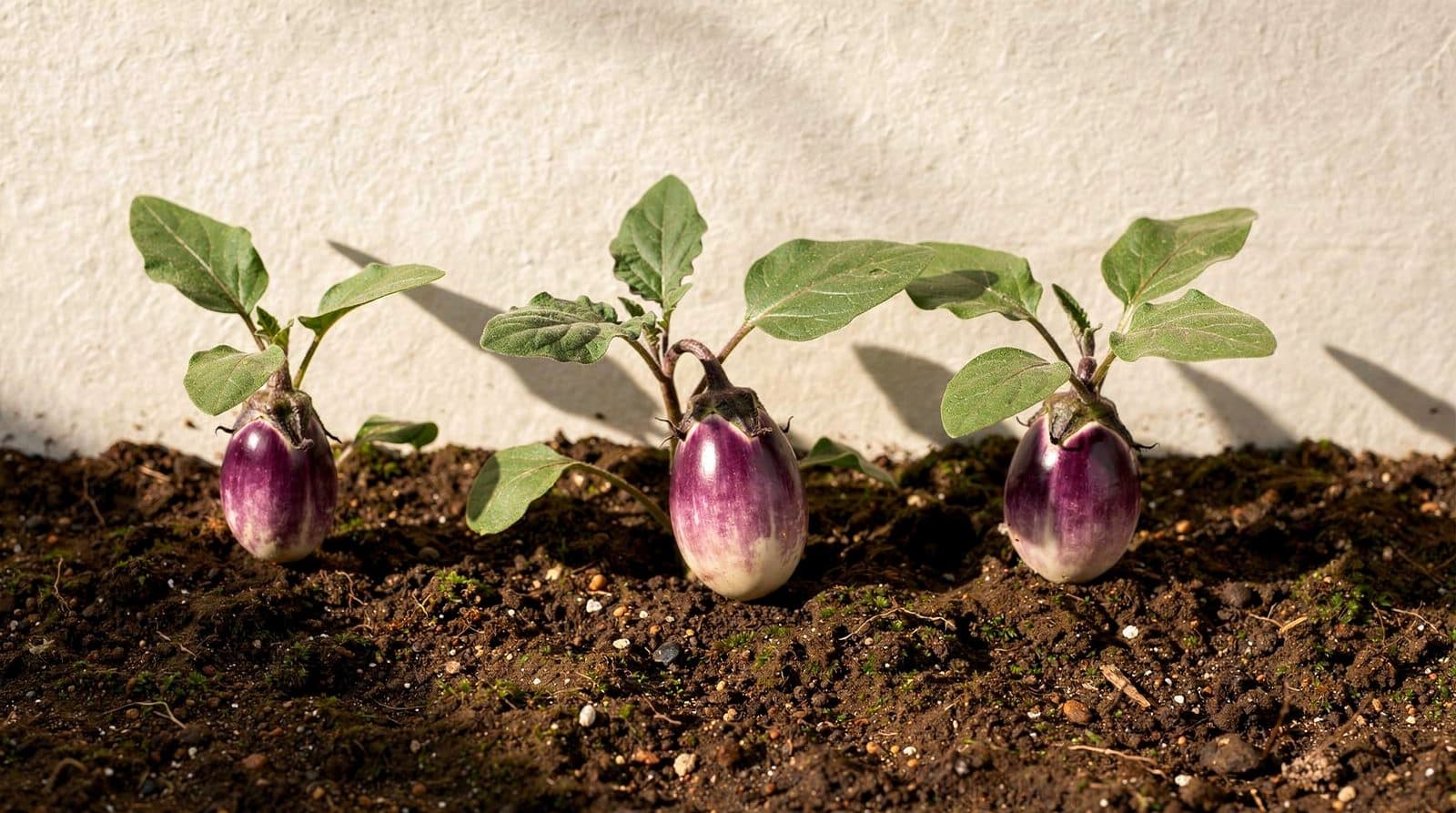
Illustrative photograph — types, timing, and spacing stay on the cited sheets.
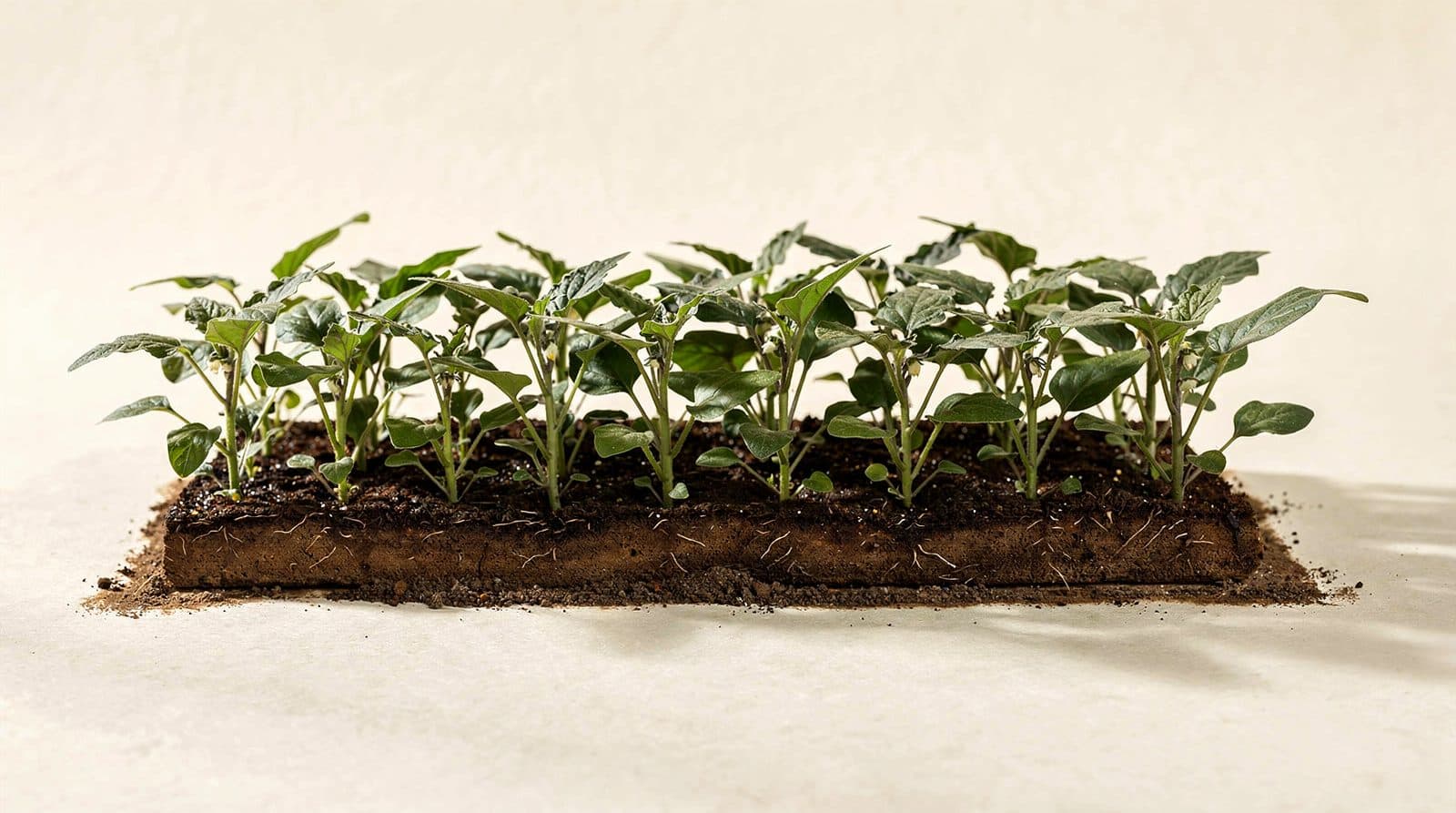
The season, on your ground
Save this bed — freeWhen to plantCareWhen to harvestGarden pests
What the sources say — at a glance
One source per card. Facts are not averaged.
Clemson HGIC 1310 (South Carolina)
Solanum melongena. Warm-season. 70–85 °F. After last frost. Soil thoroughly warmed. 6–8 week transplants. Plants 2–2½ ft. Rows 3–4 ft.
Details and limits (4)
Types
Clemson HGIC 1310 (South Carolina): eggplant (Solanum melongena) is a warm-season vegetable that grows best when temperatures are between 70 to 85 °F. Type notes — not a cultivar mill.
Timing
Clemson HGIC 1310 (South Carolina): plant in the spring after the last chance of frost and the soil has thoroughly warmed. Set out 6- to 8-week-old transplants. Seeds germinate at soil temperatures between 70 to 90 °F. Timing on their sheet — not a national plant date.
Spacing
Clemson HGIC 1310 (South Carolina): space plants 2 to 2½ feet apart in rows that are 3 to 4 feet apart. Spacing on their sheet — not a BioArva average.
Limit
South Carolina HGIC 1310. Warm-season wording and 2–2½ ft stay Clemson. Not fertilizer.
Maryland Extension (Maryland)
Very tender warm-season annual. Frost injures top growth (attributed). After danger of frost. Soil thoroughly warm. 8–10 week transplants. 18–24 in × 30–36 in.
Details and limits (4)
Types
Maryland Extension (Maryland): very tender warm-season annual. Frost will injure top growth (attributed). Needs warm weather to grow. Type notes — not a mill. Maryland’s attributed frost wording — not a planting-safety promise.
Timing
Maryland Extension (Maryland): transplant after danger of frost, when soil is thoroughly warm. Use 8- to 10-week-old transplants. Maryland timing — not a national plant date.
Spacing
Maryland Extension (Maryland): spacing 18 to 24 inches in-row by 30 to 36 inches between rows. Spacing on their sheet — not a BioArva average.
Limit
Maryland eggplant garden page. Very-tender wording and 18–24 in stay Maryland. Not fertilizer.
UMN Extension (Minnesota)
Solanum melongena. Needs warm conditions. Eight weeks indoor. Nights above 50 °F. 18 in. Rows 30–36 in.
Details and limits (4)
Types
UMN Extension (Minnesota): eggplant (Solanum melongena) needs warm conditions. Type note — not a cultivar mill.
Timing
UMN Extension (Minnesota): start eggplant seeds about eight weeks before planting them outside. Transplant outdoors after nighttime low temperatures are above 50 °F. Minnesota timing — not a national plant date.
Spacing
UMN Extension (Minnesota): space eggplants 18 inches apart, in rows 30 to 36 inches apart. Spacing on their sheet — not a BioArva average.
Limit
Minnesota eggplant page. Warm-conditions wording and 18 in stay Minnesota. Not fertilizer.
Illinois Extension (Illinois)
Cold-sensitive. Long warm season. Transplants after all danger of frost is passed. 18–24 in in-row. 30–36 in between rows, or 24 in all directions.
Details and limits (4)
Types
Illinois Extension (Illinois): eggplant is a cold-sensitive vegetable that requires a long warm season. Type notes — not a mill.
Timing
Illinois Extension (Illinois): eggplant is best started from transplants. Transplants being set in the garden after all danger of frost is passed. Illinois timing — not a national plant date. Illinois’s attributed frost wording — not a planting-safety promise.
Spacing
Illinois Extension (Illinois): space plants 18 to 24 inches apart in the row. Allow 30 to 36 inches between rows or space plants 24 inches apart in all directions in raised beds. Spacing on their sheet — not a BioArva average.
Limit
Illinois eggplant page. Cold-sensitive wording and 18–24 in stay Illinois. Not fertilizer.
Make it yours
Save the bed in the Field Book so next season is not a guess.
Sources differ
When do you plant eggplant?
Compare timing on the cited sheets. Clemson HGIC 1310 (South Carolina): after the last chance of frost, soil thoroughly warmed. Maryland: after danger of frost, soil thoroughly warm. Minnesota: eight weeks indoors, nights above 50 °F. Illinois: transplants after all danger of frost is passed. Not a national plant date.
How far apart do you plant eggplant?
The sheets do not agree on one grid. Clemson: plants 2 to 2½ feet, rows 3 to 4 feet. Maryland: 18 to 24 inches in-row by 30 to 36 inches between rows. Minnesota: 18 inches, rows 30 to 36 inches. Illinois: 18 to 24 inches in-row.
What to record in the Field Book
Save the bed with the crop and the date. You may add a photo and notes. Compare entries you have recorded with each other — not with a diagnosis from this page. If you want an identification, bring the record to local Extension.
Verified suppliers only
No supplier on this page
When a partner is listed, it will be outbound and disclosed. Nothing to buy here. Fertilizer, soils, and pesticides stay off this slot.
How we know — methodology. Ranges and assertions are cited per source, not blended.