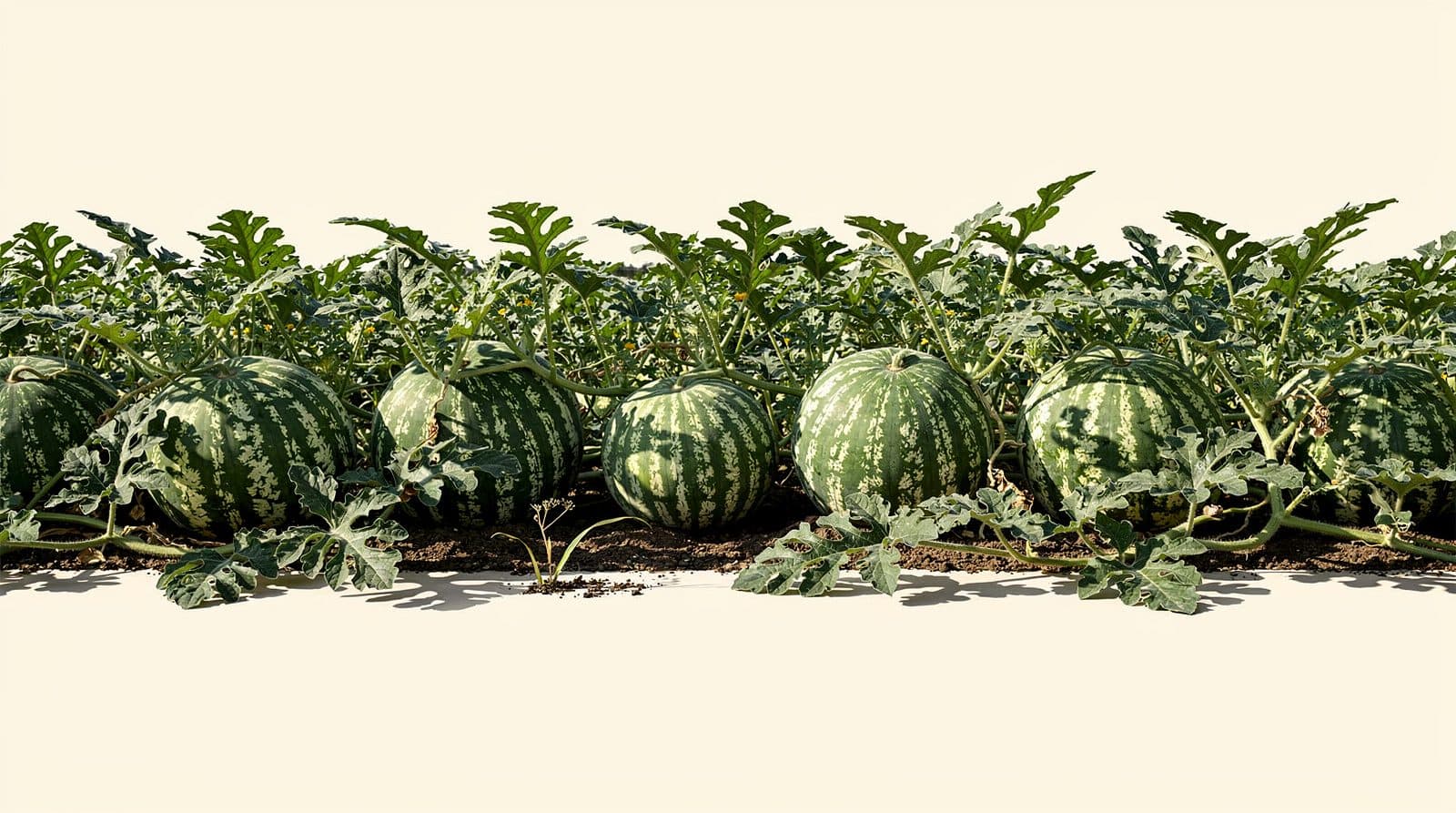
Harvest · Signals, not a promise
When to harvest watermelon
When to harvest watermelon here is cited harvest signals. Tendril and ground-spot cues stay on their own sheets. Those notes are not how long yours keeps. Cantaloupe and honeydew live on a separate crop.
Growing guidance is general information. Timing, spacing, and care depend on cultivar, weather, soil, and local conditions. Check the sources and adjust the plan for your garden.
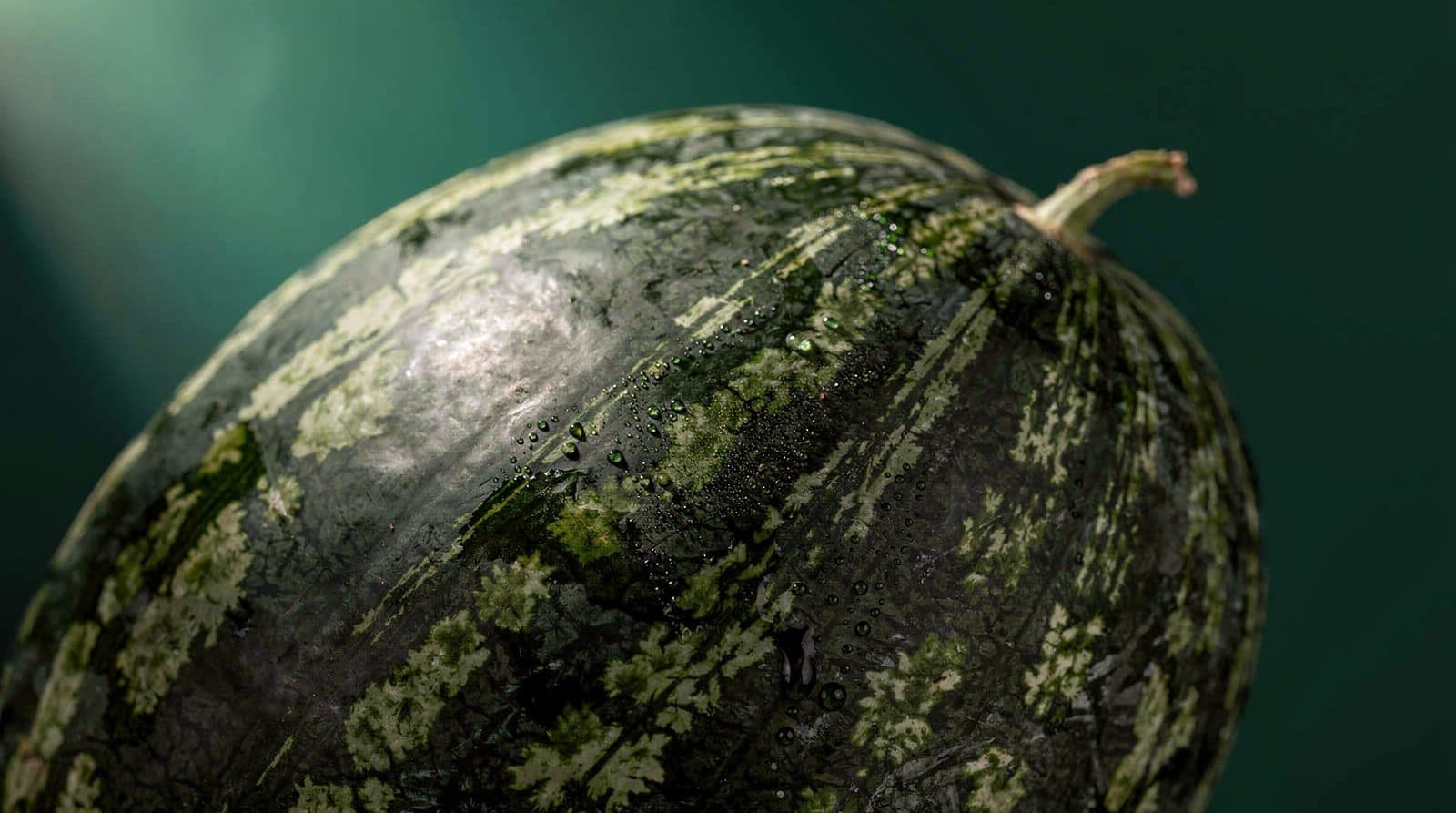
Illustrative photograph — harvest signals stay on the cited sheets.
Growing lives on growing watermelon. Timing lives on when to plant watermelon. Care lives on watermelon plant care.
What the sources say — at a glance
One source per card. Facts are not averaged.
Clemson HGIC 1325 (South Carolina)
~35 days from fruit set. Expected size. Brown tendril. Dull skin. White-to-cream ground spot. Cue — not a keeping promise.
Details and limits (2)
Harvest
Clemson HGIC 1325 (South Carolina): from the time of fruit set, it takes approximately 35 days to fruit ripening. Rules of thumb: the fruit looks to be expected size; the tendril closest to the fruit turns brown; the skin color loses its gloss and becomes dull; the bottom of the fruit has a large white to cream color oval spot. Cue — not a keeping promise.
Limit
South Carolina HGIC 1325. Size, tendril, dull skin, and ground-spot cues stay on this sheet. Not storage.
Maryland Extension (Maryland)
Yellowish (not white) underside. Dead tendril or curl near the stem. Cue — not a keeping promise.
Details and limits (2)
Harvest
Maryland Extension (Maryland): for watermelons, the best indicators are a yellowish (not white) color on the underside where the fruit touches the ground and a dead tendril or curl near the point where the fruit is attached to the vine. Cue — not a keeping promise.
Limit
Maryland melons garden page. Yellowish underside and dead-tendril cues stay Maryland. Not storage.
UMN Extension (Minnesota)
Does not slip. Brown tendrils. Yellow nearest leaf. Dull, rough surface. Light green to yellowish ground spot. Cue — not a keeping promise.
Details and limits (2)
Harvest
UMN Extension (Minnesota): identifying ripe watermelon is more difficult, since they do not slip from the vine. Tendrils near the fruit stem become brown and dry. The leaf closest to the fruit becomes yellow. The fruit surface becomes rough to the touch. The fruit color becomes dull. The bottom of the watermelon, where it lies on the soil, changes from light green to yellowish. Cue — not a keeping promise.
Limit
Minnesota melons sheet. No-slip, tendril, and ground-spot cues stay Minnesota. Not storage.
Illinois Extension (Illinois)
Combination: brown tendrils; dull surface; thumbnail-resistant skin; yellowish ground spot. Cue — not a keeping promise.
Details and limits (2)
Harvest
Illinois Extension (Illinois): use a combination of indicators. Light green, curly tendrils on the stem near the point of attachment usually turn brown and dry. The surface color of the fruit turns dull. The skin becomes resistant to penetration by the thumbnail and is rough to the touch. The bottom of the melon (where it lies on the soil) turns from light green to a yellowish color. Cue — not a keeping promise.
Limit
Illinois watermelon page. Combination cues stay Illinois. Not storage.
Sources differ
Make it yours
Save the bed in the Field Book so next season is not a guess.
Verified suppliers only
No supplier on this page
When a partner is listed, it will be outbound and disclosed. Nothing to buy here. Fertilizer, soils, and pesticides stay off this slot.
How do you know when a watermelon is ready to harvest?
Compare harvest signals on the cited sheets. Clemson HGIC 1325 (South Carolina): expected size, brown tendril, dull skin, white-to-cream ground spot. Maryland: yellowish underside and a dead tendril. Minnesota: brown tendrils, yellow nearest leaf, dull rough surface, yellowish ground spot. Illinois: a combination of those cues.
Do the sheets agree on one cue?
No. Ground color and a drying tendril appear on more than one sheet, but Clemson also lists expected size and a cream oval spot; Minnesota adds a yellow nearest leaf and that the fruit does not slip; Illinois adds thumbnail-resistant skin. Four cards — not averaged.
How we know — methodology. Ranges and assertions are cited per source, not blended.