Harvest · Signals, not a promise
When to harvest turnips
When to harvest turnips here is cited size, leaf, season, and pull-or-cut cues. Those notes are not how long yours keeps.
Growing guidance is general information. Timing, spacing, and care depend on cultivar, weather, soil, and local conditions. Check the sources and adjust the plan for your garden.
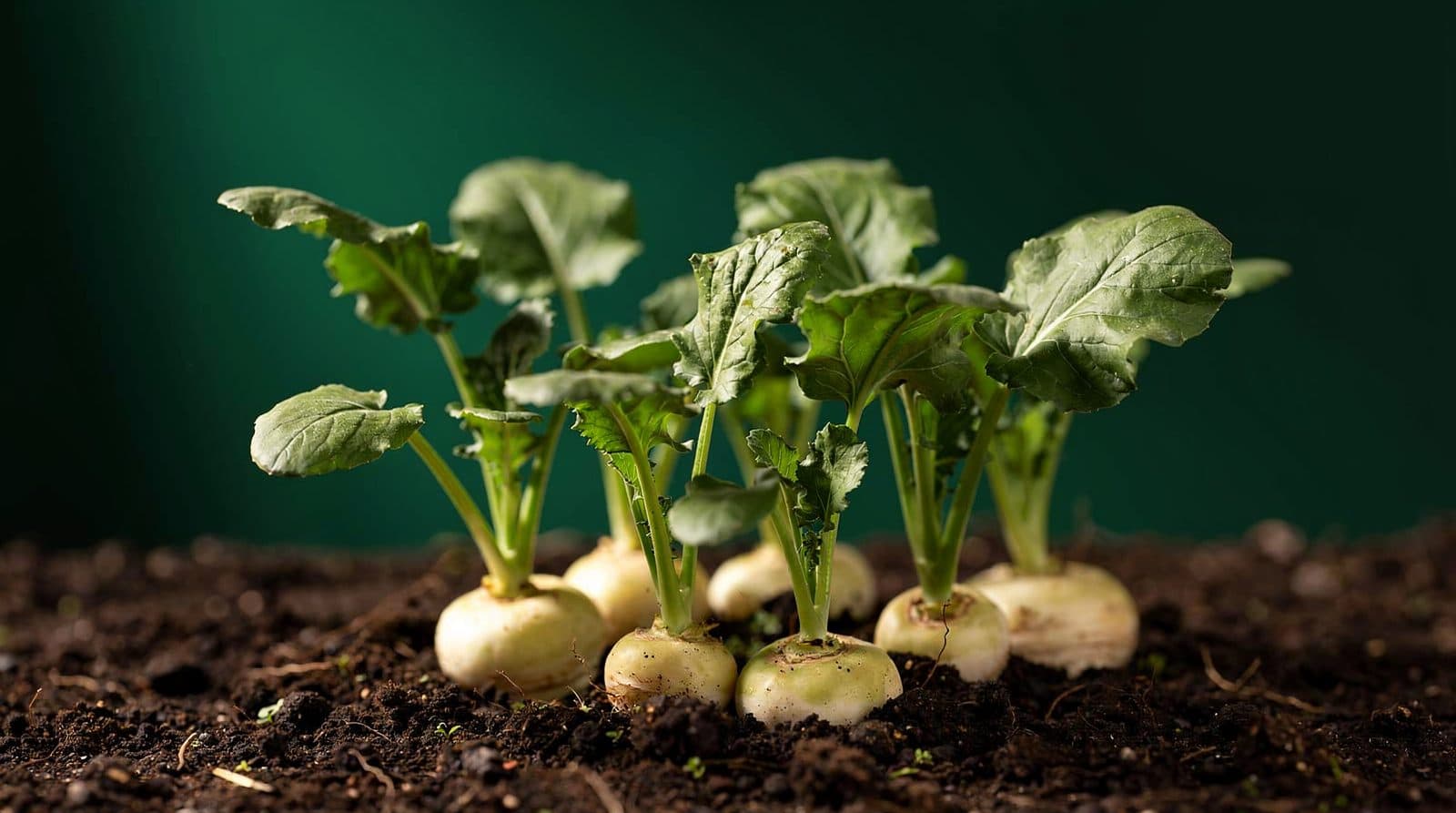
Illustrative photograph — harvest signals stay on the cited sheets.
Growing lives on growing turnips.
What the sources say — at a glance
One source per card. Facts are not averaged.
Clemson HGIC 1324 (South Carolina)
Leaves from a very early stage. Roots at tennis-ball size or larger (2½–2¾ in).
Details and limits (3)
Harvest
Clemson HGIC 1324 (South Carolina): turnip leaves can be harvested from a very early stage. Cue — not a keeping promise.
Harvest
Clemson HGIC 1324 (South Carolina): harvest turnip roots when they reach the size of a tennis ball or larger (2½ to 2¾ inches in diameter). Cue — not a keeping promise.
Limit
South Carolina HGIC 1324. Size and leaf cues stay Clemson. Not storage.
Maryland Extension (Maryland)
Outer leaves, young leaves, or entire plants. Roots throughout the fall.
Details and limits (3)
Harvest
Maryland Extension (Maryland): outer leaves, young leaves, or entire plants can be harvested. Cue — not a keeping promise.
Harvest
Maryland Extension (Maryland): turnip roots can be harvested throughout the fall. Cue — not a keeping promise.
Limit
Maryland leafy-greens sheet. Leaf and fall-root cues stay Maryland. Not storage.
UMN Extension (Minnesota)
Usable size, normally about 2–3 in wide. Greens or tops. Also at thinning before roots enlarge.
Details and limits (3)
Harvest
UMN Extension (Minnesota): harvest turnips when they reach a usable size, normally about two to three inches in width. Cue — not a keeping promise.
Harvest
UMN Extension (Minnesota): you can harvest the greens or tops of turnips. You can also use the greens when you thin crowded plants, before the roots begin to enlarge. Cue — not a keeping promise.
Limit
Minnesota turnips-and-rutabagas sheet. 2–3 in width stays Minnesota. Not storage.
Illinois Extension (Illinois)
Pull or cut at usable size. Fall roots early autumn or as needed. Tops at 4–6 in if planted for greens.
Details and limits (3)
Harvest
Illinois Extension (Illinois): spring turnips should be pulled or cut when the roots or tops reach usable size. Harvest fall roots starting in early autumn or as needed. Cue — not a keeping promise.
Harvest
Illinois Extension (Illinois): if planted for greens, harvest the tops as needed when they are 4 to 6 inches tall. Cue — not a keeping promise.
Limit
Illinois turnip page. Pull-or-cut and 4–6 in tops stay Illinois. Not storage.
Sources differ
Make it yours
Save the bed in the Field Book so next season is not a guess.
Verified suppliers only
No supplier on this page
When a partner is listed, it will be outbound and disclosed. Nothing to buy here. Fertilizer, soils, and pesticides stay off this slot.
How do you know when turnips are ready to harvest?
Compare cues on the cited sheets. Clemson HGIC 1324 (South Carolina): leaves from a very early stage; roots at tennis-ball size or larger. Maryland: outer leaves, young leaves, or entire plants; roots throughout the fall. Minnesota: usable size, normally about two to three inches wide. Illinois: pull or cut when roots or tops reach usable size.
Do the sheets agree on a cue?
No. Size, leaf, season, and pull-or-cut notes stay on their own cards — not averaged.
How we know — methodology. Ranges and assertions are cited per source, not blended.