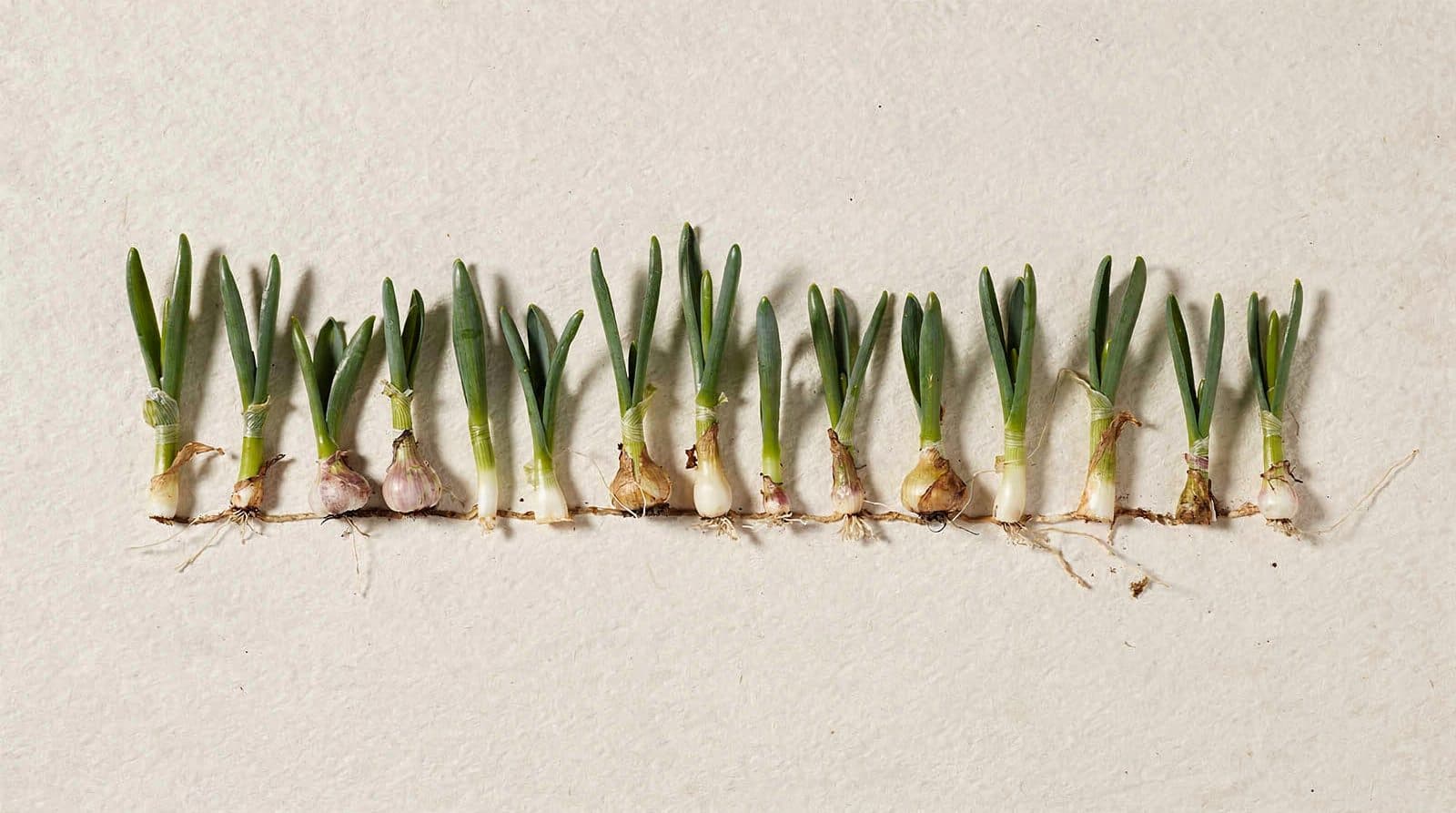
Harvest · Signals, not a promise
When to harvest garlic
When to harvest garlic here is cited harvest signals and curing method notes. Cues stay on their own sheets. Those notes are not how long yours keeps.
Growing guidance is general information. Timing, spacing, and care depend on cultivar, weather, soil, and local conditions. Check the sources and adjust the plan for your garden.
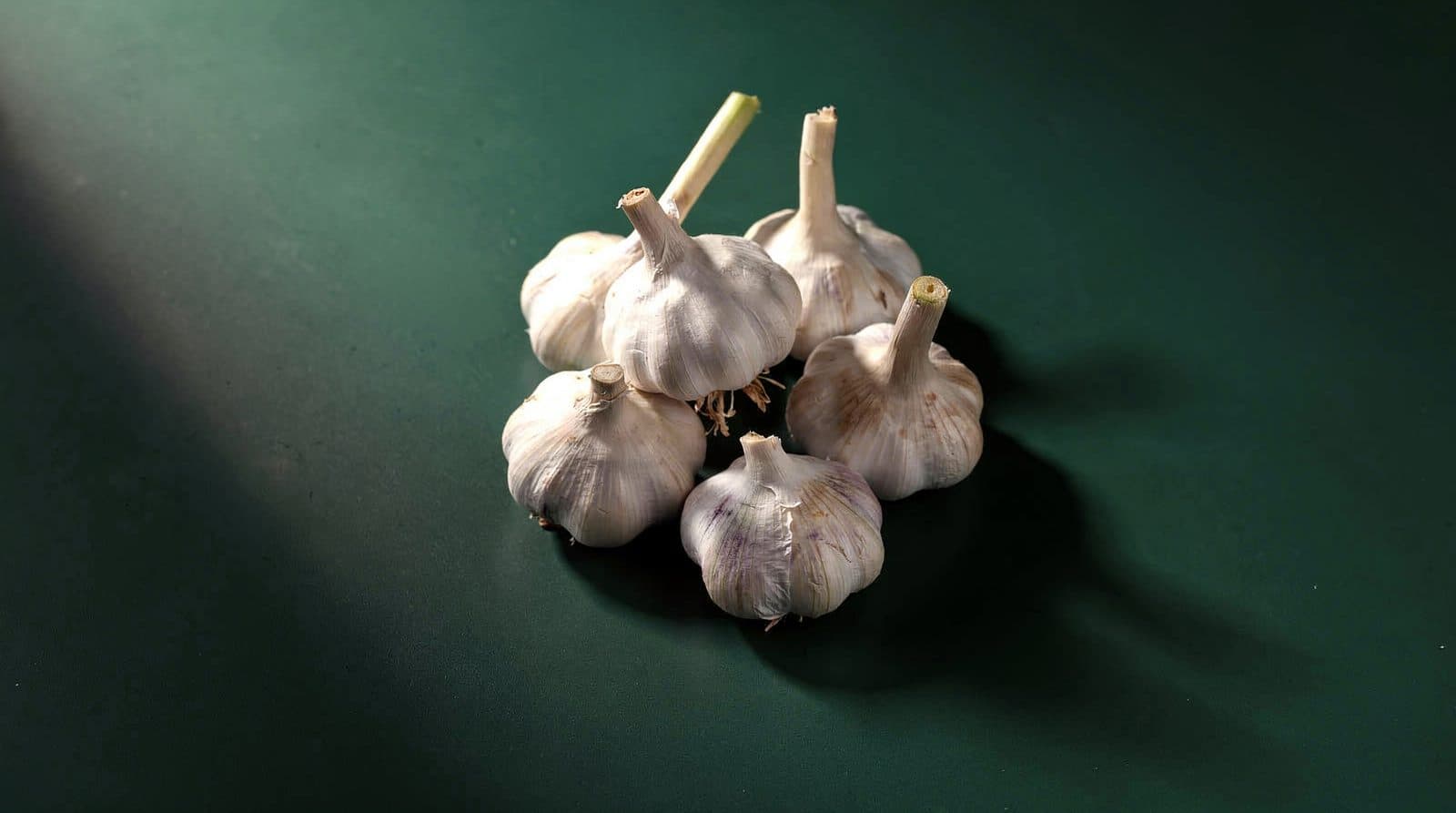
Illustrative photograph — harvest signals stay on the cited sheets.
Growing lives on growing garlic. Timing lives on when to plant garlic. Care lives on garlic plant care.
What the sources say — at a glance
One source per card. Facts are not averaged.
Clemson HGIC 1314 (South Carolina)
Leaves begin to yellow in early summer. Lift whole plant. Brush; do not wash. Cure warm, shady, ~2–3 weeks until neck dry and skin papery.
Details and limits (3)
Harvest
Clemson HGIC 1314 (South Carolina): garlic will be ready to harvest when the leaves begin to yellow in early summer. Lift up the entire plant by hand or with a spading fork, being careful not to bruise the bulbs. Brush off the soil but do not wash the bulbs. Cue — not a keeping promise.
Method
Clemson HGIC 1314 (South Carolina): cure in a warm, shady place with good air movement. Hang in bundles or spread as a single layer on screens or drying racks. Allow bulbs to dry until the neck is dry and the outer skin is papery, approximately two to three weeks. Remove tops when dry. Attributed method — not a storage guarantee.
Limit
South Carolina HGIC 1314. Leaf-yellow cue and 2–3 week cure stay on this sheet. Not a keeping promise.
Maryland Extension (Maryland)
Fork when about ½ of foliage is brown. Full-sized, well-wrapped. Brush soil. Dry tops-on 7–14 days, then cut tops; rub soil; trim roots.
Details and limits (3)
Harvest
Maryland Extension (Maryland): gently lift the plants with a garden fork when about ½ of the foliage turns brown. The bulbs should be full-sized and well-wrapped. Gently brush off attached soil. Handle plants gently. Cue — not a keeping promise.
Method
Maryland Extension (Maryland): allow plants to dry, with tops attached, in a well-ventilated location out of direct sunlight. Cut off the tops after 7 to 14 days of drying. Gently rub off any remaining soil and trim the roots. Attributed method — not a storage guarantee.
Limit
Maryland garlic garden page. Half-foliage cue and 7–14 day dry stay Maryland. Not a keeping promise.
UMN Extension (Minnesota)
Lower leaves brown; half or more of upper leaves still green. Or cloves fill the skins. Shoots attached; cure 3–4 weeks; then shoots ½–1 in.
Details and limits (3)
Harvest
UMN Extension (Minnesota): begin harvesting when the lower leaves turn brown and when half or slightly more than half of the upper leaves remain green. Alternatively, you can pull a few bulbs and cut them in half; if the cloves fill the skins, then the bulbs are ready to harvest. Cue — not a keeping promise.
Method
UMN Extension (Minnesota): harvest the garlic plants with shoots and bulbs attached. Knock off any large clumps of soil. Put the plants in a warm, dry, airy place for three to four weeks to cure. After curing, cut the shoots one-half to one inch above the bulbs and trim the roots close to the bulb base. Attributed method — not a storage guarantee.
Limit
Minnesota garlic sheet. Green-leaf cue and 3–4 week cure stay Minnesota. Not a keeping promise.
Illinois Extension (Illinois)
Lower leaves brown; half or more still green. Dig intact. Cure ~3–4 weeks, dry, airy. Tops ~1 in; roots close to the base.
Details and limits (3)
Harvest
Illinois Extension (Illinois): harvest when the lower leaves start to turn brown. Harvest when half or slightly more than half of the leaves are still green. Dig the plant carefully with roots and shoots intact. Cue — not a keeping promise.
Method
Illinois Extension (Illinois): let the plants cure for about 3 to 4 weeks in a dry area with good air circulation. After drying, the tops can be cut back to about one inch and the roots cut close to the base of the bulb. Soil can also be carefully brushed away. Attributed method — not a storage guarantee.
Limit
Illinois garlic page. Leaf-color cue and 3–4 week cure stay Illinois. Not a keeping promise.
Sources differ
Make it yours
Save the bed in the Field Book so next season is not a guess.
Verified suppliers only
No supplier on this page
When a partner is listed, it will be outbound and disclosed. Nothing to buy here. Fertilizer, soils, and pesticides stay off this slot.
How do you know when garlic is ready to harvest?
Compare harvest signals on the cited sheets. Clemson HGIC 1314 (South Carolina): leaves begin to yellow in early summer. Maryland: about half the foliage brown. Minnesota: lower leaves brown, half or more of the upper leaves still green, or cloves fill the skins. Illinois: lower leaves start to turn brown; half or slightly more than half of the leaves still green; dig intact.
Do the sheets agree on curing?
No. Clemson lists about two to three weeks until the neck is dry and the skin is papery. Maryland lists seven to 14 days tops-on. Minnesota and Illinois list about three to four weeks. Four cards — not averaged, and not a storage guarantee.
How we know — methodology. Ranges and assertions are cited per source, not blended.